National Security · Constitutional Law · Foreign Policy · Government·February 26, 2026
US and Iran resume nuclear talks as two carrier strike groups mass in Persian Gulf
US deploys F-22s to Israel for first time, two carrier groups now in region

On Feb. 26, 2026, the U.S. and Iran held their third round of indirect in Geneva. The talks are mediated by Oman, with the delegations meeting in separate rooms and passing messages through Omani intermediaries — a format used because the U.S. and Iran have no formal . Steve Witkoff, Trump's special envoy to the Middle East, and Jared Kushner, Trump's senior adviser, led the American delegation. Iranian Deputy Foreign Minister Abbas Araghchi led the Iranian delegation. After two prior rounds, negotiators said they had agreed on 'guiding principles' but had not yet begun detailed technical talks on uranium enrichment limits, inspection regimes, or sanctions relief.
Trump set a public deadline during his Feb. 24 State of the Union address, warning that Iran had 10 to 15 days to reach a deal or face unspecified consequences, which he implied would be military. In the days following, VP Vance told Fox News: 'You can't let the craziest and worst regime in the world have nuclear weapons. The president has a number of other tools at his disposal to ensure this doesn't happen. He's shown a willingness to use them, and I hope the Iranians take it seriously in the negotiations.' The CIA separately offered to recruit Iranian informants on Feb. 25, posting Farsi-language recruitment instructions on X, Instagram, and YouTube.
The military buildup accompanying the talks is significant. The U.S. repositioned more than 150 aircraft to bases in Europe and the Middle East. On Feb. 24, the Pentagon made the first-ever deployment of F-22 Raptor stealth fighters to Israel, sending 12 to Ovda Airbase in the Negev Desert. The F-22 is the most capable air superiority fighter in the U.S. arsenal and is widely regarded as purpose-built to defeat advanced Iranian and Russian air defenses. The deployment signals a qualitative escalation beyond prior U.S. force posture in the region.
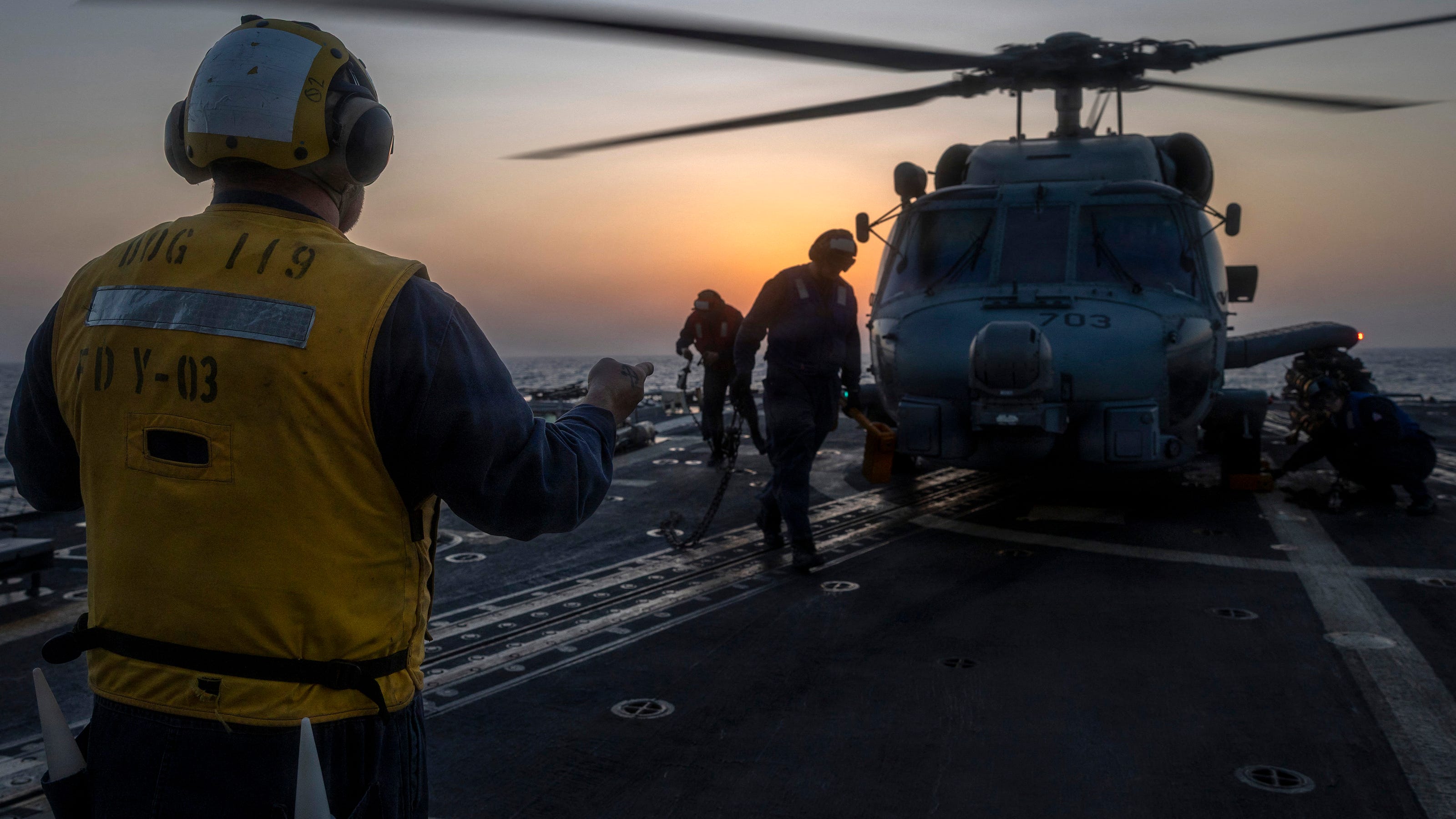
The USS Gerald R. Ford, the most advanced aircraft carrier in the U.S. fleet, departed for waters near Israel in mid-February. Its arrival created a two-carrier deployment alongside the USS Harry S. Truman, which was already in the region. A two-carrier deployment requires the commitment of approximately 10,000 to 15,000 sailors and hundreds of aircraft. Pentagon officials told reporters they expected the full U.S. force to be in place by mid-March. A Hezbollah official said the group would not intervene in the event of 'limited' U.S. strikes on Iran.
Iran has been accelerating the fortification of its nuclear sites. Satellite imagery analyzed by nonproliferation experts and published in early 2026 showed Iran moving materials and reinforcing underground facilities at Natanz and Fordow — sites where Iran enriches uranium. Iran has enriched uranium to 60% purity, approaching the 90% level required for weapons-grade material. The International Atomic Energy Agency has reported that Iran has exceeded all limits set by the 2015 Joint Comprehensive Plan of Action, which the U.S. withdrew from in 2018 under Trump's first term.
Iran's chief spokesperson Esmaeil Baqaei accused Trump during the SOTU week of spreading 'big lies' about Iran's nuclear program. Lebanon's foreign minister told reporters his country had received intelligence that Israel might attack Beirut's airport if Hezbollah intervened in a U.S.-Iran conflict, and he urged Hezbollah to stay out. The State Department separately told Ukraine to refrain from striking U.S. interests after a Ukrainian attack on the Russian port of Novorossiysk.
Congress has the constitutional authority to declare war under Article I, but has not formally exercised that power since 1942. The Resolution of 1973 requires the president to notify Congress within 48 hours of introducing U.S. forces into hostilities and limits unauthorized military operations to 60 days. A bipartisan group of House members issued a statement warning Trump that military action against Iran without congressional authorization would be unconstitutional. 'If the President believes military action is necessary, he must come to Congress,' the lawmakers said.
The 2015 Joint Comprehensive Plan of Action — the Iran nuclear deal negotiated under the Obama administration with the United States, United Kingdom, France, Germany, Russia, and China — capped Iran's uranium enrichment and established a robust inspection regime in exchange for sanctions relief. Trump withdrew the U.S. from the deal in 2018. Iran began exceeding its terms in 2019. The Biden administration attempted to re-enter the deal through 2021–2023 talks that ultimately failed. Trump's second-term approach combines diplomatic negotiations with a simultaneous military buildup.
Related Topics
6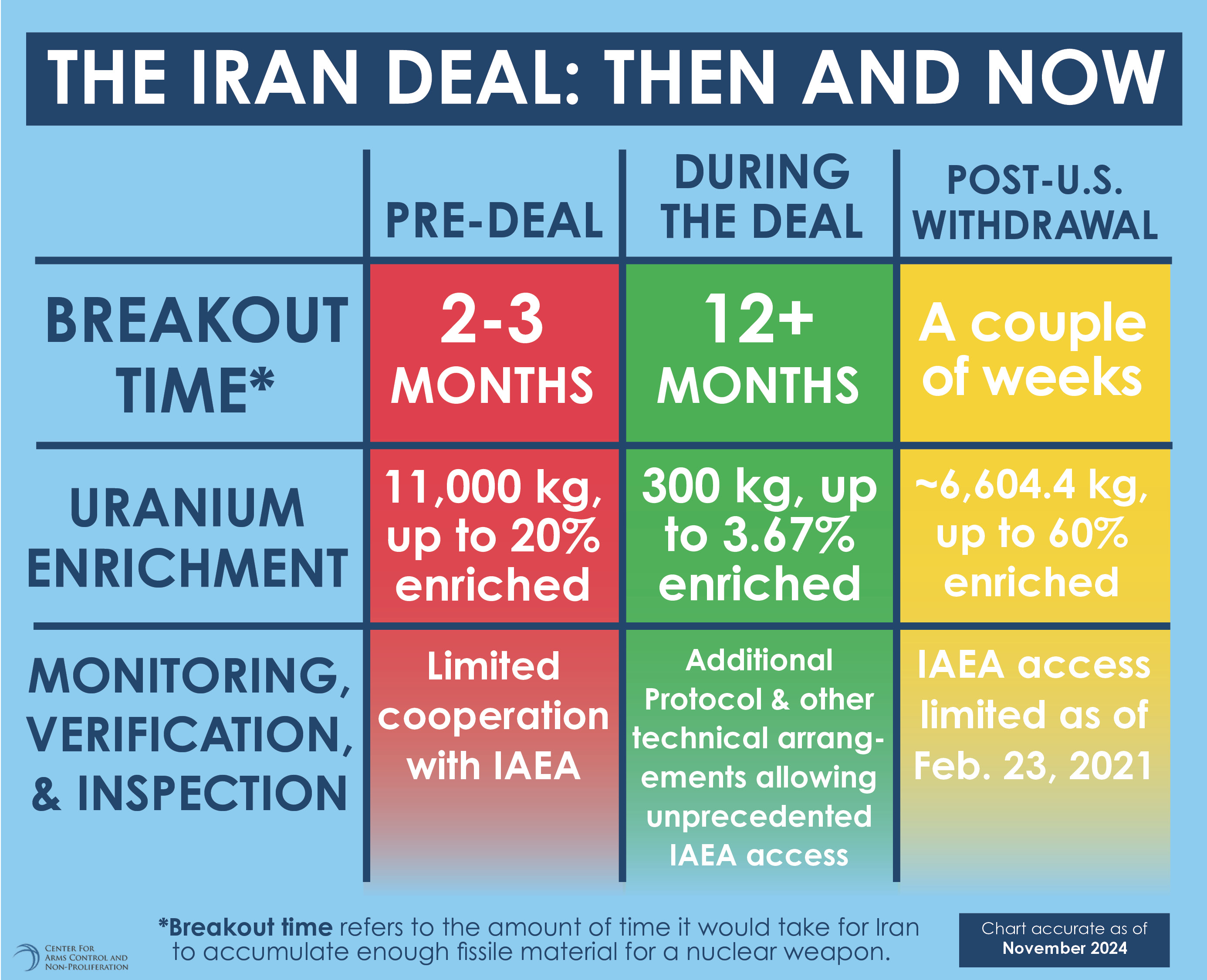
US deploys F-22 fighters to Israel for first time amid escalating Iran tensions
Largest U.S. military buildup in the Middle East since the 2003 Iraq invasion
US and Israel launch Operation Epic Fury seeking regime change in Iran
Over 30 Iranian sites hit, 57 killed at girls school in southern Iran

Pentagon told Congress Iran attack was not imminent as Trump claimed threat
Trump said "imminent threat." His own intelligence said 2035, at the earliest

They all promised no regime change in Iran. The record says otherwise
Trump, Vance, Hegseth, Rubio said it. Greene and Carlson documented the betrayal
Trump starts Iran war without Congress triggering constitutional crisis
No vote, no declaration — Trump says American heroes may die in this war
Trump gives four different reasons for the Iran war in four days
No national address, six dead Americans, and no agreed reason why
17 questions
Start the review