March 8, 2026
US and Mexico open USMCA trade review without Canada
Canada excluded from first formal talks on the trade deal that governs its economy
📈Trade🌍Foreign Policy💰Economy🔍Policy Analysis
March 8, 2026
Canada excluded from first formal talks on the trade deal that governs its economy
NAFTA governed North American trade from 1994 until 2020, when the USMCA replaced it under Trump's first term. The replacement was brokered jointly by the U.S., Mexico, and Canada. One of its built-in provisions required a joint review by all three countries on the sixth anniversary of the agreement's entry into force, July 1, 2026. If the three parties agree, USMCA continues for another six years through 2042. If not, it expires in 2036.
On March 8, 2026, U.S. Trade Representative Jamieson Greer and Mexican Economy Secretary Marcelo Ebrard announced they had launched the review process bilaterally. The USTR's official press release framed it as the start of scoping discussions. Canada was not mentioned as a party to the March 8 talks. Ebrard had previously said publicly that the review 'will be more bilateral than trilateral,' with trilateral sessions reserved for specific issues where all three countries need to align.
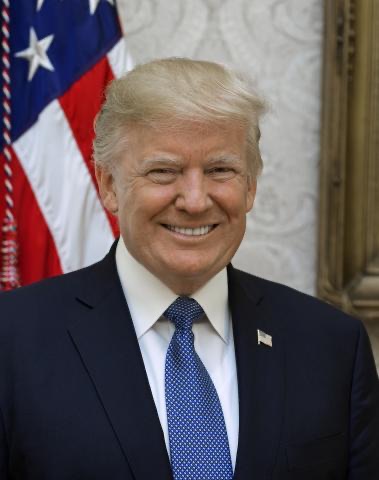
The bilateral launch followed a sustained breakdown in U.S.-Canada relations under the Trump administration. Trump imposed 25% tariffs on most Canadian goods in early 2025, citing trade imbalances and border security. Canada retaliated with tariffs on American goods. Trump repeatedly threatened economic pressure to force Canada into dependency and at times publicly mocked Canada's trade position.
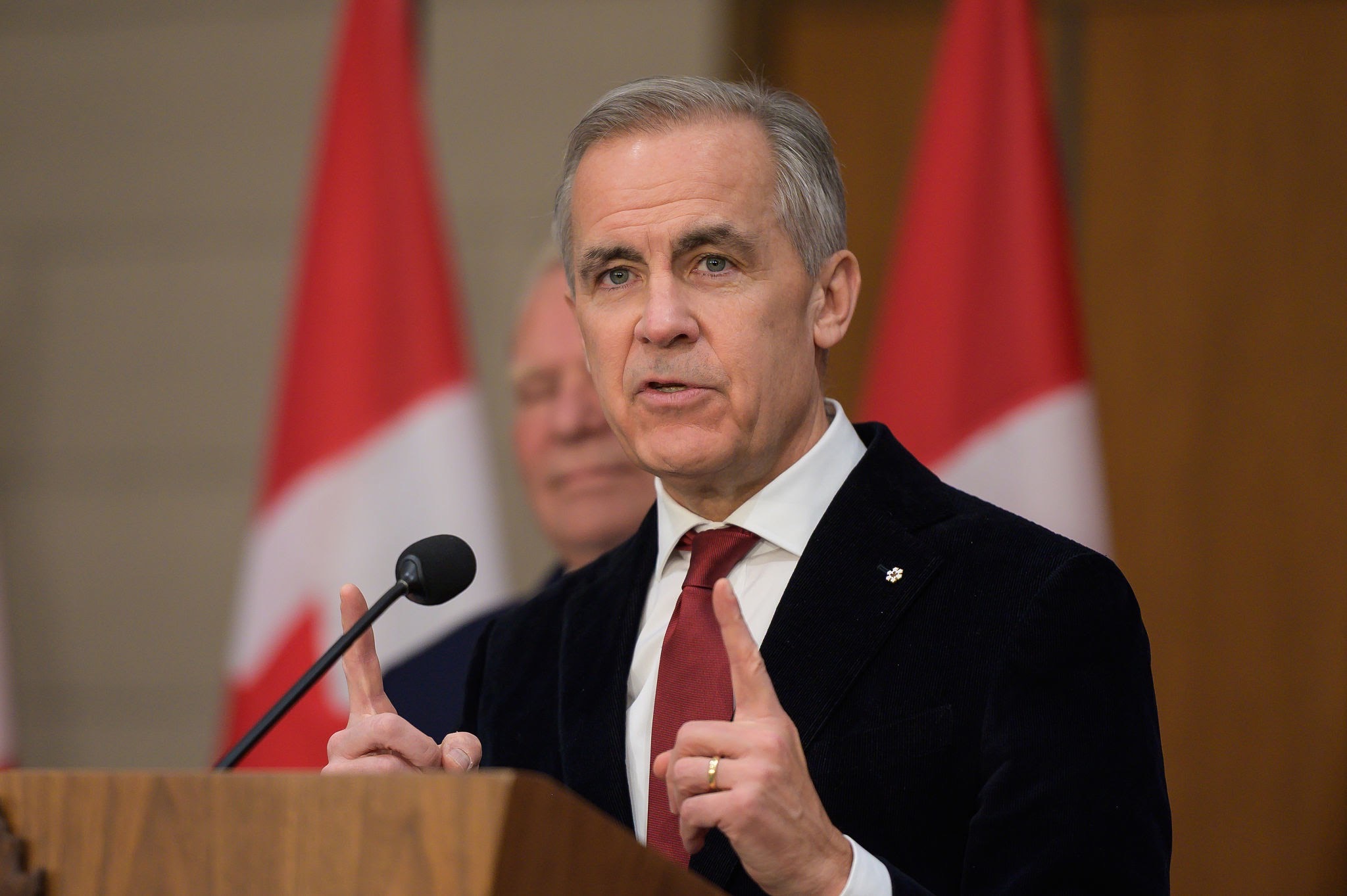
Prime Minister  Mark Carney, who took office in early 2026, pushed back harder than his predecessor Justin Trudeau. Carney and Mexican President Claudia Sheinbaum signed a Canada-Mexico Action Plan for 2025-2028, creating a coordinated strategic partnership to preserve both countries' leverage within a trilateral framework. The plan gave Canada a back-channel into the process even while excluded from the March 8 bilateral launch.
The March 8 talks covered four areas: rules of origin, supply chain security, reducing imports from outside the region, and strengthening U.S.-Mexico economic integration. Rules of origin determine how much of a product must be made in North America to qualify for zero tariffs. The USTR readout said negotiators were told to 'ensure the benefits of the Agreement accrue primarily to the parties,' language signaling tighter restrictions on Chinese-made content.
Chinese manufacturers have increasingly routed goods through Mexico to get USMCA zero-tariff access into the U.S. market, a practice called 'tariff washing.' The Biden administration raised this problem first. The Trump administration has made closing that loophole a top priority, and both the U.S. and Mexico share that interest, which is a key reason Washington pursued bilateral talks rather than waiting for Canada.
The first formal round of bilateral talks was scheduled for March 16, 2026. Under U.S. law, Congress must be notified of the review process, and any revised agreement requires congressional approval. The Congressional Research Service flagged a specific legal question: whether a bilaterally negotiated deal that brings Canada in at the end would meet the legal requirements for a jointly reviewed and approved agreement.
Canada responded by launching its own bilateral talks with Mexico through the Action Plan. Canadian officials asked for a separate Canada-Mexico track on trade and security cooperation, a move to preserve some leverage even while excluded from U.S.-Mexico negotiations. The outcome could be two overlapping bilateral agreements instead of a single trilateral renegotiation, making North American trade governance considerably more complicated.
The review's outcome directly affects prices and supply chains for American farmers, automakers, and manufacturers. USMCA covers $1.8 trillion in annual trade. The auto industry built production lines around North American content rules: a car assembled in Michigan may have parts from Ontario and engine components from Monterrey. Changes to rules of origin can raise costs for manufacturers whose facilities were designed around the trilateral framework.
Canada and Mexico are the two largest export markets for American farm products. Dairy, pork, and grain producers lobbied heavily in the original USMCA negotiation to protect access to those markets. If the review produces bilateral deals that shift tariff schedules without full trilateral input, agricultural exporters won't know whether their market access still holds.
The auto industry and semiconductor sector are where U.S.-Mexico alignment is strongest. Mexican assembly plants now build components for Tesla and Ford under USMCA rules. The U.S. and Mexico share an interest in tighter semiconductor content requirements because both want to redirect supply chains away from Taiwan and South Korea into North America, a nearshoring strategy accelerated since COVID.
Since USMCA took effect in 2020, intra-regional trade in goods and services grew by 37%, driven largely by the automotive sector. Electric vehicles, batteries, and critical minerals have moved to the center of the 2026 discussion, areas that were not prominent during the original negotiation but now carry deep supply chain importance. Mexico is building a semiconductor ecosystem with investment from Intel and others.
Chapter 31 of the USMCA establishes the Rapid Response Labor Mechanism and dispute settlement procedures. Canada negotiated to include it in 2018 specifically to protect the dispute resolution process in a trade review. If Canada believes the bilateral talks violate the agreement's requirement for joint review, Canada can file a formal challenge arguing the review process is invalid.
That proceeding could block any revised agreement from taking effect until Canada is restored to the table. Canada hadn't filed yet as of March 8, but the threat was implicit leverage. Canada's willingness to use the mechanism depends on how far U.S.-Mexico talks advance before Canada is brought into the process.
Steel and aluminum tariffs remain in place on Canadian goods under Section 232 of the Trade Expansion Act of 1962. Trump imposed them in 2018 on 'national security' grounds, a rationale courts have upheld. Even if USMCA negotiations proceed without Canada, those tariffs stay unless Trump waives them.
Canada is negotiating for relief on the tariffs as part of its bilateral track with Mexico, but Mexico got no tariff relief in exchange for cooperating with the U.S., suggesting Canada's leverage is weak. Mexico pays the 25% tariff on some goods and maintains tariff relationships with the U.S. outside of USMCA relief.
USMCA's review clause doesn't specify what happens if the countries can't agree by July 1, 2026. The agreement specifies a six-year continuation period or expiration in 2036, but the mechanics of negotiating extensions aren't spelled out. If the U.S. and Mexico reach a bilateral deal without Canada, Canada could technically refuse to renew or could agree only to the original terms.
Mexico's negotiating position is that it's willing to do either: bilateral with U.S., trilateral if Canada agrees, or a patchwork of overlapping agreements. That flexibility has given Mexico more room to maneuver than Canada, which insists on trilateral talks but has limited tools to force them.
Mexico under President Claudia Sheinbaum faces domestic political pressure from business groups seeking certainty but also public skepticism about U.S. dominance. Sheinbaum, who took office in October 2024, has deeper ties to Mexico's corporate sector than her predecessor but also to left-wing politics opposing American corporate interests.
Her willingness to negotiate bilaterally reflects a calculation that staying aligned with Washington serves Mexico's economic interests in the short run. Mexico ranked 11th globally at $36 billion in foreign direct investment in 2025, reflecting both the potential and the constraints of nearshoring under USMCA. Business groups want certainty on tariff and content rules before committing to new manufacturing investments.
The Center for Strategic and International Studies described the 2026 review as 'a stress test of whether North America can function as a coherent technology and economic-security platform in an era of intensified strategic competition globally.' The Trump administration has signaled it will use the review to seek concessions from Mexico and Canada on migration, drug trafficking, and continental defense, issues beyond the agreement's traditional trade scope.
The administration's leverage comes from controlling access to the U.S. market, the destination for 80% of Canada's exports and roughly 80% of Mexico's exports. That leverage is highest before any revised agreement is locked in.
U.S. Trade Representative
Mexican Secretary of Economy
President of Mexico
Prime Minister of Canada
President of the United States
Former Canadian Minister of International Trade (2021-2025)
Former U.S. Trade Representative (Biden administration, 2021-2025) — historical context
Former Canadian Deputy Prime Minister and Finance Minister
civic action
Contact your congressional representative about USMCA review oversight
Any revised USMCA requires congressional approval. Your representative has a direct role in setting terms for what counts as an acceptable deal, including whether Canada must be a full trilateral partner.
Hi, my name is [name] and I'm a constituent from [city]. I'm calling about the USMCA review process. The U.S. and Mexico launched bilateral trade talks on March 8 without Canada. Congress must approve any revised agreement. I want to know whether Representative [name] will require a full trilateral process including Canada before approving any changes to USMCA. Can you tell me the Representative's position on that?
civic engagement
If you work in agriculture, auto, or manufacturing — tell your trade association where you stand
Sector-specific trade associations have direct lines to USTR and congressional trade committees. Farmers, autoworkers, and manufacturers were the primary constituencies that shaped USMCA's terms in 2019. Their input still matters in 2026.
I work in [sector] and my livelihood depends on North American trade rules. I want to submit a comment on the USMCA review process to make sure USTR considers how changes to rules of origin and tariff structures would affect my industry. Where can I find the public comment docket?