Judicial ReviewConstitutional LawElectionsElectoral Systems
April 22, 2026Virginia voters approve redistricting amendment, Tazewell judge blocks it
Virginia voters approve redistricting, judge blocks it 24 hours later

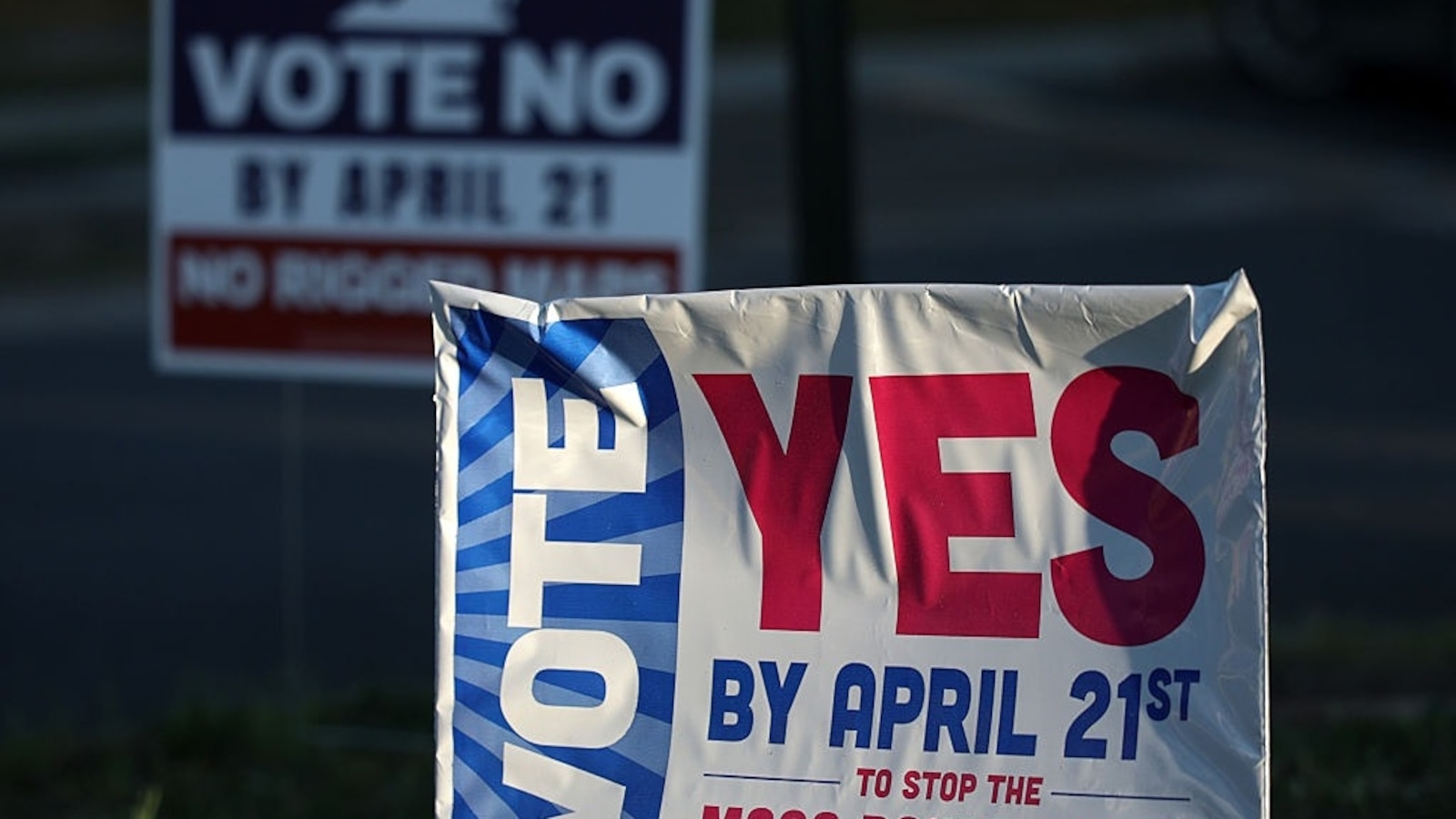
Photo: AP Photo/Julia Demaree Nikhinson
On April 21, 2026, Virginia voters approved a constitutional amendment referendum to allow the General Assembly to directly redraw congressional maps, bypassing the 2020 bipartisan commission. The referendum passed 50.7% to 49.3% with 2.5 million votes cast. This narrow approval gave Democrats, who won statewide in November 2025, the power to redraw maps to their partisan advantage.
On April 22, 2026—just one day after the election—Tazewell County Circuit Court Judge Jack C. Hurley issued a final order declaring the referendum results 'ineffective' and permanently enjoining the State Board of Elections from certifying results. This was Hurley's third ruling against the referendum, having previously blocked it twice before the April 21 election.
Judge Hurley ruled the House bill authorizing the referendum was 'void ab initio' (void from the beginning) based on his interpretation of Virginia's Constitution. He also stated the ballot language was 'flagrantly misleading', suggesting voters did not understand what they were voting on. His ruling raised questions about who determines whether voters understood a referendum.
Virginia Attorney General Jay Jones announced an immediate appeal to the Court of Appeals of Virginia, signaling this fight will continue. The core appellate question: does a trial judge have authority to invalidate a voter-approved constitutional amendment, or must such challenges be decided by higher courts? The appellate court's decision will set precedent for how Virginia handles future conflicts between voter intent, judicial review, and constitutional interpretation.
Timeline
Republican Redistricting and Gerrymandering
Apr 21, 2026
ElectionSignificant
Virginia voters approve redistricting referendum 51.7%; Tazewell judge blocks it within hours
Virginia voters approved the redistricting referendum 51.7% to 48.3% in a special election on April 21, 2026, with roughly 1.6 million voting yes. Within hours of the polls closing, Tazewell County Circuit Court Judge Jack Hurley issued a permanent injunction blocking certification, ruling the amendment void from inception because Democrats had voted to advance it after early voting for the November 2025 election had already begun. Attorney General Jay Jones immediately pledged to appeal.


Apr 22, 2026
Main
Virginia voters approve redistricting amendment, Tazewell judge blocks it
On April 21, 2026, Virginia voters approved a constitutional amendment referendum that would let lawmakers directly redraw congressional maps, bypassing a 2020 bipartisan redistricting commission created to reduce partisan gerrymandering. The measure passed 50.7% to 49.3% out of 2.5 million ballots cast. However, on April 22, 2026—one day after the election—Tazewell County Circuit Court Judge Jack C. Hurley issued a final order declaring all votes "ineffective" and permanently enjoining the State Board of Elections from certifying results. Hurley ruled the House bill authorizing the referendum was "void ab initio" and violated Virginia's Constitution. He also called the ballot language "flagrantly misleading." This was Hurley's third ruling against the proposal. Virginia Attorney General Jay Jones announced an immediate appeal to the Court of Appeals of Virginia. If new maps had taken effect, they would shift the congressional layout from favoring Democrats 6-5 to 10-1, raising questions about which court has final authority over electoral outcomes and whether bipartisan redistricting commissions can be overridden by voter referendum.
Related Topics
2
Virginia court voids redistricting referendum, keeps GOP maps
Virginia court strikes voter-approved map, blocking four Democratic House seats
Virginia voters to decide redistricting referendum April 21 that could flip 4 House seats
Maps drawn by bipartisan commission give Republicans five of eleven seats but could flip four
21 questions
Start the review