530 U.S. 466 (2000) · 2000
Charles C. Apprendi, Jr. v. New Jersey
Landmark
Summary
The Court held that any judge-found fact (other than prior conviction) that increases a sentence beyond the statutory maximum must be submitted to a jury and proven beyond a reasonable doubt.
Background & Context
Shortly after 2 a.m. on December 22, 1994, Charles Apprendi fired several shots into the home of a Black family that had recently moved into his previously all-white neighborhood in Vineland, New Jersey. When police questioned him, Apprendi said he didn't know the family personally, but that because they were Black, he didn't want them in the neighborhood. He later retracted that statement. A grand jury indicted Apprendi on multiple firearms charges, but crucially, none of those charges mentioned New Jersey's hate-crime enhancement law. Apprendi pleaded guilty to a group of those firearms counts — charges that carried a maximum sentence of ten years under normal circumstances. Then something unusual happened: the trial judge held a separate hearing. Using a lower legal standard than "beyond a reasonable doubt" — a standard called preponderance of the evidence — the judge found that the shooting was racially motivated. On the basis of that finding, the judge doubled Apprendi's maximum sentence, imposing twelve years rather than the ten that the jury charges allowed. Apprendi's lawyers argued this was unconstitutional: a judge, not a jury, had found the most damaging fact in the case — the racial motivation that doubled his sentence — and had done so with only a 51 percent certainty instead of proof beyond a reasonable doubt. The New Jersey courts upheld the sentence. The Supreme Court reversed, 5-4. The ruling scrambled the usual left-right alignments: Justice Stevens's majority included both liberal and conservative justices. Thomas joined not just the majority but wrote his own concurrence arguing the principle should reach even further.
The Question Before the Court
Does the Constitution require that any fact — other than a prior conviction — that increases a defendant's sentence beyond the normal maximum be proven to a jury beyond a reasonable doubt, rather than found by a judge at sentencing using a lower standard of proof?
Petitioner
Charles C. Apprendi, Jr.
Party asking the Court to review or reverse
Argued
- A judge doubled Apprendi's sentence based on a fact no jury ever considered
- The Sixth Amendment guarantees the right to have a jury decide facts that increase punishment
- Due process requires proof beyond a reasonable doubt for facts that increase punishment
- The line between 'elements' and 'sentencing factors' shouldn't depend on how legislators label things
Respondent
New Jersey
Party defending the judgment below
Argued
- Judges have always had discretion to consider facts at sentencing
- The hate-crime finding didn't change the crime — only the sentence
- Prior Supreme Court precedents supported judicial fact-finding at sentencing
- Requiring jury findings for all sentence enhancements would create chaos in sentencing law
The Holding
The Supreme Court ruled 5-4 that any fact other than a prior conviction that increases the penalty for a crime beyond the statutory maximum must be submitted to a jury and proved beyond a reasonable doubt. Justice Stevens wrote the majority opinion, joined by Scalia, Souter, Thomas, and Ginsburg. The central principle: the maximum sentence a judge can impose is the highest sentence the jury's verdict alone supports. Anything beyond that requires a jury finding, under the higher standard. The ruling directly invalidated Apprendi's enhanced sentence. But its significance rippled far beyond his case. It forced legislatures and prosecutors to rethink how they structured sentencing enhancement schemes. Justice Thomas concurred, writing separately to argue the principle should reach even further — that many facts courts had treated as mere sentencing factors were constitutionally required to be elements of the offense. Apprendi launched a line of cases that transformed American sentencing law over the following decade.
The Court
How the justices lined up in this decision.
5-4
Vote
Joined decision
1 justice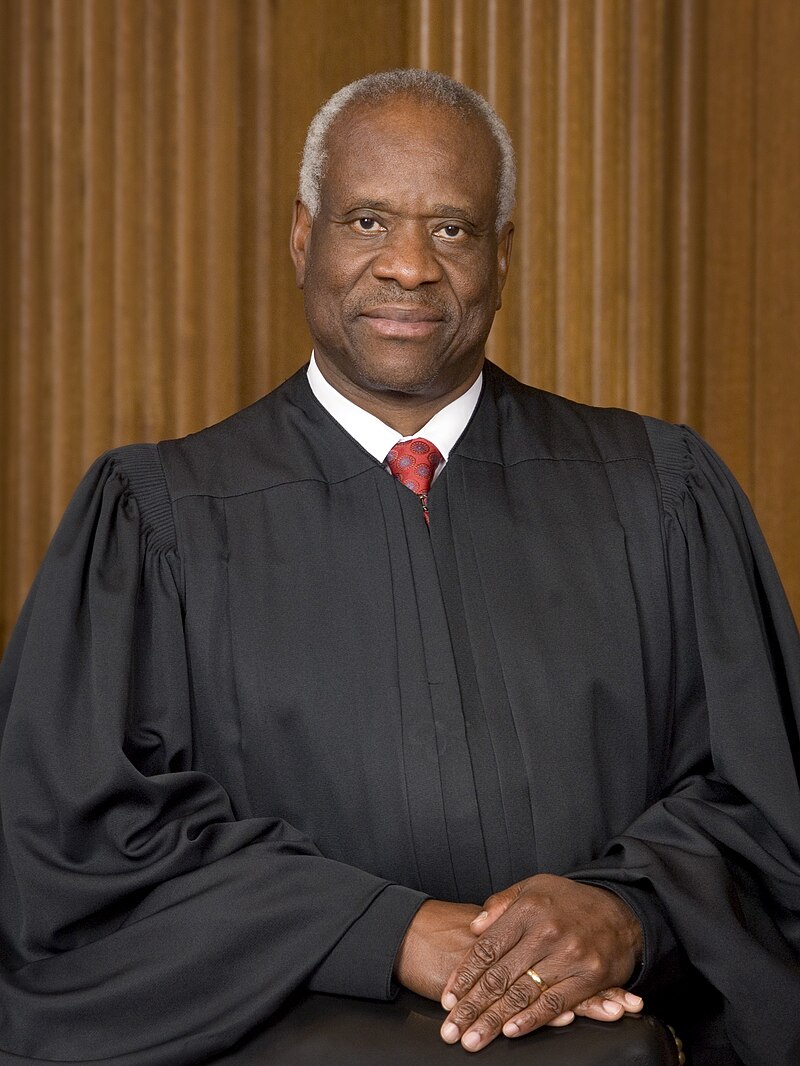
Justice Thomas
Majority
What this means for you
Sentencing-enhancement facts that raise the maximum penalty must be pleaded or decided by a jury beyond a reasonable doubt rather than found solely by a judge, affecting charging decisions, plea bargaining, and sentencing practices for defendants and prosecutors.
Key Takeaways
- If a judge wants to sentence you to more than the maximum the jury's verdict alone would allow, the Constitution requires a jury — not just the judge — to find the facts that justify the higher sentence, and those facts must be proven beyond a reasonable doubt
- This ruling changed how prosecutors charge crimes: they now need to include in the indictment any facts they plan to use to seek a higher sentence
- The decision has shaped American criminal justice ever since — it was the foundation for later rulings that transformed federal sentencing guidelines and death penalty sentencing
- The case involved a racially motivated shooting, but the constitutional principle it established protects every criminal defendant, regardless of the seriousness of the charge
- Justice Thomas's concurrence argued for an even broader rule — that Almendarez-Torres (which allowed prior convictions to be found by judges) was wrongly decided, a position he has maintained for decades
Decision
5-4 decision
- Citation
- 530 U.S. 466 (2000)
- Vote
- 5-4
- Opinion author
- Justice John Paul Stevens