531 U.S. 98 (2000) · 2000
George W. Bush, et al., Petitioners v. Albert Gore, Jr., et al. (Bush v. Gore)
Landmark
Summary
A per curiam Supreme Court decision that stopped Florida's 2000 presidential recount on Equal Protection grounds, effectively deciding the election.
Background & Context
On election night, November 7, 2000, the presidential race between George W. Bush and Al Gore came down to Florida. The state's 25 electoral votes would determine the presidency. When the votes were counted, Bush led by fewer than 600 votes out of nearly 6 million cast. An automatic machine recount narrowed his lead to 300 votes. Florida's election law required a manual recount request in certain circumstances; Gore's campaign made one. Florida's counties used different voting systems. Many used punch-card ballots where voters pushed a stylus through a card to mark their choice. Ballots where the chad — the small square of paper — hadn't been fully punched through created ambiguity: was that a vote? Hanging chads, dimpled chads, pregnant chads. Different counties adopted different standards for determining voter intent. Some counted any indentation; others required a full punch. Some counting teams interpreted the same rule differently from table to table. The Florida Supreme Court, interpreting state law, ordered a statewide manual recount of all ballots that hadn't registered a vote for president. The U.S. Supreme Court agreed to hear the case on an emergency basis. On December 9 — with the recount underway — the Court voted 5-4 to stop it while it considered the case. Three days later, by another 5-4 margin, the Court ruled the recount as ordered was unconstitutional, and said it couldn't be fixed in time. The decision ended the Florida recount. Gore conceded the next day. Bush became the 43rd President of the United States.
The Question Before the Court
Did Florida's manual recount process — where different counties and counting teams applied different standards for determining a voter's intent — violate the Equal Protection Clause of the Fourteenth Amendment by treating identical ballots differently?
Petitioner
George W. Bush, et al., Petitioners
Party asking the Court to review or reverse
Argued
- The recount standards violated equal protection by treating identical ballots differently
- The Florida Supreme Court overstepped its authority by creating new election rules
- No constitutionally valid recount could be completed before the federal safe-harbor deadline
- The certified results should stand
Respondent
Albert Gore, Jr., et al. (Bush v. Gore)
Party defending the judgment below
Argued
- States have broad authority to determine how votes are counted
- The goal of the recount was to determine voter intent — a legitimate state interest
- Even if there were equal protection problems, the remedy should be to fix the standard — not stop counting
- December 12 wasn't a hard constitutional deadline
The Holding
The Supreme Court ruled in two parts. First, by 7-2, it found that conducting a manual recount without uniform standards for determining voter intent violated the Equal Protection Clause — treating voters differently based on which county counted their ballot or which counting team reviewed it. Second, by 5-4, it ruled that no constitutionally valid recount could be completed before Florida's December 12 safe-harbor deadline, so the recount order was reversed without remand. The per curiam opinion carried no single author's name, though Chief Justice Rehnquist, joined by Scalia and Thomas, wrote a separate concurrence that also grounded the decision in Article II. The four dissenters — Stevens, Souter, Ginsburg, and Breyer — split on the equal protection question but united in opposing the remedy. Souter and Breyer agreed there was an equal protection problem but argued the Court should have sent the case back to Florida to establish uniform standards rather than halting the count entirely. Stevens and Ginsburg argued the Florida Supreme Court had legitimately interpreted state law and the federal courts had no business overriding it. The majority itself acknowledged its ruling was limited to "present circumstances" — an unusual disclaimer that critics have since treated as an acknowledgment that the decision's reasoning didn't extend beyond the case itself.
The Court
How the justices lined up in this decision.
5-4 (Court found Equal Protection problems by a 7-2 margin but agreed on the remedy and stopping the recount by a 5-4 margin).
Vote
Joined decision
1 justice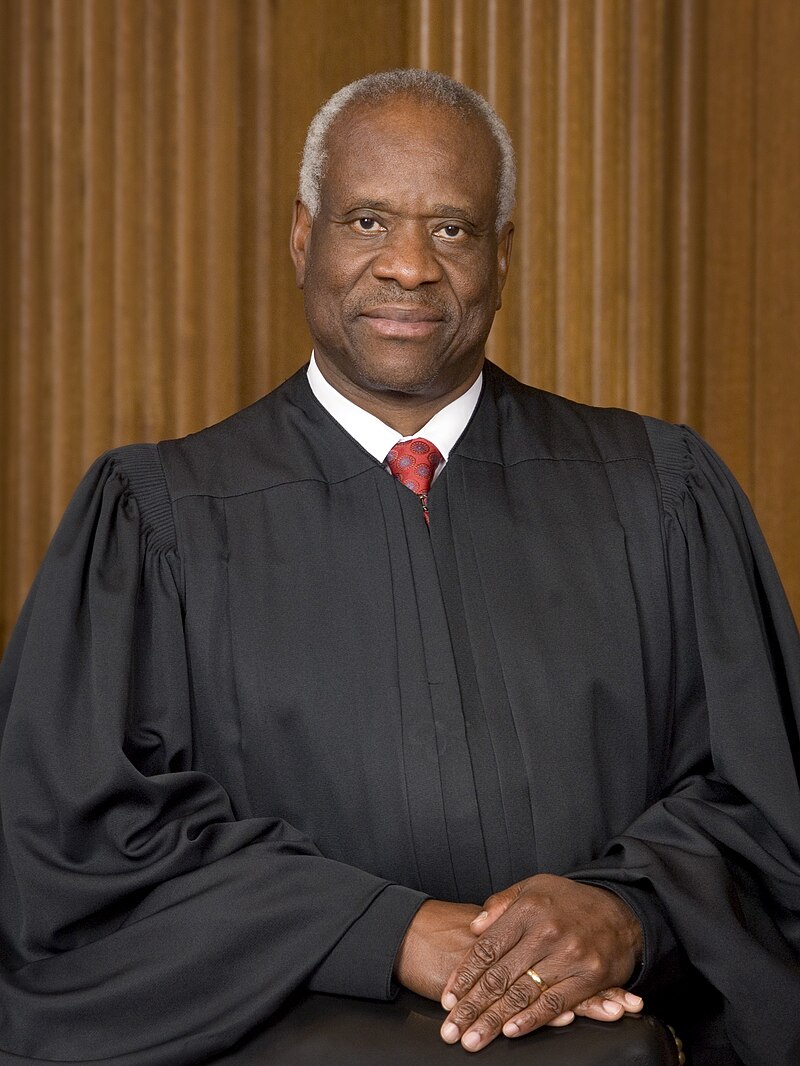
Justice Thomas
Majority
What this means for you
Practically, the decision halted the Florida recount, effectively resolving the 2000 presidential election in favor of George W. Bush; it underscored the need for uniform vote-counting standards, spurred state-level election procedure and technology changes, and intensified public debate about election administration and trust in electoral institutions.
Key Takeaways
- The equal protection problem in this case was that different counties — and different counting tables within counties — were applying different standards to identical ballots. Two voters' identical ambiguous ballots were being treated as votes in one place and non-votes in another.
- Seven justices agreed the lack of uniform recount standards was an equal protection problem. The 5-4 split was specifically on whether to stop the recount entirely or send it back to Florida to fix the standards.
- The Court's own per curiam opinion stated its ruling was limited to "present circumstances" — courts and scholars still debate what precedential weight it carries for future election disputes.
- The decision effectively resolved the 2000 presidential election, making it one of the most consequential and contested decisions in the Court's history — but it addressed a specific procedural flaw, not who 'should' have won.
- The case accelerated election reform: Congress passed the Help America Vote Act in 2002 funding clearer voting equipment and requiring uniform provisional ballot standards
Decision
5-4 (Court found Equal Protection problems by a 7-2 margin but agreed on the remedy and stopping the recount by a 5-4 margin). decision
- Citation
- 531 U.S. 98 (2000)
- Vote
- 5-4 (Court found Equal Protection problems by a 7-2 margin but agreed on the remedy and stopping the recount by a 5-4 margin).
- Opinion author
- Per Curiam (opinion unsigned; drafting has been credited in commentary to Justice Anthony Kennedy).