533 U.S. 27 (2001) · 2001
Kyllo v. United States
Fourth AmendmentPrivacySearch and SeizureTechnologyCriminal ProcedureLandmark
Summary
Kyllo v. United States held that police conducted a Fourth Amendment search when they used a thermal-imaging device from outside a home to detect heat patterns inside. The case protects the home against some technology-enhanced surveillance that reveals details otherwise unknowable without physical entry.
Background & Context
Agents used a thermal imager to scan Kyllo's triplex from outside, then used that information with other evidence to obtain a search warrant. The Ninth Circuit held the scan was not a search; the Supreme Court reversed.
The Question Before the Court
Does using a thermal-imaging device from outside a home to detect heat patterns inside the home count as a Fourth Amendment search?
Petitioner
Danny Lee Kyllo
Party asking the Court to review or reverse
Argued
- Kyllo argued that the government used technology to learn details about the interior of his home that it could not lawfully learn without entering.
- He argued that officers should not be able to avoid the Fourth Amendment by using devices that reveal information ordinary observation cannot reveal.
Respondent
United States
Party defending the judgment below
Argued
- The United States argued that the device detected heat escaping from exterior surfaces and did not expose intimate details inside the home.
- The government argued that Kyllo had no reasonable expectation of privacy in heat patterns emitted to the outside world.
The Holding
When the government uses sense-enhancing technology not in general public use to obtain information about the interior of a home that could not otherwise be learned without physical intrusion, that surveillance is a Fourth Amendment search. The thermal scan of Kyllo's home therefore required Fourth Amendment justification.
The Court
How the justices lined up in this decision.
1-0
Vote
Joined decision
6 justicesAS
Antonin Scalia
Majority
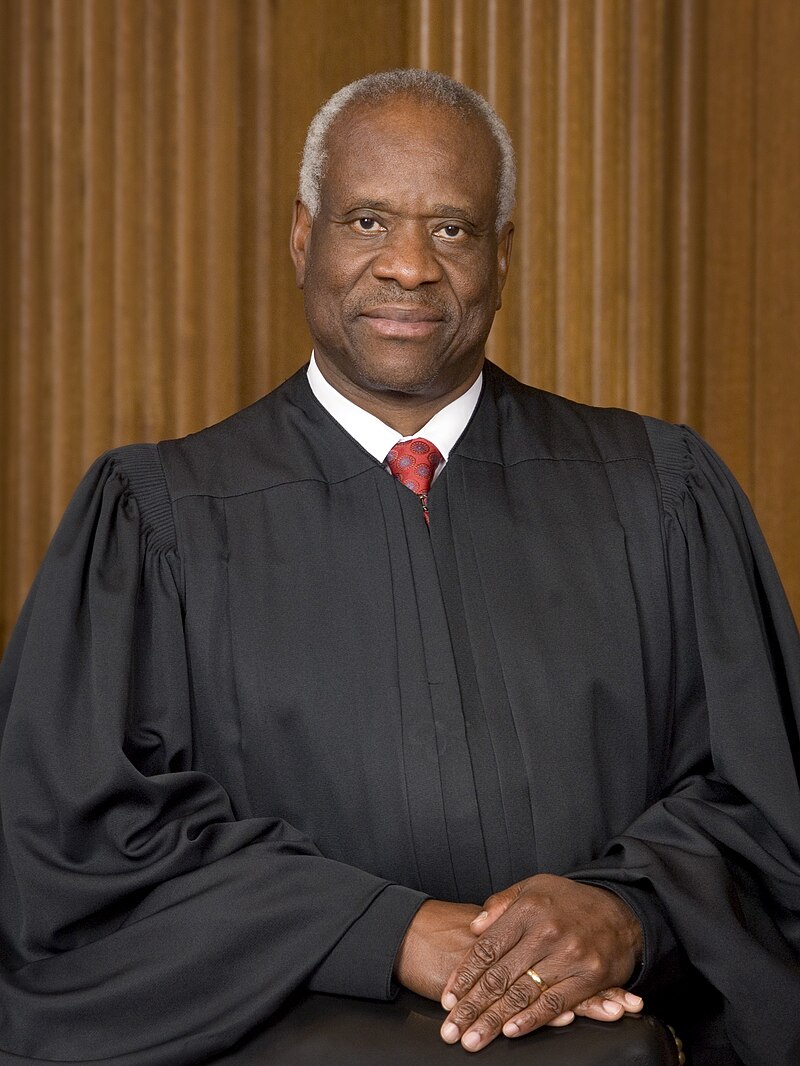
Justice Thomas
Majority
CT
Clarence Thomas
Majority
DH
David Souter
Majority
RB
Ruth Ginsburg
Majority
SG
Stephen Breyer
Majority
Dissented
4 justicesAM
Anthony Kennedy
Dissent
JP
John Stevens
Dissent
SD
Sandra O'Connor
Dissent
WH
William Rehnquist
Dissent
What this means for you
Kyllo is a core technology-and-privacy case. It protects the home against government efforts to use new tools to learn interior details from outside, and it warns that Fourth Amendment protection cannot shrink just because surveillance technology improves.
Key Takeaways
- The home receives the Fourth Amendment's strongest protection.
- Thermal imaging from a public street still counted as a search because it revealed information about the home's interior.
- The rule applies to sense-enhancing technology not in general public use.
- The Court did not hold that every use of external technology is a search; the home and the nature of the information mattered.
- The case was remanded for further proceedings on the warrant and evidence after the scan was treated as a search.
Decision
1-0 majority opinion
- Citation
- 533 U.S. 27 (2001)
- Vote
- 1-0
- Decision type
- Majority opinion
- Argued
- February 20, 2001
- Decided
- June 11, 2001
- Term
- 2000
- Opinion author
- Antonin Scalia
Justice Scalia wrote for a five-justice majority joined by Justices Souter, Thomas, Ginsburg, and Breyer. Justice Stevens dissented, joined by Chief Justice Rehnquist and Justices O'Connor and Kennedy.