542 U.S. 466 (2004) · 2004
Shafiq Rasul, et al. v. George W. Bush, President of the United States, et al.
Landmark
Summary
The Court ruled that federal courts may hear habeas corpus petitions from foreign nationals detained at Guantánamo Bay.
Background & Context
Shafiq Rasul was a British citizen who was captured in Afghanistan in late 2001, turned over to U.S. forces by Pakistani bounty hunters, and transferred to the U.S. Naval Station at Guantanamo Bay, Cuba. He was held there without charges, without access to counsel, and without any judicial process. Mamdouh Habib (Australian) and two other British citizens — Asif Iqbal and Ruhal Ahmed — were held under similar circumstances. Their families and lawyers filed habeas corpus petitions in U.S. federal court in the District of Columbia, seeking a court order requiring the government to explain the legal basis for their detention. The government's position was categorical: Guantanamo Bay was not U.S. sovereign territory, and therefore federal courts had no jurisdiction to hear habeas petitions from detainees there. The government relied on Johnson v. Eisentrager (1950), in which the Supreme Court had held that German nationals tried by a U.S. military commission in China and imprisoned in Germany had no right to file habeas corpus petitions in U.S. courts. The lower courts agreed with the government and dismissed the petitions. The case reached the Supreme Court alongside Hamdi v. Rumsfeld, decided the same day. The central question was whether federal courts had any power to review the legality of detentions at Guantanamo — a location the U.S. had controlled since 1903 under a lease from Cuba but had never formally annexed. The answer would determine whether Guantanamo functioned as a legal black hole for the executive branch.
The Question Before the Court
Do federal courts have jurisdiction to hear habeas corpus petitions from foreign nationals detained at Guantanamo Bay, Cuba?
Petitioner
Shafiq Rasul, et al.
Party asking the Court to review or reverse
Argued
- The federal habeas statute applies to any detention under U.S. authority
- Guantanamo is functionally U.S. territory for legal purposes
- Eisentrager is distinguishable on its facts
Respondent
George W. Bush, President of the United States, et al.
Party defending the judgment below
Argued
- Guantanamo is not U.S. sovereign territory
- Federal courts lack jurisdiction over extraterritorial detentions
- The political branches, not courts, should govern wartime detention
The Holding
The Supreme Court ruled 6-3 that federal courts have jurisdiction under the federal habeas statute (28 U.S.C. § 2241) to hear petitions from foreign nationals detained at Guantanamo Bay. Justice Stevens wrote the majority opinion. The Court distinguished Eisentrager on its facts, noting that the petitioners in this case were not nationals of countries at war with the U.S., had not been afforded any form of tribunal or hearing, denied any connection to terrorist activity, and were held in a location over which the U.S. exercised exclusive control. The ruling did not decide whether the detentions were lawful — it only held that federal courts had the power to examine that question. The decision effectively ended the government's effort to use Guantanamo as a jurisdiction-free detention facility. Congress responded by passing the Detainee Treatment Act (2005) and the Military Commissions Act (2006), which attempted to strip courts of jurisdiction — setting off years of additional Supreme Court litigation.
The Court
How the justices lined up in this decision.
6-3
Vote
Dissented
1 justice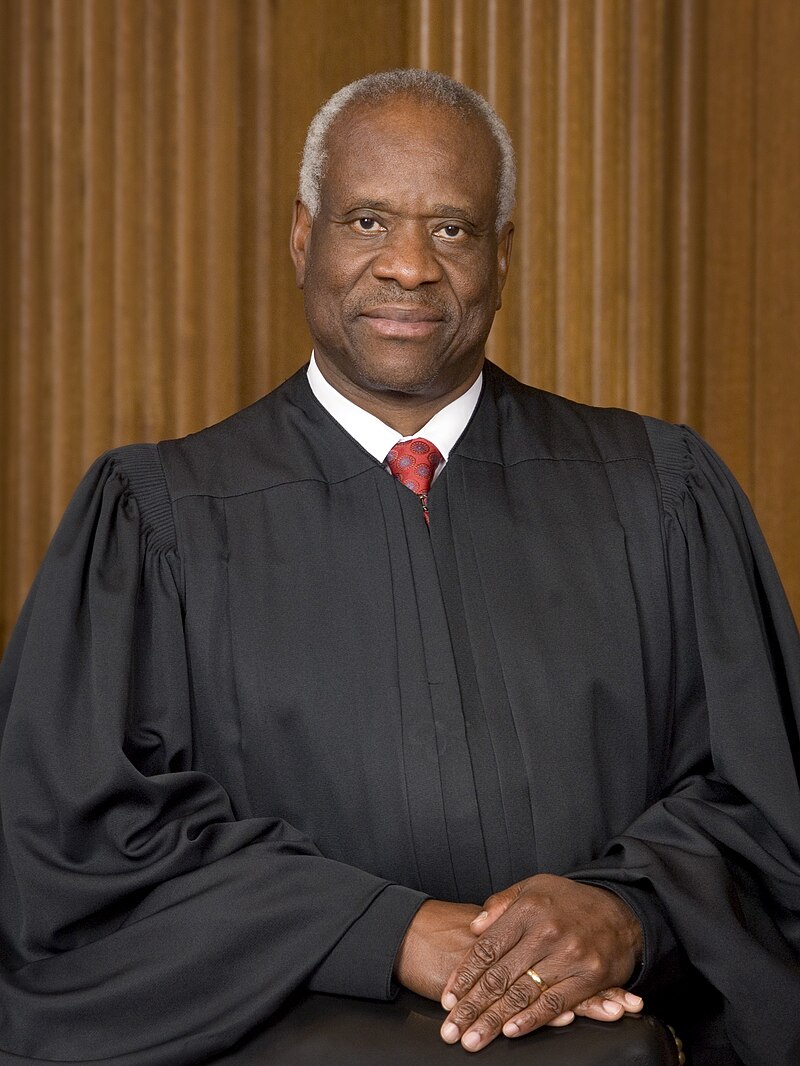
Justice Thomas
Dissent
What this means for you
Opened the door for Guantánamo detainees to petition U.S. federal courts for habeas review, forcing the Executive Branch to justify detentions in court, prompting further litigation and legislative responses about detainee process and review.
Key Takeaways
- Federal courts have jurisdiction to hear habeas petitions from Guantanamo Bay detainees
- The 6-3 majority distinguished the 1950 Eisentrager precedent on its facts
- The ruling did not decide whether detentions were lawful — only that courts could examine the question
- Congress responded with laws trying to strip court jurisdiction, leading to Boumediene v. Bush (2008)
- Scalia, Rehnquist, and Thomas dissented, arguing the majority was setting a dangerous precedent for wartime operations
Decision
6-3 decision
- Citation
- 542 U.S. 466 (2004)
- Vote
- 6-3
- Opinion author
- Justice John Paul Stevens