Summary
The Supreme Court struck down the VAWA federal civil remedy for gender-motivated violence as beyond Congress's Commerce Clause and §5 powers.
Background & Context
In the fall of 1994, Christy Brzonkala was a freshman at Virginia Tech. Within thirty minutes of meeting football players Antonio Morrison and James Crawford, she says both men raped her in a dormitory room. She told Morrison no twice. He didn't stop. In the months that followed, Brzonkala became depressed, stopped attending classes, cut off her hair, and eventually attempted suicide. Morrison later announced in the dormitory dining hall that he "liked to get girls drunk and fuck the shit out of them." Virginia Tech held a disciplinary hearing. Morrison admitted to sexual contact despite her objections. The school suspended him for two semesters — then reversed the suspension on procedural grounds. A grand jury in Richmond declined to indict. Brzonkala had nowhere left to turn under state law. So she turned to a federal law Congress had passed that same year: the Violence Against Women Act, which created a federal civil lawsuit option for victims of gender-motivated violence. She sued Morrison and Crawford in federal court under that provision — 42 U.S.C. §13981. The case became a direct test of how far Congress could reach. Congress had held extensive hearings documenting how states systematically failed to prosecute gender-motivated violence and how that failure affected women's participation in the national economy. The question was whether that documented pattern was enough to justify a federal remedy — or whether the Constitution limited Congress to leaving these cases to the states.
The Question Before the Court
Did Congress have constitutional authority to create a federal civil lawsuit for victims of gender-motivated violence — either under its power to regulate interstate commerce or its power to enforce the Fourteenth Amendment's guarantee of equal protection?
Petitioner
United States
Party asking the Court to review or reverse
Argued
- Gender-motivated violence substantially affects interstate commerce in the aggregate
- Congress documented systematic state failures to prosecute gender-motivated violence
- VAWA targeted a specific class of motivated violence, not all crime
- Women's right to be free from gender-motivated violence is a Fourteenth Amendment concern
Respondent
Morrison
Party defending the judgment below
Argued
- Gender-motivated violence is not economic activity subject to Commerce Clause regulation
- The Fourteenth Amendment requires state action — it doesn't cover private violence between individuals
- States, not the federal government, are responsible for policing violent crime
- The violence in this case was local; any remedy should come from state law
The Holding
The Supreme Court ruled 5-4 to strike down §13981 of the Violence Against Women Act, the provision creating a federal civil lawsuit for gender-motivated violence. Chief Justice Rehnquist wrote for the majority. On the Commerce Clause question, the Court applied the framework from United States v. Lopez and held that gender-motivated violence is noneconomic activity that Congress cannot regulate merely by citing its aggregate effects on commerce. On the Fourteenth Amendment question, the Court held that Section 5's enforcement power reaches only state action — not private conduct between individuals — and that §13981 was directed entirely at private actors. Christy Brzonkala lost her federal lawsuit. Her case left an imprint on constitutional law that Congress has never been able to fully reverse through ordinary legislation. Justice Thomas concurred with the majority in full and wrote separately to press his view that the Court's "substantial effects" test under the Commerce Clause was inconsistent with the original meaning of the Commerce Clause — a position he had articulated in Lopez and would continue to develop.
The Court
How the justices lined up in this decision.
5-4
Vote
Joined decision
1 justice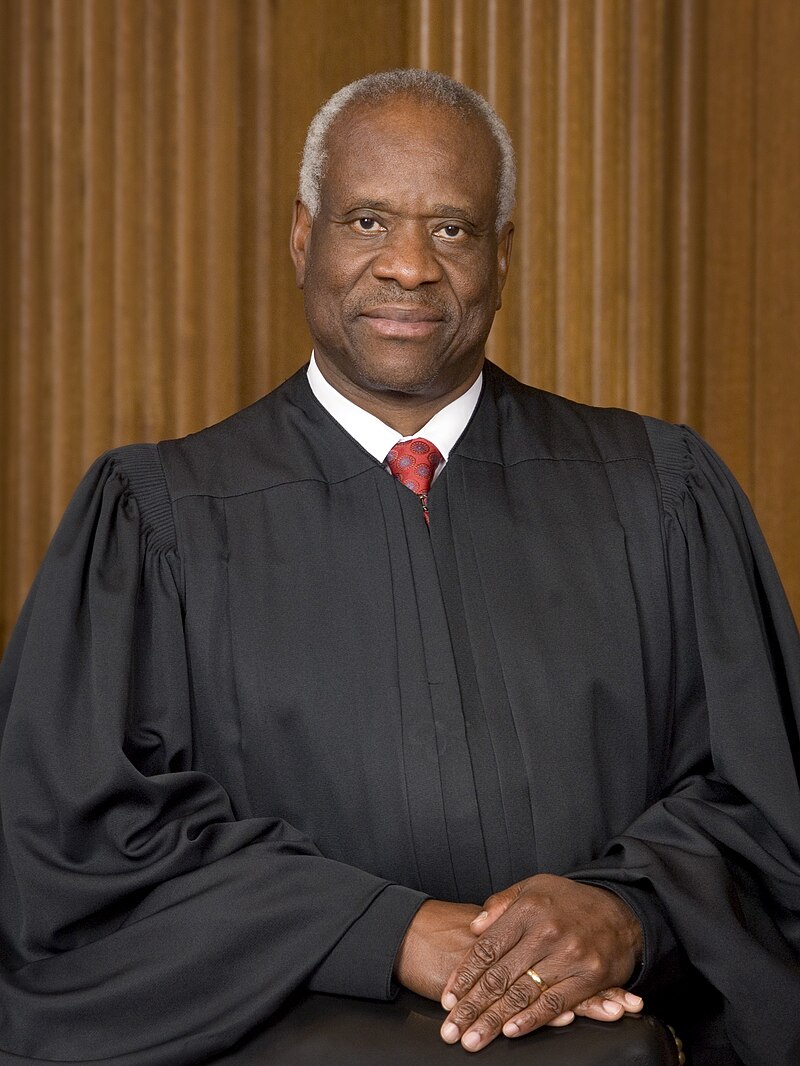
Justice Thomas
Majority
What this means for you
The decision limited Congress's ability to create federal civil remedies for primarily local, noneconomic violent conduct and constrained federal intervention under the Commerce Clause and §5 of the Fourteenth Amendment; victims of gender-motivated violence may not rely on the struck-down federal private-right-of-action and must generally seek remedies through state law or other federal statutes that fit within enumerated powers.
Key Takeaways
- Congress can't regulate a noneconomic activity — like a violent assault — just by citing its claimed effects on the national economy. The Commerce Clause has real limits on what Congress can reach.
- The Fourteenth Amendment's enforcement power (Section 5) only reaches state action — discrimination by governments. It doesn't give Congress power to create federal lawsuits against private individuals for private conduct.
- The Violence Against Women Act's criminal provisions, and later amendments, remained intact — only the private civil lawsuit provision in §13981 was struck down.
- Christy Brzonkala's experience — and her access to a federal remedy — became a casualty of a constitutional argument about federalism. Her story illustrates the real-world consequences of abstract legal limits on congressional power.
- This decision, along with Lopez, defines where federal regulatory power ends and state authority begins — a line courts continue to apply in cases involving federal criminal laws, environmental regulations, and civil rights statutes
Decision
5-4 decision
- Citation
- 529 U.S. 598 (2000)
- Vote
- 5-4
- Opinion author
- William Rehnquist