Public Policy · Government · Legislative Process·March 15, 2025
Executive order targets Education Department as Congress holds sole authority
Dismantling Education Department would transform how schools get funded

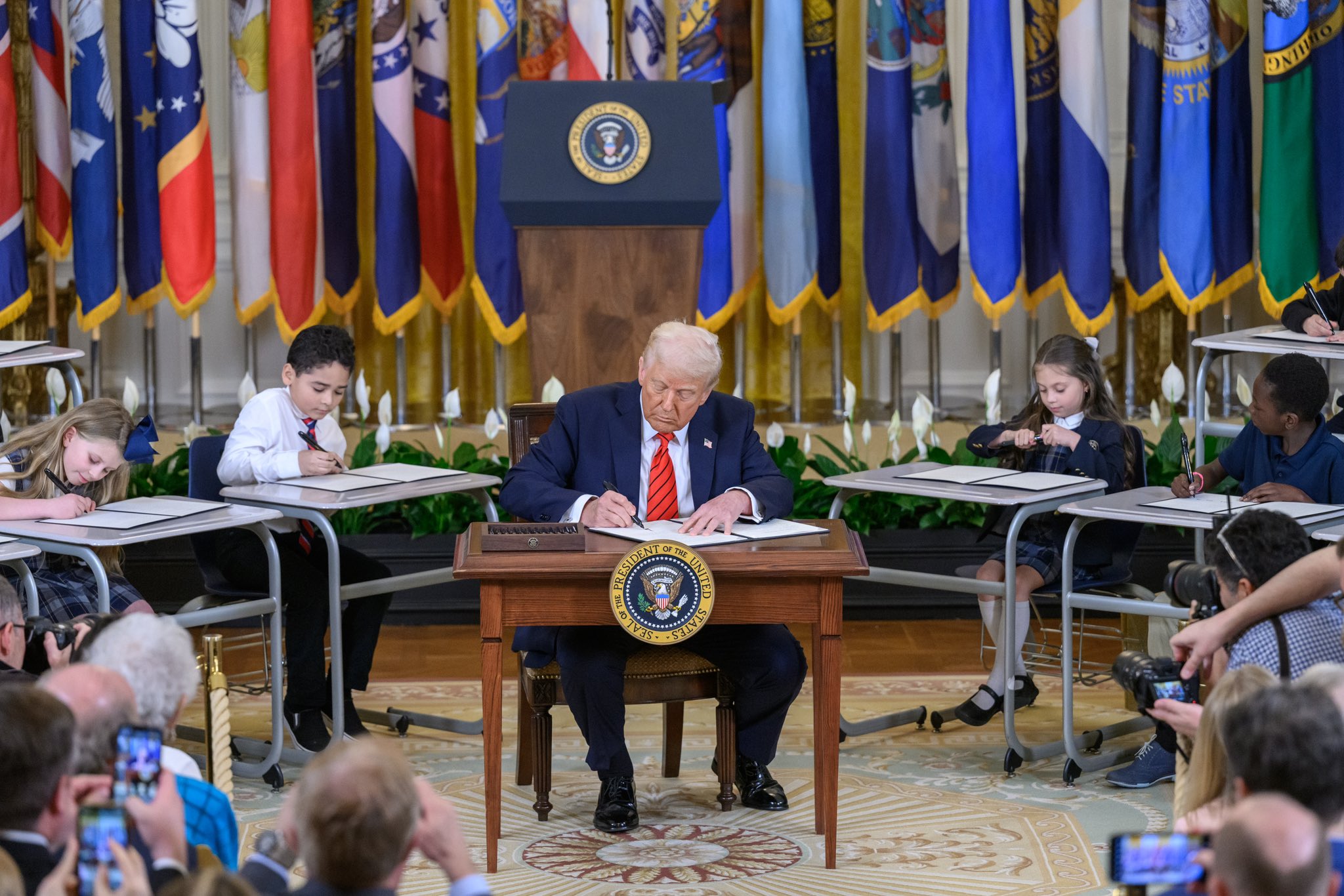
President Trump signed 14242 on March 20, 2025, directing Education Secretary Linda McMahon to begin facilitating the closure of the Department of Education, which Congress established through the Department of Education Organization Act (P.L. 96-88) in 1979.
Trump's Education Department announced mass layoffs on March 11, 2025 — nine days before the executive order — cutting roughly 2,000 of the department's 4,133 employees, including Federal Student Aid staff managing $1.7 trillion in student loans.
The order requires congressional approval to fully eliminate the department, needing 60 Senate votes to overcome filibusters, making complete abolition unlikely despite Republican control.
for low-income schools ($18 billion annually) and Pell Grants remain protected while 18 smaller programs face consolidation into a $2 billion , cutting specialized funding by 60%.
ICE enforcement returned to schools after the order eliminated sensitive locations policies requiring headquarters approval, forcing educators to choose between protecting students and avoiding federal charges.
The executive order ended the Department of Education Organization Act's statutory requirements while claiming the federal education experiment 'plainly failed' despite constitutional education powers belonging to states.
National Assessment of Educational Progress data cited in the order showed 70% of 8th graders below proficient in reading and 72% below proficient in math, though experts note these scores predate current federal policies.
Related Topics
6
McMahon ordered to dismantle Education Department despite lacking statutory authority
Trump eliminates Education Department, slashes NIH by $18B, kills AmeriCorps
OMB cuts Education budget as Senate delays McMahon confirmation
Education Department closure shifts federal school funding to states

Trump and McMahon advance Department of Education shutdown
Executive order and mass layoffs cut DOE workforce in half while states sue
Education Department bans 'critical race theory' and discussions on systemic racism in federal guidance
Schools face funding loss over critical race theory and LGBTQ content

Trump moves Education Department offices to other agencies without Congressional approval
Administration transfers education programs to other agencies, bypassing Congress that created them in 1979

Education Department consolidates 18 Title I programs eliminating $4.5 billion
Trump administration consolidates 18 K-12 programs, slashing $4.5B in afterschool, rural school, and literacy grants—Linda McMahon's Education Department redirects federal funds to block grants while Russell Vought's OMB withholds releases
13 questions
Start the review