Public HealthGovernmentEconomy
January 1, 2026Enhanced ACA premium tax credits expire, millions face cost hikes
9 million enrollees face doubled premiums as congressional gridlock ends enhanced subsidies

A bipartisan Senate working group, led by Sen. Bernie Moreno (R-OH), is negotiating a compromise bill expected as early as Jan. 13, 2026
Potential reforms include minimum premium payments (eliminating zero-dollar plans) or Hyde Amendment restrictions prohibiting federally subsidized plans from covering abortion services
Democrats have historically rejected Hyde-style abortion restrictions as non-starters Whether a compromise can pass both chambers and reach President Trump's desk remains uncertain.
House Minority Leader Hakeem Jeffries filed a discharge petition in late Dec. 2025 to force a floor vote over Speaker Mike Johnson's objections Four moderate Republicans—Reps. Don Bacon, Mike Lawler, Young Kim, and David Valadao—signed the petition, joining all 214 Democrats to reach the 218-signature threshold The procedural vote passed Jan. 7, 2026, by 221-205, with nine Republicans voting yes The final passage vote Jan. 8 saw 17 Republicans support it.
The Congressional Budget Office estimated Jan. 8 that a three-year extension would cost $80.6 billion over ten years, increasing the federal deficit
Without the enhanced subsidies, CBO projects 3.7 million fewer people will have ACA coverage in 2026
The enhanced subsidies cost roughly $50 billion in FY 2025 CBO also warned that premium hikes could destabilize insurance markets as healthier enrollees drop coverage, leaving sicker, more expensive enrollees in the pool.
The Senate rejected two proposals to extend enhanced subsidies on Dec. 11, 2025
The Democratic three-year extension and a Republican one-year extension with reforms both failed 51-48 (60 votes required to advance)
Four Republicans—Sens Susan Collins (ME), Lisa Murkowski (AK), Dan Sullivan (AK), and Josh Hawley (MO)—voted yes on the Democratic version Senate Majority Leader John Thune said Jan. 8 there's 'no appetite' for a clean extension in the Senate.
Insurers and patient advocates warn that the expiration destabilizes ACA marketplaces
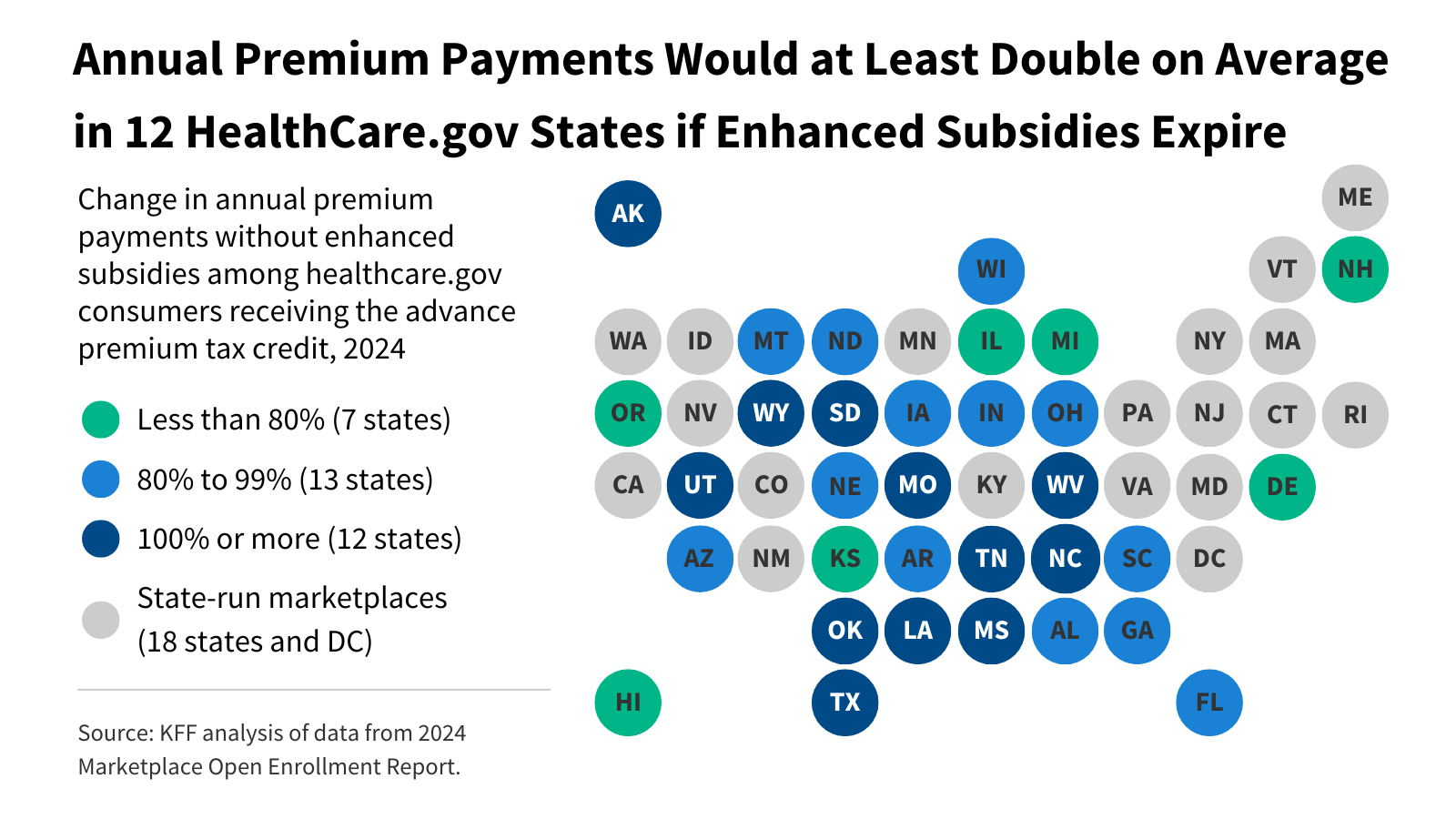
Monthly premiums jumped by an average of 150-200% for enrollees earning over 400% of the federal poverty level (roughly $60,240 for individuals in 2025)
A Vermont farmer quoted by NPR saw premiums jump from $900 to $3,200 per month Roughly 9 million people earning over 400% FPL relied on the enhanced subsidies to afford coverage Without action, CBO projects 3.7 million will drop coverage in 2026.
Related Topics
5
American Rescue Plan cuts ACA premiums for 12 million enrollees
Biden law cut premiums $50 monthly and enrolled 1.7 million uninsured

Senate rejects healthcare plans as ACA subsidies expire
22 million marketplace enrollees face premium hikes without subsidies
17 House Republicans break with Trump on ACA subsidies vote
House passes 3-year extension despite Trump opposition and Senate resistance
Inflation Reduction Act extends enhanced Obamacare subsidies through 2025
Expiring subsidies threaten coverage for 13 million ACA enrollees in 2026
ACA subsidies expire after Senate fails to act on shutdown deal
Congress punts healthcare fight until after deadline, leaving millions facing premium spikes
20 questions
Start the review