Energy · Environment · Public Policy · Legislative Process·April 16, 2026
Senate votes to repeal Boundary Waters mining ban after Collins and Tillis oppose
Collins and Tillis voted No on motion to proceed and final passage vote is pending
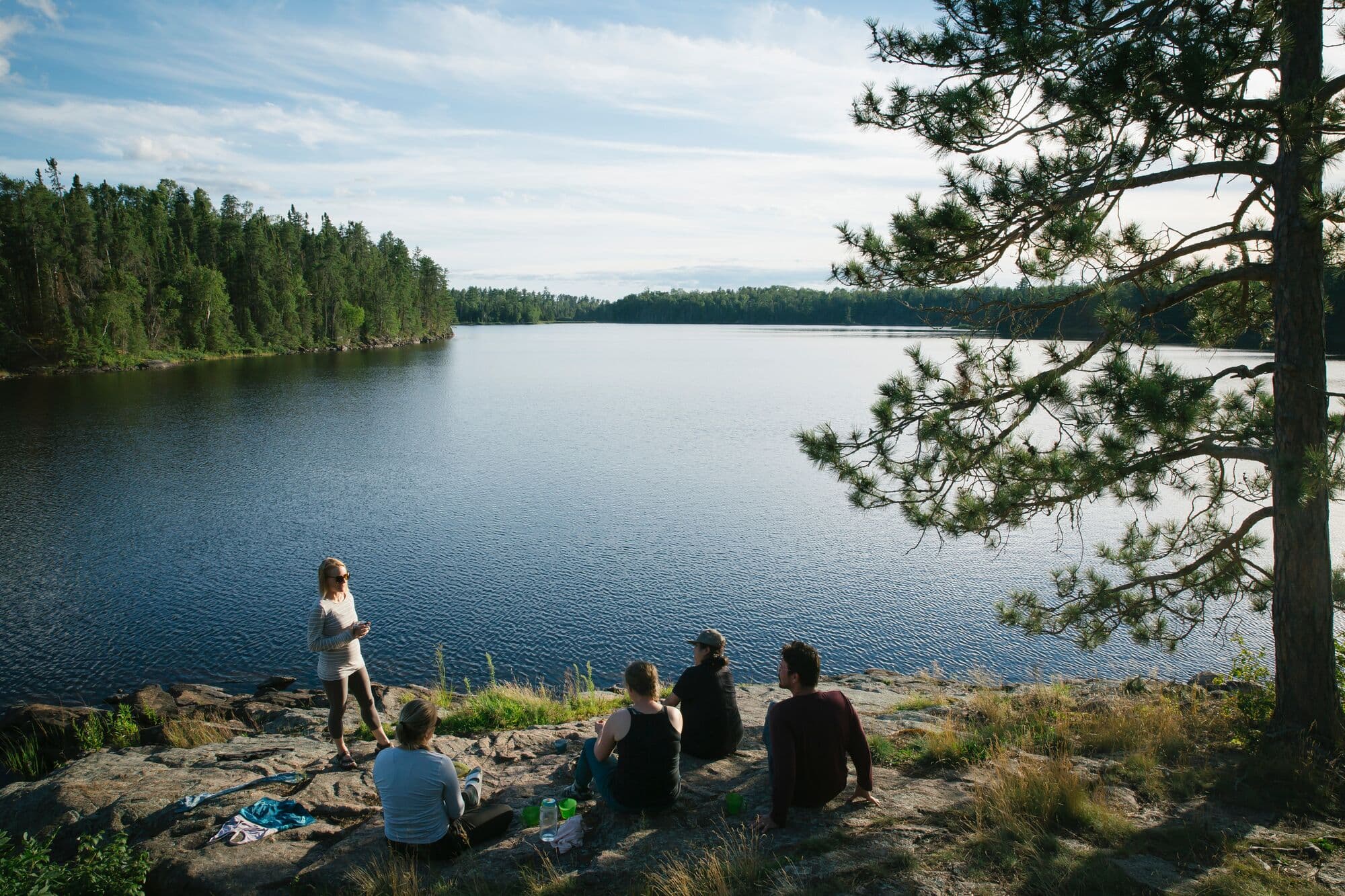
H.J.Res.140 is a resolution introduced by Rep. Pete Stauber (R-MN-8) on January 12, 2026. It targets Public Land Order 7917, the Biden administration's January 31, 2023 executive withdrawal of 225,504 acres of Superior National Forest land from mineral and geothermal leasing for 20 years Congressional Research Service. The House passed it 214-208 on January 21, 2026.
If signed into law, H.J.Res.140 reopens the 225,504-acre Boundary Waters buffer zone to mineral and geothermal leasing. The CRA's permanent-bar feature prevents any future administration from reinstating a similar mining ban through executive action alone. A future administration would need Congress to pass new legislation, a far higher bar than the executive order used to create the original protection.
The Boundary Waters Canoe Area Wilderness (BWCAW) is a 1.1-million-acre federal wilderness area in northeastern Minnesota, straddling the Canadian border. It's the most visited wilderness area in the United States, drawing approximately 150,000 to 165,000 visitors annually MPR News. The area supports a multi-billion-dollar regional tourism and recreation economy.
If the CRA resolution is signed, no future president can protect the Boundary Waters watershed through executive withdrawal. Restoring those protections would require passing new legislation through Congress.
The Congressional Review Act (5 U.S.C. § 801) is a 1996 law allowing Congress to nullify federal agency rules within 60 legislative days of submission Congressional Research Service. A disapproval resolution requires only a simple majority in each chamber and, if signed by the president, repeals the rule. The law was used only once in its first 20 years but became a frequent tool during the first Trump administration (2017-2021) E&E News.
Once a rule is disapproved under the CRA, the agency is permanently barred from issuing a substantially similar rule without new legislation from Congress. For H.J.Res.140, that means the Interior Department and all future administrations would be locked out of protecting the same 225,504 acres through executive action.
On April 15, 2026, the Senate held two consecutive procedural votes on H.J.Res.140. First, at 8:00 p.m. EDT, the Senate voted 51-48 to table a Democratic point of order challenging whether the CRA applies to mineral withdrawals (Roll Call Vote 82) CBS News Minnesota. All 47 Democrats and Susan Collins (R-ME) voted against tabling. Thom Tillis (R-NC) did not vote. Twenty-one minutes later, the Senate voted 51-49 on the Motion to Proceed to H.J.Res.140 (Roll Call Vote 83), formally putting the resolution on the floor for consideration. Collins and Tillis both voted NAY on the motion to proceed. As of April 16, 2026, final passage had not been confirmed and the mining ban protecting 225,504 acres of Superior National Forest remains in effect CNBC.
Collins has a long record of protecting wilderness areas and environmental regulations. Tillis announced public opposition in March 2026 citing concerns about the CRA's permanent-bar feature.
The primary beneficiary of H.J.Res.140 is Twin Metals Minnesota, a subsidiary of Antofagasta PLC, a Chilean multinational mining corporation. Twin Metals holds mineral leases in the Superior National Forest near the Boundary Waters and has spent decades pursuing permits for a large sulfide-ore copper mine Earthjustice. The Biden administration cancelled those leases in 2023 through Public Land Order 7917.
H.J.Res.140 passage reopens the 225,504-acre buffer zone to mineral leasing and removes the main regulatory obstacle to the mine's development. Environmental groups have documented risks of acid mine drainage from sulfide-ore copper mining, a problem that can contaminate groundwater for decades.
A legal dispute at the center of the vote is whether Public Land Orders constitute rules under the Congressional Review Act. The CRA was designed to apply to agency regulations. Sen. Tina Smith argued on the Senate floor that PLOs are land management decisions, not rules subject to CRA review, and called it the first time Congress had ever applied the CRA to a Public Land Order Western Priorities. The Senate Parliamentarian nonetheless ruled that Public Land Order 7917 qualifies as a reviewable rule.
Litigation is expected after Trump signs the resolution. Environmental groups could challenge whether the CRA's permanent bar actually applies to land withdrawals. The outcome could determine whether Congress can use the CRA to nullify other executive land management actions.
Rep. Stauber framed the vote as restoring economic opportunity to Minnesota's Iron Range, a region historically dependent on mining. Twin Metals claims the project would create hundreds of jobs in construction, mining, and related industries E&E News. The Trump administration has promoted domestic mining expansion as part of a strategy to reduce reliance on foreign mineral imports, citing copper's role in electric vehicles, renewable energy infrastructure, and defense systems.
Antofagasta, Twin Metals' Chilean parent company, has secured agreements with Chinese state-owned copper smelters to process ore concentrates mined in Minnesota.
A peer-reviewed Harvard University study found the outdoor recreation economy around the BWCAW would support 1,500 to 4,600 more jobs and $100 to $900 million more in income over 20 years than mining Save the Boundary Waters via CNBC. Sens. Amy Klobuchar and Tina Smith called the vote permanent, irreversible damage to one of the country's most visited natural areas CBS News Minnesota.
No sulfide-ore mine in the United States has operated without polluting surrounding waters. Once a watershed is contaminated, the tourism economy and wilderness value are effectively gone.
20 questions
Start the review