National Security · Public Policy · Constitutional Law · Government·June 17, 2025
Massie and Khanna introduce war powers resolution to block Iran conflict
Unusual bipartisan alliance attempts to block presidential war without approval

On June 17, 2025, Republican Thomas Massie and Democrat Ro Khanna introduced a bipartisan war powers resolution to prevent Trump from involving the U.S. in the Israel-Iran conflict without congressional approval. This unusual alliance between a libertarian Republican and progressive Democrat reflects growing concern about presidential war powers.
Key facts
On June 17, 2025, Representatives Thomas Massie (R-KY) and Ro Khanna (D-CA) introduced H.Con.Res.38, a bipartisan war powers resolution directing President Trump to withdraw U.S. forces from unauthorized hostilities against Iran.
The resolution invokes Section 5(c) of the War Powers Resolution of 1973 (50 U.S.C. 1544), which requires the President to withdraw forces unless Congress authorizes continued military action within 60-90 days.
The Constitution grants Congress the sole power to declare war under Article I, Section 8, Clause 11, while the President serves as Commander-in-Chief under Article II, Section 2.
The resolution had 16 original co-sponsors on June 17, 2025, including Representatives Ocasio-Cortez (D-NY), Tlaib (D-MI), Jayapal (D-WA), Omar (D-MN), Pressley (D-MA), and McGovern (D-MA), and grew to 76 co-sponsors by late June.
On June 27, 2025, the Senate rejected Senator Tim Kaine's companion resolution (S.J.Res.59) by a vote of 47-53, with Senator Rand Paul (R-KY) the only Republican voting in favor and Senator John Fetterman (D-PA) the only Democrat voting against.
Defense Secretary Pete Hegseth refused to assure Representative Khanna that the U.S. would not launch military strikes on Iran, stating 'Bibi Netanyahu is going to put his country first and we're going to put our country first.'
On June 22, 2025, the U.S. conducted 'Operation Midnight Hammer,' striking three Iranian nuclear sites including the underground Fordow facility, without prior congressional authorization or notification to Democratic leaders.
Brown University's Costs of War Project estimates the total cost of post-9/11 wars at $8 trillion, with Iraq/Syria operations costing $2.1 trillion and Afghanistan/Pakistan costing $2.3 trillion.
A ceasefire between Israel and Iran took effect on June 24, 2025, leading Massie and Khanna to adopt a 'wait-and-see approach' on pushing the resolution forward, though they kept it available if hostilities resumed.
Related Topics
6⚔️
Senate Democrats force repeated war powers votes to stall floor and demand Iran war authorization
On March 4 and March 24, 2026, Senate Democrats forced floor votes on war powers resolutions directing the removal of U.S. troops from hostilities against Iran without congressional authorization. The procedural votes failed along mostly party lines (47-53 on March 4, with only Sen. Rand Paul crossing over), but the effort achieved Democrats' strategic goal: forcing every Republican senator to vote on the record supporting Trump's undeclared war. The coalition—led by Sens. Adam Schiff (D-CA), Tim Kaine (D-VA), Tammy Duckworth (D-IL), Chris Murphy (D-CT), Cory Booker (D-NJ), and Minority Leader Chuck Schumer (D-NY)—invoked the War Powers Resolution of 1973 to challenge whether the Trump administration possessed legal authority to wage war against Iran. The administration claimed existing 2001 and 2002 military force authorizations (AUMFs) provided coverage, but top constitutional scholars including former State Department Legal Adviser Brian Egan rejected this interpretation. The strategy succeeded in making the Iran war the most visible Senate issue in March 2026, with significant midterm implications for seven vulnerable Republican seats, while Joe Kent's March 17 resignation as National Counterterrorism Center director contradicted the administration's claims about Iranian threats.
99% match
28 questions
🏛️
Senate rejects Iran war powers resolution 47-53
On March 4, 2026, the Senate voted 47-53 to reject a war powers resolution that would have required President Trump to withdraw U.S. forces from Iran unless Congress explicitly authorized the conflict. Sen. Tim Kaine (D-VA) and Sen. Rand Paul (R-KY) cosponsored the measure, which was a rare alliance, arguing that the Constitution grants Congress alone the power to declare war. Sen. John Fetterman (D-PA) was the only Democrat to vote against the resolution, and Paul was the only Republican to support it. Key GOP moderates, including Sen. Susan Collins (R-ME), Sen. Lisa Murkowski (R-AK), and Sen. Todd Young (R-IN), all voted with the Republican majority. The vote was the eighth failed war powers attempt since June 2025, and a parallel House vote was expected within 24 hours. Under the 1973 War Powers Resolution, Trump faces a 60-day clock, which means he must receive congressional authorization or withdraw forces from Iran by late April 2026.
98% match
19 questions
🗳️
Representative Chris Smith blocks Democrats' Iran war powers resolution in pro forma session
Senate Democrats led by Minority Leader Chuck Schumer forced the fourth war powers resolution vote on Iran when the Senate returned from its two-week recess on April 13, 2026 — the same day CENTCOM launched a naval blockade of Iranian ports. The resolution, co-sponsored by Senators Tim Kaine, Adam Schiff, and Chris Murphy, sought to direct President Trump to withdraw U.S. forces from hostilities against Iran. Senate Republicans defeated it again, with Democratic Sen. John Fetterman crossing the aisle to oppose it and Republican Sen. Rand Paul crossing to support it. The War Powers Resolution 60-day clock expires approximately April 28.
95% match
18 questions
🏛️
Trump calls Iran war a "short-term excursion" to calm House Republicans
On March 10, 2026, Trump spoke privately with House Republicans at a policy retreat at Trump National Doral in Florida, calling the Iran war "a short-term excursion" and saying it would be "finished pretty quickly" — attempting to tamp down growing concerns about a prolonged Middle Eastern conflict going into the 2026 midterms. The meeting came days after the House voted 219-212 to reject a war powers resolution requiring Trump to withdraw from Iran. Trump's private assurances to House members stood in sharp contrast to what senators heard in a classified Senate Armed Services Committee briefing, where Senator Elizabeth Warren told reporters the situation was "so much worse than you thought." Trump simultaneously sent mixed public signals — telling reporters the war would be "over very soon" but in the same week saying the U.S. "hasn't won enough" and must achieve "ultimate victory." The Times of Israel confirmed 140 U.S. service members had been wounded as of March 10 — described by Secretary Hegseth as the most intense day of strikes since the war began.
95% match
14 questions
🗳️
House rejects Iran war powers resolution by one vote
The U.S. House of Representatives voted 213 to 214 on April 16, 2026, to reject a resolution sponsored by Rep. Gregory Meeks directing President Trump to remove U.S. armed forces from Iran unless Congress explicitly authorizes the war. Only one Republican — Rep. Thomas Massie of Kentucky — voted yes. Only one Democrat — Rep. Jared Golden of Maine — voted no. Rep. Warren Davidson of Ohio, who had supported a similar measure in March, voted "present," effectively helping defeat the bill. Three Democrats who previously voted against the measure switched to yes: Reps. Juan Vargas, Greg Landsman, and Henry Cuellar. The War Powers Resolution of 1973 gives Congress a 60-day clock to force troop withdrawals from unauthorized hostilities — that deadline falls around May 1, 2026. No president has ever complied with a congressional demand to withdraw troops under the War Powers Resolution in the law's 53-year history.
94% match
19 questions
⏱️
The sixty-day clock on Iran strikes just ran out. Congress can't stop it.
The War Powers Resolution gives Congress 60 days to authorize or end presidential military action. That deadline passed May 1 for U.S. strikes on Iran. The Senate voted 47-50 to direct Trump to stop — the sixth such vote since strikes began February 28. The resolution is expected to die in the House. The White House argues the clock pauses during ceasefires. Constitutional scholars disagree.
92% match
34 questions
Related
Categories that may be relevant to you
5 topics available
May 23, 2026
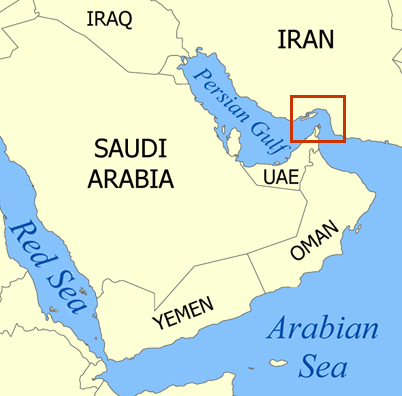
Trump declares Iran peace MOU largely negotiated
May 22, 2026
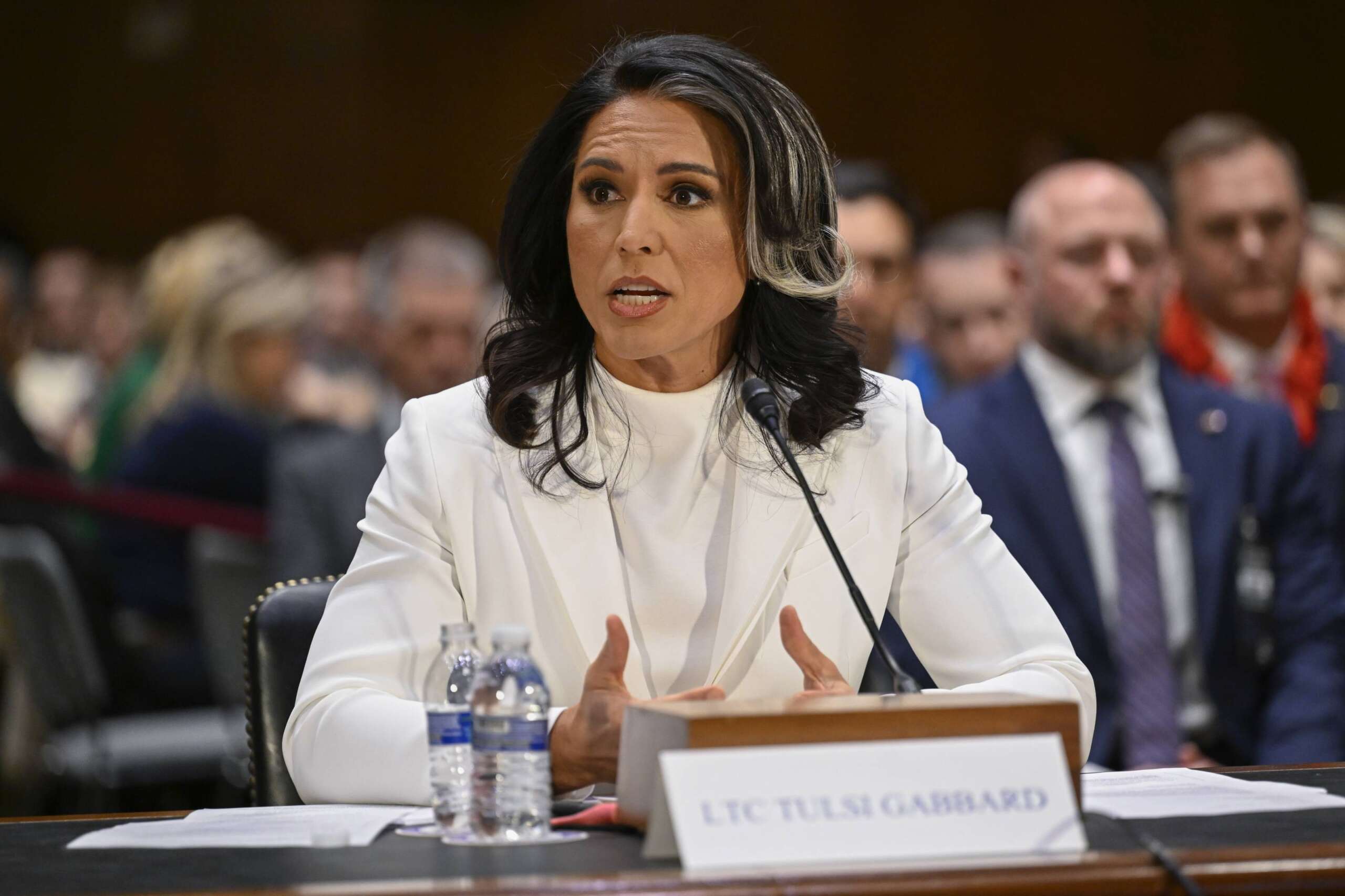
Gabbard resigns as director of national intelligence
May 21, 2026
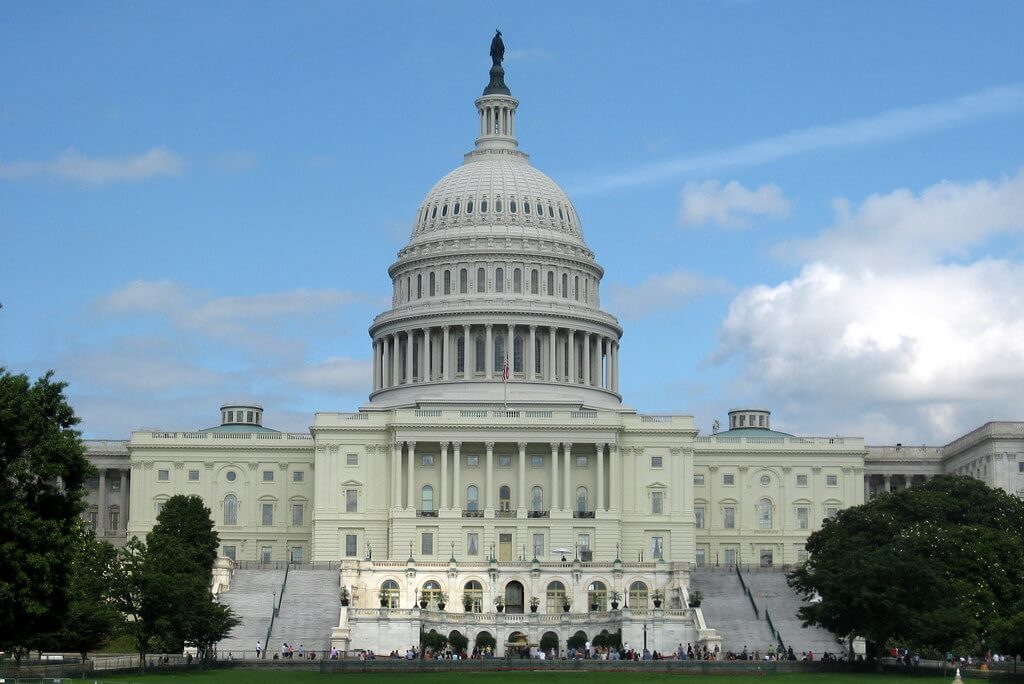
House GOP cancels Iran war powers vote, shielding Trump from rebuke
⚖️
May 21, 2026
Supreme Court rules cruise lines liable for Cuba's confiscated docks

May 20, 2026
DOJ indicts Raul Castro over 1996 Brothers to the Rescue shootdown
View All Foreign Policy Topics
322 topics
12 questions
Start the review