GovernmentCivil RightsJustice
September 5, 2025D.C. AG sues Trump over National Guard military occupation
Federal troops occupy American capital as civilian government sues for control

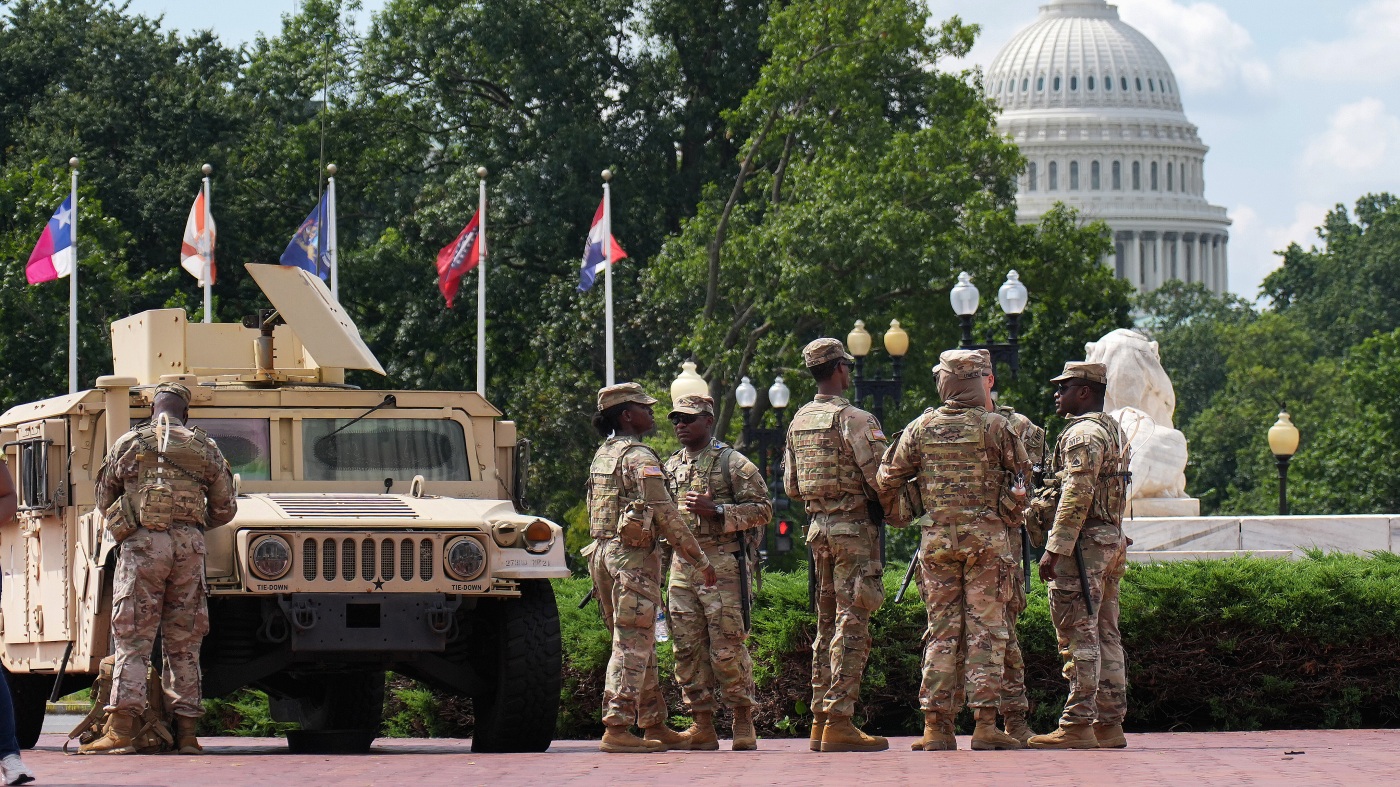
D.C. Attorney General Brian Schwalb filed a federal lawsuit on Sept. 4, 2025, challenging Trump's deployment of nearly 2,300 National Guard troops from seven states to Washington, D.C. as an illegal military occupation of the nation's capital.
Trump invoked an emergency provision of the D.C. Home Rule Act on Aug. 11, 2025, to take temporary control of the Metropolitan Police Department for 30 days and deploy the National Guard under a declared crime emergency. The troops were placed under Department of Defense command rather than the District's elected government.
The U.S. Marshals Service deputized most or all of the Guard members to conduct law enforcement activities in D.C. neighborhoods, including arrests, searches, and traffic and crowd control. The Marshals Service waived standard law enforcement training requirements for deputized Guard members — the same training required of actual police officers.
Schwalb's lawsuit argued the deployment violated two federal laws: the Posse Comitatus Act of 1878, which prohibits federal military forces from conducting domestic law enforcement, and the D.C. Home Rule Act, which grants the District its own elected government and limits direct federal control over local affairs.
A federal judge in California had ruled two days earlier, on Sept. 2, 2025, that Trump violated the Posse Comitatus Act by using military troops for civilian law enforcement in Los Angeles — creating directly applicable legal precedent for Schwalb's D.C. case.
U.S. District Judge Jia Cobb ultimately ruled Trump's National Guard deployment in D.C. unlawful, finding it violated the Posse Comitatus Act and 10 U.S.C. § 275, which bar federal military units from domestic policing. Cobb stayed her order until Dec. 11, 2025, allowing the deployment to continue while the Trump administration appealed.
D.C. occupies a unique constitutional position: it is not a state and lacks voting representation in Congress. District residents can't elect senators or a voting House member who could legislate limits on federal military presence. The lawsuit filed by Schwalb was the primary legal tool available to D.C. residents to contest the deployment.
The Posse Comitatus Act was enacted in 1878 after Reconstruction, when Southern states objected to continued use of federal troops to enforce civil rights laws. Congress prohibited the military from policing domestic civilians — a prohibition that has held for nearly 150 years. Trump's D.C. deployment represented one of the most extensive domestic military law enforcement operations since the law's passage.
The White House defended the deployment, arguing the president has broad constitutional authority to deploy National Guard units and that the crime emergency declaration justified the troops' law enforcement role. The administration appealed Cobb's ruling, setting up a clash between executive emergency powers and the century-old statutory prohibition on military policing.
Related Topics
3
Trump federalizes DC police, deploys National Guard
Trump invokes emergency powers to federalize DC police despite low crime rates
Trump seizes DC police, deploys armed National Guard
National Guard deploys after federal control order
Three more states deploy National Guard to DC as "occupation" criticism mounts
Red state militaries occupy blue city in authoritarian escalation
14 questions
Start the review