March 4, 2026
DHS watchdog tells Congress Noem is blocking 11 investigations
Noem asked for a list of all criminal investigations against her agency
🔐Ethics🏛️Government🛂Immigration
March 4, 2026
Noem asked for a list of all criminal investigations against her agency
On March 4, 2026, DHS Inspector General Joseph Cuffari sent a letter to Congress that was unusual in its candor: he listed 11 specific instances in which DHS had blocked his office from accessing witnesses, documents, or ongoing investigations, and stated that in each case, his office had not been told why access was being denied. Timing was not coincidental. Cuffari sent the letter the day after Noem testified before both Senate and House Judiciary Committees, while she was simultaneously defending DHS operations from a different angle. His letter landed in senators' hands while she was still on Hill. Sen. Thom Tillis (R-NC), who had already been publicly demanding accountability on Noem OIG obstruction since January, held up the letter during the Senate Judiciary hearing and told Noem directly: 'This failure of leadership is grounds for resignation.' He had already threatened to hold all DHS nominees unless obstruction ended.
The 11 obstructions covered an unusually broad range. Among blocked investigations were the Minneapolis killings of Renee Good and Alex Pretti, two U.S. citizens killed during Operation Metro Surge in January 2026, as well as earlier CBP and ICE use-of-force cases, contracting irregularities, and personnel matters. None of the 11 investigations had been formally closed. None had produced a criminal referral. The pattern Cuffari documented was systematic: not sporadic instances of bureaucratic friction, but a consistent practice of denying access across multiple offices and multiple subject matters. Sen.  Chuck Grassley (R-IA), who had spent decades defending inspector general independence across administrations, joined Tillis in raising the obstruction issue — a signal that the accountability concern had broken through the administration's partisan shield.
The Inspector General Reform Act of 2008 explicitly prohibits executive branch officials from interfering with IG access to witnesses, documents, and records. Violations are subject to referral to DOJ for potential criminal prosecution. DOJ under  Pam Bondi — a Trump appointee who had not publicly commented on Cuffari's letter — would be the agency deciding whether to pursue charges against DHS officials who blocked OIG. That structural loop — DOJ deciding whether to prosecute officials in an agency overseen by a cabinet secretary the president appointed — captures the accountability gap at the center of Trump's second-term governance model. Trump had fired 17 inspectors general in January 2025, within hours of his inauguration, in a mass removal that courts were still evaluating. Cuffari survived that purge, making his letter to Congress an act of institutional self-defense as much as oversight.
Noem was fired on March 5, one day after Cuffari's letter. Administration officials cited Cuffari's obstruction documentation as one element of a culmination of many failures. After her departure, congressional sources reported that the 11 blocked investigations had resumed access. No one had been disciplined. No criminal referral had been made. DHS spokesperson did not respond to NPR's request to confirm resumption. The Minneapolis families — who had waited since January for any formal accountability — received no public update on where the investigations now stood or when findings might be expected.
DHS Inspector General
Former DHS Secretary (fired March 5, 2026)
U.S. Senator (R-NC), Senate Judiciary Committee

U.S. Senator (R-IA), Senate Judiciary Committee; longtime defender of IG independence
U.S. citizen killed during Operation Metro Surge, Minneapolis, January 2026
U.S. citizen shot by Border Patrol agents, Minneapolis, January 2026
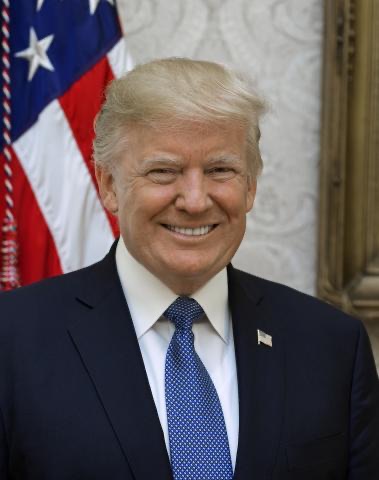
President of the United States

U.S. Attorney General
Federal statute prohibiting executive branch interference with IG investigations
CBP Operations Commander, Operation Metro Surge, Minneapolis
civic action
Contact your senators to demand DHS cooperate with its inspector general
Congress created inspectors general to provide independent oversight of executive agencies. When an agency blocks an IG from investigating — especially when the IG says one blocked investigation has national security implications — Congress has both the authority and responsibility to intervene.
Hello, I am [NAME], a constituent from [CITY/STATE]. I'm calling about the DHS Inspector General's letter to Congress.
Key concerns:
Questions to ask:
Specific request: I am asking Senator [NAME] to demand the DHS immediately restore the IG's access to blocked records and provide a timeline for full compliance.
Question: What is Senator [NAME]'s position on Secretary Noem's request for a list of all pending criminal investigations against her agency?
Thank you.
research
Read the Inspector General Reform Act to understand legal protections
The Inspector General Reform Act of 2008 is the primary law protecting inspector general independence. Understanding what it requires — and what enforcement mechanisms exist — gives citizens a factual basis for demanding accountability.
research
Track the DHS OIG's published reports and investigation status
The DHS OIG publishes its completed reports, audits, and investigations publicly. Tracking what reports have been published and what investigations remain open — particularly in the context of 11 blocked access requests — helps citizens identify gaps between what the IG is investigating and what it's able to complete.