DOJ and ATF release 34 gun rule changes after 14-month review
Pistol brace rule repealed; NFA forms go digital after 14-month review
Pistol brace rule repealed; NFA forms go digital after 14-month review
Executive Order 14206, signed February 7, 2025, directed the Attorney General to review all Biden administration firearms regulations and develop a plan to 'eliminate all infringements' on Second Amendment rights. The order halted existing Biden-era policies and directed the Attorney General to report on which rules, regulations, and guidance documents should be rescinded, revised, or repealed. In April 2025, then-Attorney General Pam Bondi created a 'Second Amendment Enforcement Task Force' to coordinate the review. The April 29 announcement represents the culmination of that 14-month process.
ATF Director Robert Cekada, confirmed by the Senate making him only the third Senate-confirmed leader in the agency's history and the first active ATF Special Agent to hold the title, said the reforms reflect ATF's commitment to regulations that are 'clear, legally sound, and narrowly tailored.' Acting Attorney General Todd Blanche said the package 'reduces unnecessary burdens on lawful gunowners and licensed businesses, eliminates ambiguity, and helps prevent the kind of confusion that, in the past, led to inconsistent and sometimes unfair enforcement.' He added that 'the Second Amendment is not a second-class right.'
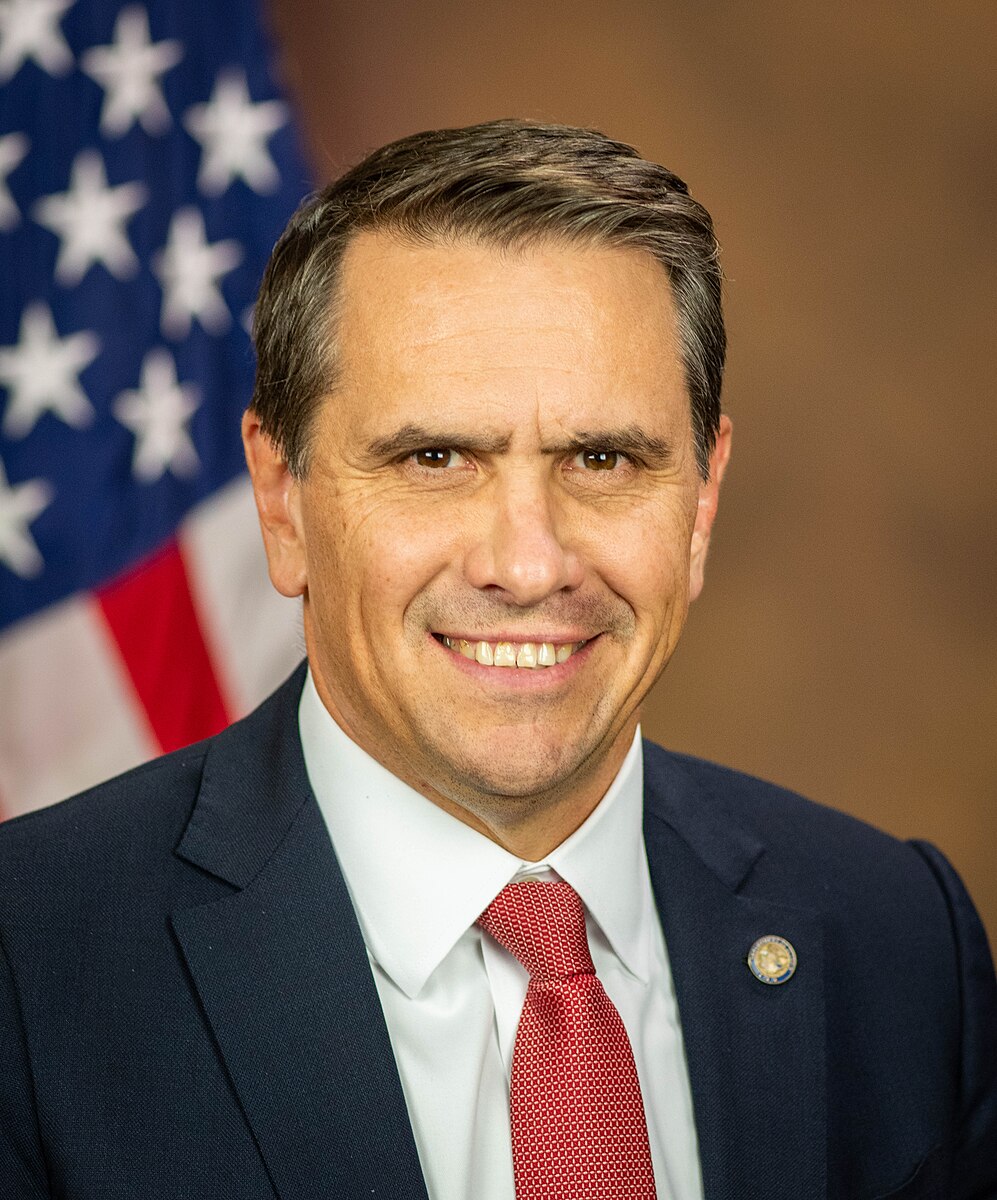
Acting U.S. Attorney General, Department of Justice
Blanche co-hosted the April 29 press conference with ATF Director Cekada to announce the 34-notice regulatory package. He framed the announcement as ending 'the weaponization of federal authority against law-abiding gun owners' and stated that 'the Second Amendment is not a second-class right.' Blanche oversees DOJ's implementation of Executive Order 14206 and the Second Amendment Enforcement Task Force created under former AG Pam Bondi.

Director, Bureau of Alcohol, Tobacco, Firearms and Explosives
Cekada was recently Senate-confirmed as ATF director, becoming only the third Senate-confirmed leader in the agency's history and the first active ATF Special Agent to hold the title. He co-announced the regulatory package on April 29 and has pledged to focus ATF enforcement on 'willful violators and criminal actors, not inadvertent compliance issues.' He has more than 30 years of federal law enforcement experience, including leadership of the Miami and Baltimore Field Divisions.
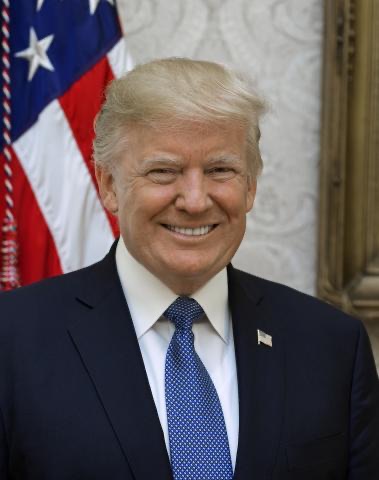
President of the United States
Trump signed Executive Order 14206, 'Protecting Second Amendment Rights,' on February 7, 2025, directing the Attorney General to review all Biden-era firearms regulations and deliver a plan to 'eliminate all infringements' on Second Amendment rights. The order halted existing Biden policies and created the regulatory review process that produced the April 29 package. Trump had previously, in his first term, directed ATF to classify bump stocks as machine guns — a rule the Supreme Court later struck down.

Former U.S. Attorney General, Department of Justice
Bondi created the 'Second Amendment Enforcement Task Force' in April 2025 to coordinate the regulatory review required by Executive Order 14206. She directed ATF and DOJ attorneys to identify which Biden-era firearms regulations should be rescinded, revised, or repealed. Though no longer serving as AG by the time of the April 29 announcement, her task force provided the institutional framework for the regulatory package.
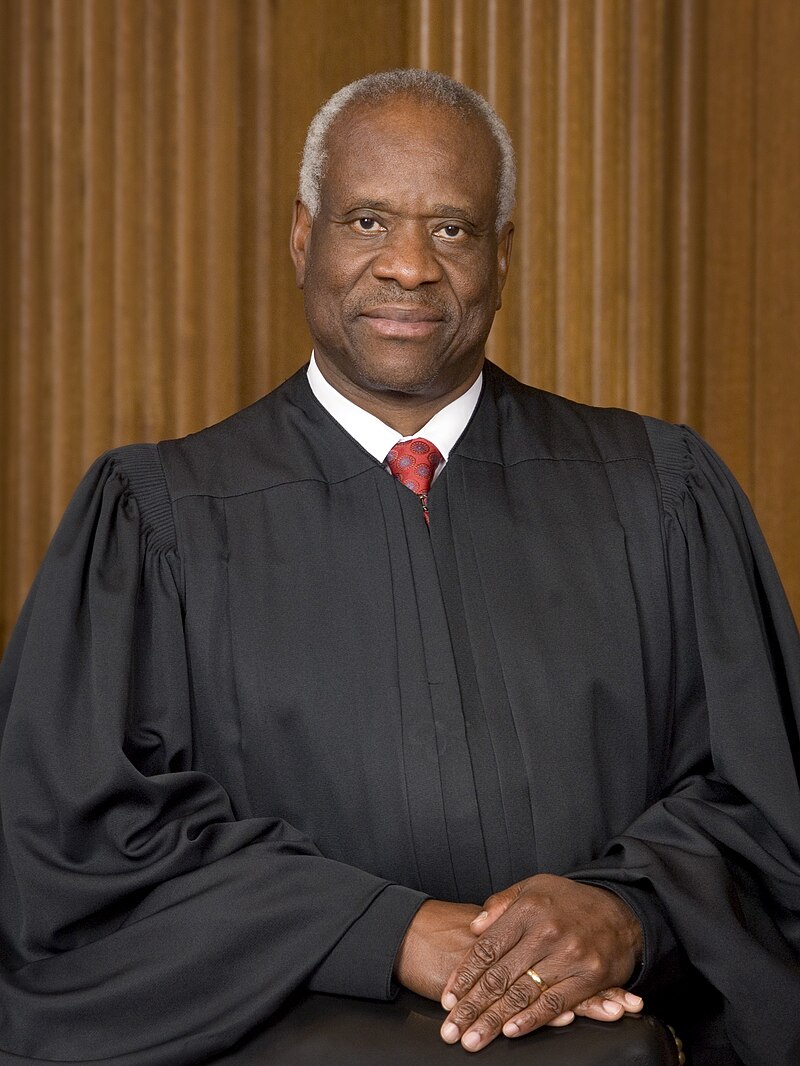
Associate Justice, U.S. Supreme Court
Thomas authored the majority opinion in Garland v. Cargill (2024), holding 6-3 that bump stocks do not constitute machine guns under the National Firearms Act because firing with a bump stock requires more than 'a single function of the trigger.' That ruling made the Biden-era bump stock ban unenforceable through administrative action and created the regulatory gap that one of the April 29 ATF rules is designed to address through a formal machine gun definition revision.
Attorney General, State of Montana
Knudsen led a coalition of 15 state attorneys general in sending a letter to the Senate Judiciary Committee urging confirmation of Robert Cekada as ATF director. His letter cited Cekada's 'federal law enforcement experience, principled leadership, and familiarity with the Bureau's operational realities' and described the nomination as an opportunity to 'move beyond the difficulties of the previous administration.' The 15-state coalition provided political momentum for Cekada's confirmation.

Plaintiff, Garland v. Cargill; Owner, Central Texas Gun Works
Cargill challenged ATF's 2018 rule classifying bump stocks as machine guns, arguing it was an unconstitutional administrative overreach. His case ultimately reached the Supreme Court, which sided with him 6-3 in June 2024, vacating the bump stock rule and holding that ATF had exceeded its statutory authority. The Cargill decision created one of the specific regulatory gaps — around the machine gun definition — that the April 29 ATF rulemaking package addresses.
Executive Director, Brady Campaign to Prevent Gun Violence
Commerford issued a public statement criticizing the ATF regulatory package, arguing that narrowing the 'engaged in the business' rule would 'send more guns into the hands of people who shouldn't have them' by creating loopholes in background check requirements. The Brady Campaign has been a leading voice in litigation and advocacy opposing the regulatory rollbacks, and is among the organizations expected to challenge specific rules through the public comment process and in federal court.
U.S. Senator (R-Iowa); Chair, Senate Judiciary Committee
Grassley chaired the Senate Judiciary Committee hearing at which Robert Cekada testified as ATF director nominee. Grassley questioned Cekada about his enforcement priorities and received assurances that ATF would focus on violent crime rather than paperwork violations by licensed dealers. The Judiciary Committee's advancement of Cekada's nomination to a full Senate vote cleared the key institutional hurdle for his confirmation.
True
The ATF regulatory package includes 34 notices of final and proposed rulemaking
Multiple news outlets and the DOJ's own press release confirm 34 notices of final and proposed rulemaking were released April 29. The distinction between final and proposed rules is significant: final rules take effect immediately, while proposed rules are open for public comment and subject to revision. [1][2]
True
The Supreme Court's Cargill decision makes a bump stock ban unenforceable through ATF rulemaking alone
The Supreme Court held 6-3 in Garland v. Cargill (2024) that bump stocks do not meet the NFA's definition of a machine gun, and that restoring the ban requires new legislation from Congress. Justice Alito's concurrence explicitly acknowledged that Congress retains the power to pass new legislation. ATF cannot restore the ban through administrative action under the current NFA statutory definition. [1][2]
True
Robert Cekada is the first active ATF Special Agent to be confirmed as ATF director
ATF's own announcement confirmed Cekada is only the third Senate-confirmed director in the agency's history and the first active ATF Special Agent to hold the title. Previous Senate-confirmed directors were political appointees rather than career ATF agents. [1][2]
True
Form 4473 errors account for seven of the top ten ATF compliance violations
Multiple FFL compliance industry sources confirm this figure, which is also cited in ATF's own 'New Era of Reform' materials justifying the 4473 simplification. The high error rate involves the form's complexity rather than intentional misconduct by most FFLs — a distinction the new enforcement philosophy explicitly acknowledges. [1][2]
True
A bump stock was used in the 2017 Las Vegas shooting that killed 60 people
The FBI and law enforcement investigation confirmed that the Las Vegas shooter used rifles equipped with bump stocks, which he used to fire hundreds of rounds into the crowd from his hotel window. The shooting killed 60 people and injured more than 400, making it the deadliest mass shooting in modern U.S. history. The investigation directly prompted ATF's 2018 rulemaking classifying bump stocks as machine guns. [1][2]
Disputed
Biden's zero-tolerance enforcement policy led to a nearly six-fold increase in actions against Federal Firearms Licensees
This figure comes from the Trump administration itself and has not been independently verified by neutral third parties. ATF enforcement data indicates an increase in FFL compliance actions during 2021-2024, but the 'six-fold' characterization involves the administration's framing. Gun safety advocates note that FFL enforcement actions were designed to address reckless dealers supplying crime guns, not to target innocent small businesses. [1][2]
Disputed
The pistol brace rule potentially criminalized millions of gun owners
Gun rights groups estimated 10-40 million brace owners, while the Biden DOJ used lower figures. The ATF's 2023 rule included a limited amnesty registration period and was stayed by courts in multiple jurisdictions before it could be broadly enforced. The actual number of people who faced criminal liability before the rule was stayed or vacated was far smaller than the total brace-owning population. [1][2]
Disputed
Narrowing the 'engaged in the business' rule conflicts with the Bipartisan Safer Communities Act
The Bipartisan Safer Communities Act of 2022 amended the Gun Control Act to broaden who is 'engaged in the business' of dealing firearms. Critics argue the ATF's narrow interpretation of that amendment contradicts congressional intent. The administration argues its interpretation is consistent with the statute's text. Courts will ultimately resolve whether the revised rule is consistent with the 2022 law. [1][2]
Submit a public comment on ATF proposed rules during the 90-day comment window
civic action
Many of the 34 regulatory notices are proposed rules, not final rules, meaning they are open for public comment. Public comments become part of the administrative record and must be addressed by the agency. Well-documented comments from individuals, researchers, and affected communities can influence final rule language and form the evidentiary basis for future legal challenges.
Contact your senators to support or oppose confirmation of Kevin Warsh as ATF oversight figure
civic action
The ATF regulatory package was announced the same day the Senate Banking Committee advanced Kevin Warsh's nomination as Federal Reserve chair. The Senate has jurisdiction over all major agency leadership — contacting senators about both ATF director Cekada's approach and Warsh's nomination communicates constituent views on regulatory philosophy.
If you own a pistol with a stabilizing brace, review updated ATF classification guidance
legal information
The repeal of the pistol brace rule changes the legal status of millions of firearms. Owners who registered their braced pistols as short-barreled rifles under the NFA during the Biden era should check ATF guidance on whether those registrations remain effective and whether they can request a refund of the $200 tax stamp fee paid under the now-repealed rule.
Support or oppose legislation addressing the regulatory gaps created by the Cargill decision
civic action
The Supreme Court's Cargill ruling made clear that restoring the bump stock ban requires an Act of Congress, not just ATF rulemaking. Contacting your representative supports or opposes legislation that would explicitly define bump stocks as machine guns in the National Firearms Act or the Gun Control Act.