FBI diverts 934 agents from national security to redact Epstein files
Counterterrorism agents work 12-hour shifts redacting files instead of tracking threats
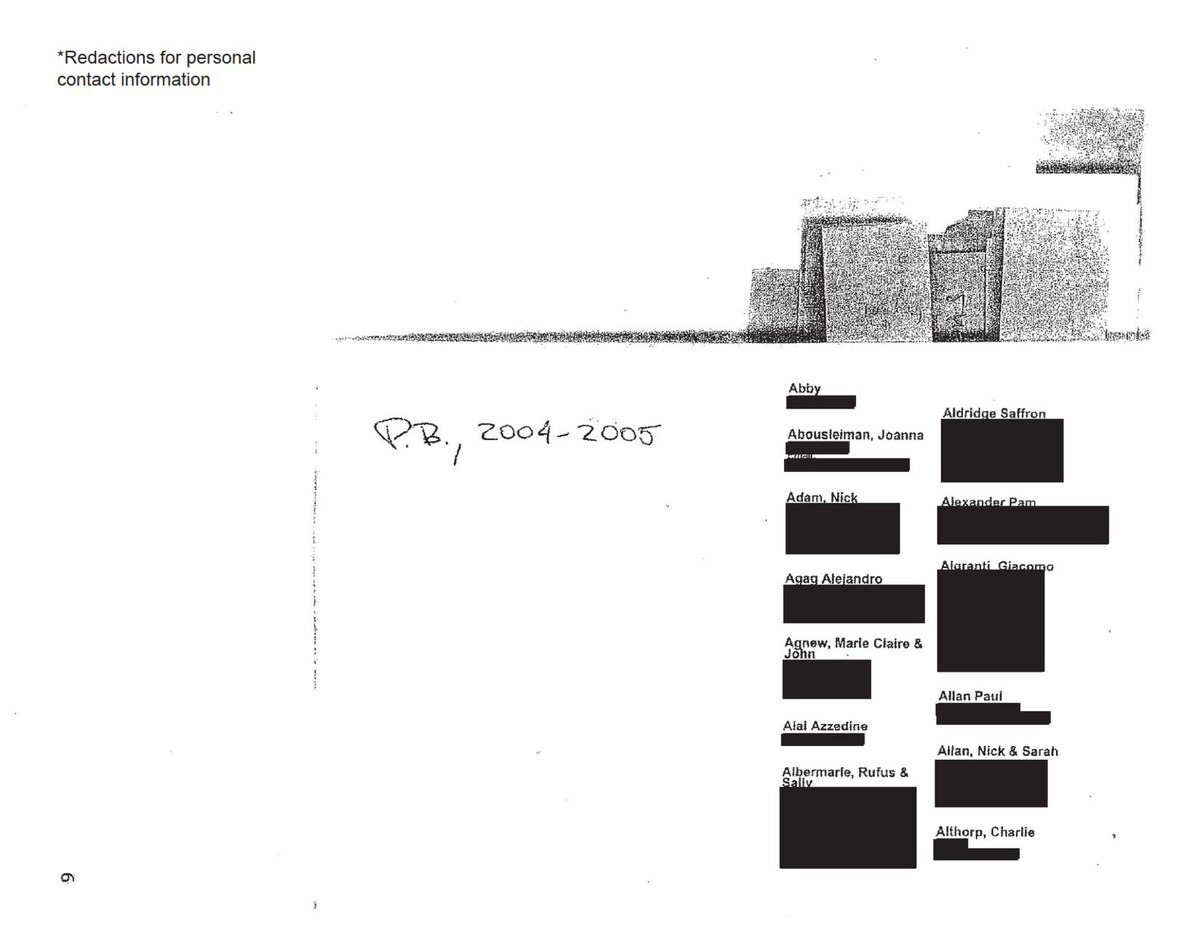
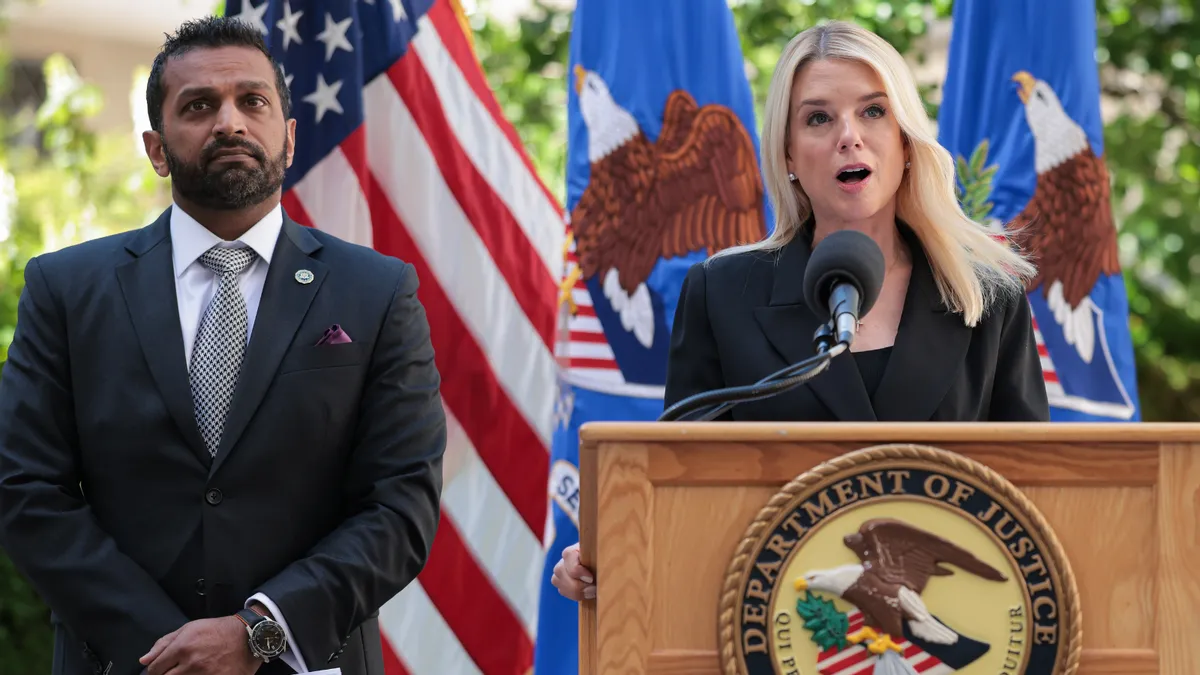
AG Pam Bondi ordered the FBI to mobilize 934 agents for the "Epstein Transparency Project 2025" starting the week of March 17, 2025. The agents worked a combined 14,278 premium pay hours in just six days, costing taxpayers $851,344 in overtime. The project came after Bondi's Feb. 27 "Phase 1" release embarrassed the administration because it mostly contained previously leaked documents.
Essential concepts and terms to understand this topic
The constitutional principle that federal power is limited to powers explicitly granted in the Constitution.
Federal courts' constitutional authority to hear cases involving federal law, treaties, and the Constitution itself.
Gideon v. Wainwright established that states must provide lawyers to criminal defendants who cannot afford them, enforcing the Sixth Amendment right to counsel.
Fair procedures that government must follow—notice, hearing, neutral decision-maker—before taking someone's life, liberty, or property.
Congressional and executive mechanisms to monitor and legally control intelligence agency operations.
Congressional authority to investigate the executive branch and compel compliance with subpoenas.
Government monitoring of individuals' social media accounts and posts for enforcement purposes.
U.S. Attorney General
Bondi ordered the FBI to mobilize agents for the Epstein file redaction effort after her Feb. 27 "Phase 1" release was criticized as containing mostly previously leaked material. She sent a letter to FBI Director Patel demanding the remaining files by Feb. 28 after learning the New York field office had withheld thousands of pages. She later faced bipartisan contempt threats from Congress for incomplete file releases.
FBI Director
Patel oversaw the FBI's massive redaction effort, ordering approximately 1,000 agents and personnel to work around the clock reviewing Epstein documents. He received Bondi's demand letter and directed the bureau's resources toward the project. He publicly stated there would be 'no cover-ups, no missing documents, and no stone left unturned.'

Bloomberg Senior Investigative Reporter
Leopold filed the FOIA lawsuit that forced the FBI to release internal emails about the redaction process. His reporting revealed the $851,344 overtime cost, the 934-agent mobilization, and the project's internal names. The FBI withheld 161 additional pages from his request.
U.S. Senator (D-IL), Ranking Member of Senate Judiciary Committee
Durbin received a whistleblower disclosure alleging agents were told to flag Trump-related records. He led bipartisan requests for a DOJ Inspector General audit of the file release process and pressed Bondi, Patel, and Dan Bongino on rifts between the DOJ, FBI, and White House over the Epstein files.

U.S. Representative (D-NY)
Goldman publicly accused Bondi of hiding the Epstein files to protect Trump, citing Trump's documented relationship with Epstein including seven flights on Epstein's private jet between 1993 and 1997. He demanded Bondi disclose whether Trump intervened in the release process.

U.S. Representative (R-KY)
Massie co-authored the Epstein Files Transparency Act with Rep. Ro Khanna (D-CA). The bipartisan duo forced a floor vote that passed 427-1, creating a legal mandate for full file disclosure within 30 days.
Misleading
The FBI diverted agents specifically to hide Trump's name from Epstein files
Bloomberg confirmed in August 2025 that the FBI's FOIA team did redact Trump's name from documents, and a whistleblower told Sen. Durbin's office that agents were instructed to 'flag' Trump-related records [1]. However, the FBI said the redaction was because Trump was a private citizen when the 2006 investigation began, which is standard Privacy Act procedure. The 934-agent mobilization was to process all files, not solely to remove Trump references [2]. The available documents neither confirmed nor disproved whether the flagging was for protection or for standard legal review.
Sources
Misleading
The FBI spent $1 million just on 'redaction training' for the Epstein files
The $851,344 figure covers all overtime pay for 934 agents during the week of March 17-22, 2025, for the full range of review, processing, and redaction work [1]. Snopes verified the authentic FBI records but noted the documents 'neither confirmed nor disproved' claims that all the money went to 'redaction training' specifically. The total overtime cost between January and July 2025 was higher, as agents logged 4,737 overtime hours across that period.
Sources
False
Bondi's Phase 1 release was a serious transparency effort that revealed significant new information about Epstein
The DOJ's own description acknowledged the Phase 1 files had been 'previously leaked but never released in a formal capacity by the U.S. Government' [2]. Multiple outlets confirmed the Feb. 27 release contained little new information. The White House distributed binders marked 'Declassified' to conservative media figures including Liz Wheeler and Scott Presler at a White House event, but critics noted the theatrical presentation masked the lack of substance [1]. Bondi later blamed the FBI for the disappointing release.
Sources
False
The Epstein Files Transparency Act was passed because Democrats wanted to embarrass Trump
The bill was co-authored by Rep. Thomas Massie (R-KY) and Rep. Ro Khanna (D-CA), a bipartisan pair [1]. It passed the House 427-1, with the lone 'no' vote from Republican Rep. Clay Higgins (R-LA). The Senate passed it by unanimous consent. Trump himself signed it into law on Nov. 19, 2025 [2]. The overwhelming bipartisan support and Republican co-sponsorship contradict the claim that it was a partisan Democratic effort.
Sources
False
The DOJ released all Epstein files within the legally required 30-day deadline
The Epstein Files Transparency Act required the attorney general to make all files publicly available within 30 days of signing, which set a deadline of Dec. 19, 2025. On that date, the DOJ admitted it had released less than 1% of the files [1]. Lawmakers from both parties threatened Bondi with contempt of Congress for the incomplete release [2]. The DOJ cited the discovery of over 1 million additional documents from the FBI and the U.S. Attorney for the Southern District of New York as the reason for delays. The final release didn't come until Jan. 30, 2026.
Sources
Disputed
Diverting FBI agents from counterterrorism to redact Epstein files created no real national security risk
The FBI's New York field office is the bureau's largest and handles active counterintelligence cases involving China and Iran, counterterrorism investigations, and public corruption probes [1]. House Judiciary Committee Democrats said the diversion 'endangers public safety' and that experienced agents were being 'sacked' from critical national security work [2]. The FBI has not publicly disclosed whether any active investigations were compromised. National security experts have noted that intelligence threats don't pause for document reviews.
Sources
Contact your senators to support the Inspector General audit of Epstein file releases
civic action
The FBI diverted 934 agents from national security work and spent nearly $1 million on overtime to redact Epstein files. The DOJ is withholding 47,635 files including Trump-related allegations, violating the Epstein Files Transparency Act which required release by December 19, 2026. An Inspector General audit is needed to determine if redactions served transparency or protected powerful people. The DOJ admitted 99% of files remain unreleased, raising serious questions about executive branch compliance with federal law.
Track the DOJ Inspector General audit results
oversight tracking
Bipartisan senators requested an audit of the DOJ's compliance with the Epstein Files Transparency Act. The IG's office can investigate whether files were tampered with, whether redactions were legally justified, and whether communications from senior officials were improperly withheld.
Read the released Epstein files directly
information access
The DOJ has released over 3.5 million pages of Epstein-related files on a public website. Citizens can review the actual documents rather than relying on media summaries. This is how accountability works: public access to government records.