Public HealthConstitutional LawEducation
July 21, 2025Harvard v. Trump: The $2.2 Billion Federal Research Funding Freeze
Cancer trials halted as Trump weaponizes grants against Harvard

The Trump administration froze $2.2 billion in federal research grants and contracts to Harvard University on April 14, 2025 — the day after Harvard President Alan Garber publicly refused a list of demands from a multi-agency Joint Task Force to Combat Antisemitism. The demands, sent April 11, included: eliminating all DEI programs; implementing merit-based admissions ending any race-conscious policies; banning face masks at campus protests; submitting to external review and sharing of admissions, financial, and hiring data with the federal government; auditing departments for viewpoint diversity; and cooperating fully with DHS in identifying undocumented students.\n\nThe freeze was later expanded to $2.7 billion — covering NIH, NSF, DOD, USDA, DOE, and HUD grants and contracts. Education Secretary Linda McMahon declared on May 5 that Harvard would receive no new grants.
The April 11 letter to Harvard was unsigned and marked 'not for distribution.' Harvard's governing body — the Harvard Corporation — reviewed it and decided Garber should publicly decline. Garber's April 14 response stated: 'The University will not surrender its independence or its constitutional rights.'
The White House characterized Harvard's refusal as 'antisemitism' despite the demands relating primarily to DEI, admissions, and protest policies that had nothing to do with antisemitism enforcement.
The demands followed a pattern: Columbia University had received similar demands in March 2025 and accepted most of them, avoiding the freeze. Columbia's acquiescence demonstrated that the administration's strategy was effective as leverage — Harvard's refusal made it the primary battleground.
Harvard filed suit against the Trump administration on April 21, 2025, arguing the funding freeze violated: the First Amendment (retaliation for Harvard's public refusal to comply with unconstitutional demands); the Fifth Amendment's Due Process Clause (terminating grants without notice, hearing, or reasoned explanation); the Spending Clause (conditioning funding on requirements unrelated to any federal program); and the Impoundment Control Act (withholding appropriated funds without congressional notification). The lawsuit was filed in the U.S. District Court for the District of Massachusetts before Judge Allison Burroughs.
Judge Allison Burroughs issued a preliminary injunction on May 30, 2025, ordering the administration to restore Harvard's access to existing grants and halt further terminations while the case proceeded. On September 3, 2025, Burroughs issued a full ruling on the merits, finding the funding freeze unconstitutional on three independent grounds: retaliation for protected First Amendment speech (Harvard's refusal); unconstitutional conditions (the demands were unrelated to any specific federal program's statutory purposes); and unconstitutional coercion (the threat was so enormous relative to Harvard's total budget that it left Harvard no real choice). The ruling was framed as applying not just to Harvard but as a nationwide precedent: 'Any university receiving federal research funding has the same First Amendment rights as Harvard.'
The Supreme Court intervened on the government's emergency application in June 2025, issuing a 5-4 order staying the preliminary injunction pending appeal — allowing the administration to continue terminating grants despite Burroughs's ruling. The five-justice conservative majority (Thomas, Alito, Gorsuch, Kavanaugh, and Barrett) granted the stay without explanation; the four liberal justices dissented, with Justice Jackson writing that 'the majority's decision allows the executive to continue exercising powers it likely does not have, causing irreparable harm while this Court decides whether to take a case it may not need to take.' The stay meant that even though Burroughs had found the freeze unconstitutional, Harvard could not receive new grants while the government appealed.
The practical damage from the funding freeze was documented in Harvard's court filings: 383 clinical trials were disrupted, affecting 74,000+ enrolled participants nationwide — including active cancer treatment trials, COVID-19 longitudinal studies, and maternal health research. Joan Brugge, a Harvard cell biologist whose $7 million breast cancer research grant was terminated, described losing key lab personnel who found positions elsewhere before her grant was eventually restored.
'Even if you restore the funding, you can't restore the time lost or the people who left,' she testified. Harvard estimated its medical school alone had lost $1.4 billion in effective research capacity through departures, missed grant renewal deadlines, and lost partnerships that moved to institutions in Canada, the UK, and Germany.
DOGE gained a parallel role in the crisis: DOGE operatives working through the Department of Education and NIH blocked grant disbursements even after court orders requiring restoration — effectively creating a shadow enforcement mechanism that operated outside the court's jurisdiction. Harvard's attorneys documented specific instances where funds were court-ordered restored but DOGE-linked freezes prevented actual disbursement. Judge Burroughs wrote in an August 2025 contempt order that 'the executive branch appears to have created a parallel system of fund withholding that operates without judicial accountability,' and imposed daily fines pending compliance.
The Harvard case became a template applied to Columbia (which accepted demands and avoided the freeze), MIT (which received demands in May 2025 and partially complied), Princeton (demands received June 2025, compliance negotiated), and University of Pennsylvania (demands received June 2025, partial compliance). By August 2025, the administration had sent demand letters to more than 30 universities, made formal funding threats to 14, and imposed actual freezes on 6 (Harvard, plus UPenn, Northwestern, Cornell, Georgetown, and Brown). The AAUP documented 89 universities that changed DEI policies, admissions practices, or protest rules under implicit or explicit threat of federal funding action — without receiving formal demand letters — a 'chilling effect' scale that Harvard's lawyers argued demonstrated the unconstitutional nature of the coercive strategy.
Related Topics
2
Judge blocks Trump from defunding universities over DEI
Judicial branch blocks educational McCarthyism at universities
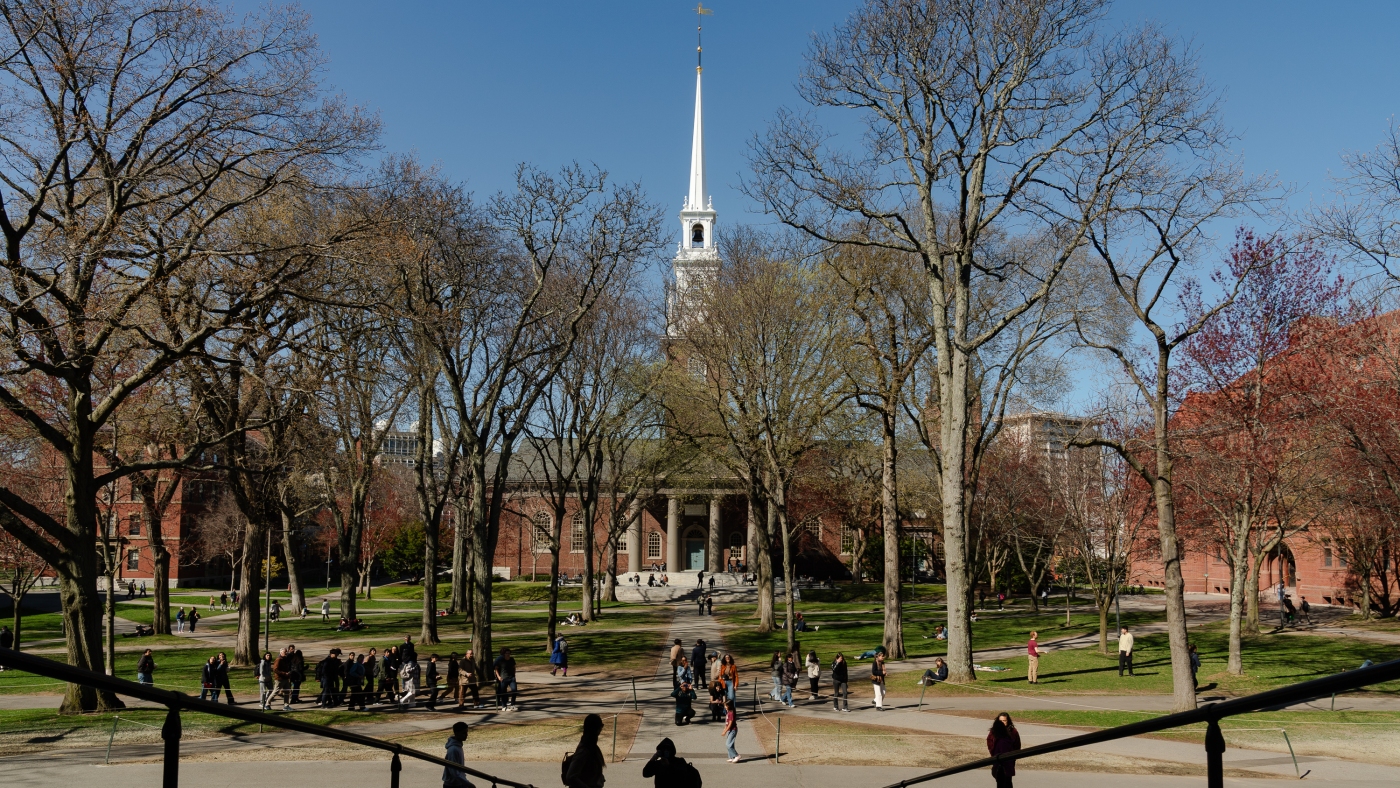
Trump administration refers Harvard to Justice Department after finding "violent violation" of Title VI
HHS finds Harvard in "violent violation" of civil rights law, refers to DOJ after "fruitless" talks
37 questions
Start the review