Digital RightsNational SecurityGovernmentCivil Rights
April 17, 202620 House Republicans kill FISA renewal over warrant requirement
FBI ran 200,000 warrantless searches on Americans using the program in 2022

Photo: Anna Moneymaker/Getty Images
Section 702 of the Foreign Intelligence Surveillance Act lets U.S. intelligence agencies compel communications providers like Google, Apple, and Meta to hand over messages sent to or from foreign intelligence targets located outside the United States. The program doesn't require a court order for the initial collection. But when Americans communicate with those foreign targets, their messages are also captured and stored in government databases.
The FBI then searches those databases — which contain Americans' communications — without obtaining a warrant. The Office of the Director of National Intelligence reported the FBI conducted more than 200,000 warrantless searches of Section 702 data involving U.S. persons in 2022. In 2024, that number dropped to 5,518 queries for the FBI alone, but the FBI admitted it failed to track an entire category of searches using an "advanced filter function" for portions of 2024 and 2025, meaning the actual number of warrantless searches remains unknown (State of Surveillance, April 2026). Privacy advocates call this a "backdoor search" that lets the government bypass the 's by collecting data under a foreign surveillance law and then querying it for domestic purposes.
On April 15-16, 2026, Speaker Mike Johnson brought a clean 18-month reauthorization of Section 702 to the House floor without any warrant-protection amendments. Twenty Republicans voted against the procedural rule advancing the bill, killing it before debate (The Verge, April 10, 2026). The House then passed a 10-day emergency extension at 2:09 AM on April 18, keeping Section 702 alive until April 30, 2026. The 20 Republican rebels included Reps. Thomas Massie (R-KY-04), Warren Davidson (R-OH-08), Lauren Boebert (R-CO-04), Tim Burchett (R-TN-02), Andrew Clyde (R-GA-09), and Scott Perry (R-PA-10) — all demanding a warrant requirement before the FBI can query Americans' data (Nextgov, April 15, 2026).
Rep. Warren Davidson introduced the Government Surveillance Reform Act in March 2026, co-sponsored by Sens. Ron Wyden (D-OR) and Mike Lee (R-UT) with bipartisan support from Sens. Elizabeth Warren (D-MA), Cynthia Lummis (R-WY), and Reps. Sara Jacobs (D-CA) and Pramila Jayapal (D-WA) (Davidson.house.gov, March 12, 2026). The bill would require the federal government to obtain a warrant to access Americans' private communications gathered under Section 702, with emergency exceptions. It would also prohibit federal agencies from buying Americans' data from private brokers without a warrant — closing what critics call the "data broker loophole" that allows agencies to circumvent warrant requirements by purchasing location, web browsing, and search data commercially (The Verge, April 10, 2026). The bill had roughly 50 House co-sponsors as of mid-April.
The April 30 deadline gives negotiators less than two weeks to reach a deal. CIA Director John Ratcliffe and DNI Tulsi Gabbard both lobbied Republicans to support the clean extension, arguing that adding a warrant requirement would slow time-sensitive national security investigations (Nextgov, April 15, 2026). Gabbard's position represented a complete reversal: as a Democratic congresswoman in 2020, she co-sponsored legislation to end warrantless Section 702 collection. As DNI, she called the program "crucial." Her reversal attracted scrutiny during her Senate confirmation hearing (NBC News, April 2026). Privacy advocates counter that a warrant requirement would merely restore Fourth Amendment protections for Americans whose communications are incidentally collected and should be accessible to the government only after agents establish .
The Electronic Frontier Foundation, ACLU, libertarian groups, and progressive Democrats have formed an unusual coalition backing Section 702 reform. This strange-bedfellows alliance united constitutional conservatives and civil liberties advocates around the principle that the FBI should need a warrant before searching data on U.S. persons, regardless of how that data was originally collected (The Verge, April 10, 2026). Senate Democrats have made clear they won't support a clean extension without reforms. The House nearly passed a warrant requirement amendment in the last Section 702 reauthorization fight: the amendment failed on a 212-212 tie vote in 2024.
The House Rules Committee approved a closed rule on April 15 preventing any amendments to the 18-month clean extension, which raised concerns among privacy advocates and reform-minded lawmakers about the lack of opportunity for a full floor debate on warrant protections (Nextgov, April 15, 2026). House Judiciary Committee Chairman Jim Jordan testified in support of the clean extension, despite writing an essay one year earlier calling for warrant requirements. Multiple House conservatives — including Michael Cloud (R-TX), Andy Harris (R-MD), and Warren Davidson — publicly stated they remained unconvinced by Johnson's argument that a clean extension was necessary, saying a shorter emergency extension or a bill including warrant reforms would be preferable.
The ODNI's 13th Annual Statistical Transparency Report, released April 1, 2026, showed that Section 702 foreign targets increased again in 2024 and 2025, continuing a climb from approximately 246,000 targets in 2022 to approximately 292,000 by 2024 (State of Surveillance, April 2026). The FBI's backdoor searches of Americans' data rose significantly: according to an FBI letter to Senators Grassley and Durbin dated March 11, 2026, the FBI conducted 7,413 U.S. person queries in the reporting period ending November 2025 — a 35% jump from 5,518 in the prior period. However, an investigation by Just Security found that the FBI failed to track an entire category of U.S. person searches using an "advanced filter function" that remained enabled until early 2025, meaning the 5,518 and 7,413 figures are incomplete.
Approximately 30 million Americans' communications are believed to be captured in Section 702 databases, even though they were never targets of the original surveillance and committed no crime (Reclaim the Net, April 15, 2026). Senate Judiciary Committee Chairman Chuck Grassley (R-IA) supported the clean extension after the DOJ pledged to revise rules governing of the Foreign Intelligence Surveillance Court, including rolling back policies that had restricted House and Senate members from attending certain FISC proceedings, taking notes, or observing sessions. Grassley characterized the DOJ's oversight concessions as sufficient protection, though civil liberties advocates argued that procedural improvements to FISA Court access didn't address the core Fourth Amendment problem of warrantless searches of U.S. person data.
Related Topics
3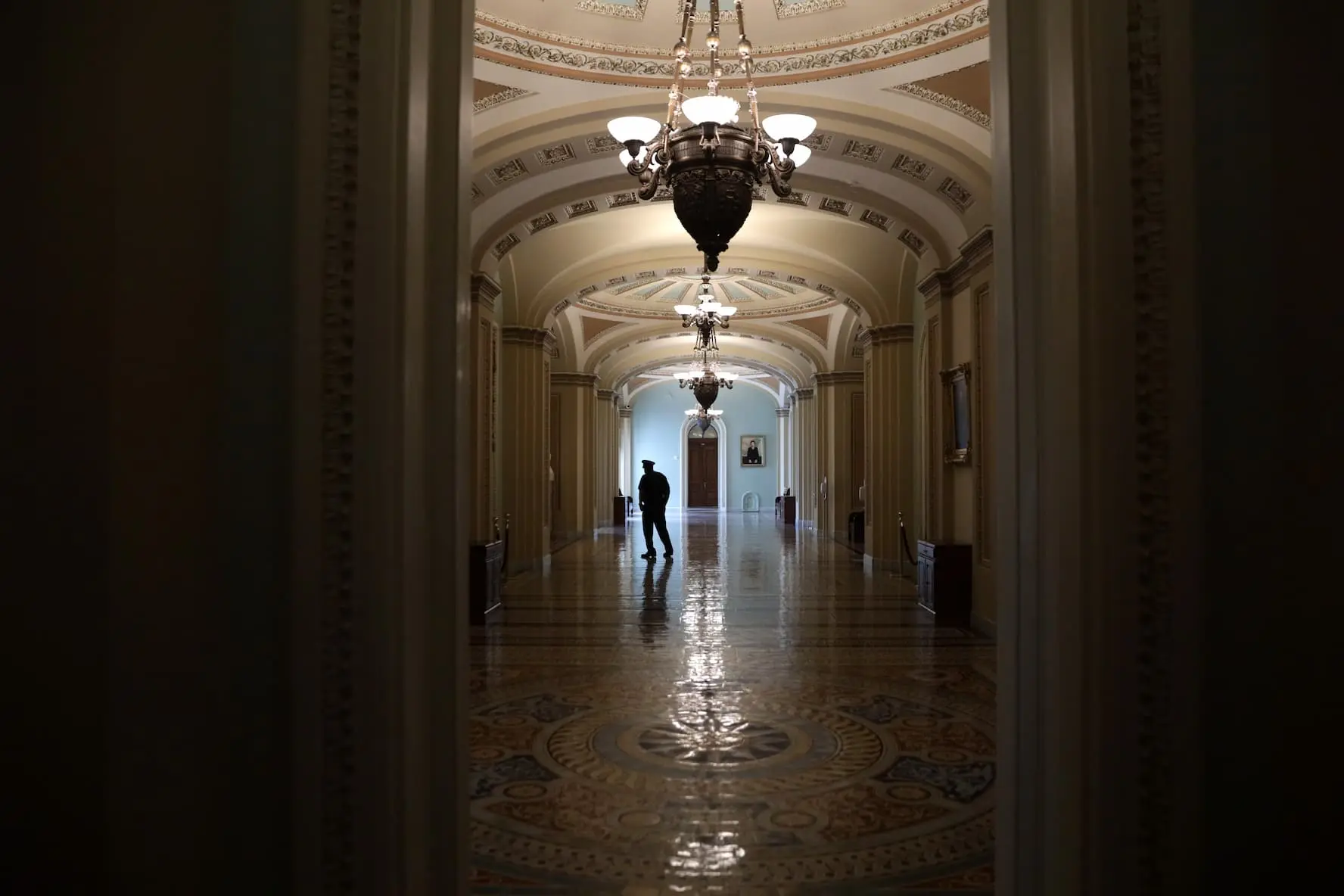
Congress passes emergency 10-day FISA surveillance extension
Twenty House Republicans blocked Trump's surveillance renewal, forcing a 10-day patch

House votes to extend surveillance law without warrant requirement
Warrant fight stalls FISA 702 as April deadlines force stopgap deals
House passes 3-year FISA 702 renewal 235-191, Senate next
Bipartisan vote includes warrant safeguards but no backdoor search protection
23 questions
Start the review