Public HealthGovernmentElections
January 8, 202617 House Republicans break with Trump on ACA subsidies vote
House passes 3-year extension despite Trump opposition and Senate resistance

The House passed H.R. 612, a three-year clean extension of enhanced ACA premium tax credits, on Jan. 8, 2026, by a 230-196 vote
All 213 Democrats voted yes
Seventeen Republicans broke with GOP leadership and President Trump to support the bill: Robert Bresnahan (PA), Mike Carey (OH), Monica De La Cruz (TX), Brian Fitzpatrick (PA), Andrew Garbarino (NY), Jeff Hurd (CO), Dave Joyce (OH), Tom Kean Jr. (NJ), Nick LaLota (NY), Mike Lawler (NY), Ryan Mackenzie (PA), Max Miller (OH), Zach Nunn (IA), María Elvira Salazar (FL), David Valadao (CA), Derrick Van Orden (WI), and Rob Wittman (VA) This represents a rare rebuke of Republican leadership on a key health care vote.
House Minority Leader Hakeem Jeffries filed a discharge petition in late Dec. 2025 to force a floor vote over Speaker Mike Johnson's objections
Four moderate Republicans—Reps
Don Bacon (NE), Mike Lawler (NY), Young Kim (CA), and David Valadao (CA)—signed the petition, joining all 214 Democrats to reach the 218-signature threshold needed The procedural vote to bring H.R. 612 to the floor passed Jan. 7, 2026, by 221-205, with nine Republicans voting yes The final passage vote Jan. 8 saw 17 Republicans support it Discharge petitions are rare procedural weapons that bypass leadership They've succeeded only 20 times since 2000.
The 17 Republicans who voted for the ACA extension represent competitive or swing districts where health care affordability is a major concern heading into Nov. 2026 midterm elections
Many of these members face tough reelection campaigns
Reps Lawler (NY-17), Valadao (CA-22), and D'Esposito (NY-4) won their seats in 2024 by narrow margins in Biden-won districts Voting for the extension allows them to campaign on protecting health care access despite party opposition Several represent suburban districts where ACA enrollment is high and premium increases would hit middle-class families hard.
President Trump and House Speaker Mike Johnson opposed the bill
Trump hasn't publicly commented on the vote but previously called ACA subsidies "wasteful spending." Johnson urged Republicans to vote no, arguing the bill would increase the deficit by $80.6 billion over ten years (per CBO estimates)
Johnson said Republicans should wait for a bipartisan Senate compromise with reforms rather than passing a clean extension The 17 defections represent a significant break with leadership on a high-profile vote It's unusual for this many Republicans to defy leadership on a party-line issue, especially one Trump opposes.
The bill now moves to the Senate, where prospects are uncertain
Senate Majority Leader John Thune (R-SD) said Jan. 8 there's "no appetite" for a clean extension in the Senate
Thune pointed to ongoing bipartisan negotiations between senators and House members A bipartisan Senate working group, led by Sen. Bernie Moreno (R-OH), is drafting a compromise bill expected to be released as early as Jan. 13, 2026 The compromise may include reforms like minimum premium payments (requiring all enrollees to pay at least $50-$100 monthly) or Hyde Amendment abortion restrictions (prohibiting subsidies for plans covering elective abortions).
The Senate rejected two proposals to extend enhanced subsidies on Dec. 11, 2025
A Democratic three-year clean extension and a Republican one-year extension with reforms both failed 51-48 (60 votes required to advance under filibuster rules)
Four Republicans—Sens Susan Collins (ME), Lisa Murkowski (AK), Dan Sullivan (AK), and Josh Hawley (MO)—voted yes on the Democratic version The failed Senate votes in Dec. set the stage for the House discharge petition and the Jan. 8 House vote Senate Republicans are under pressure to act now that the House passed a bipartisan bill.
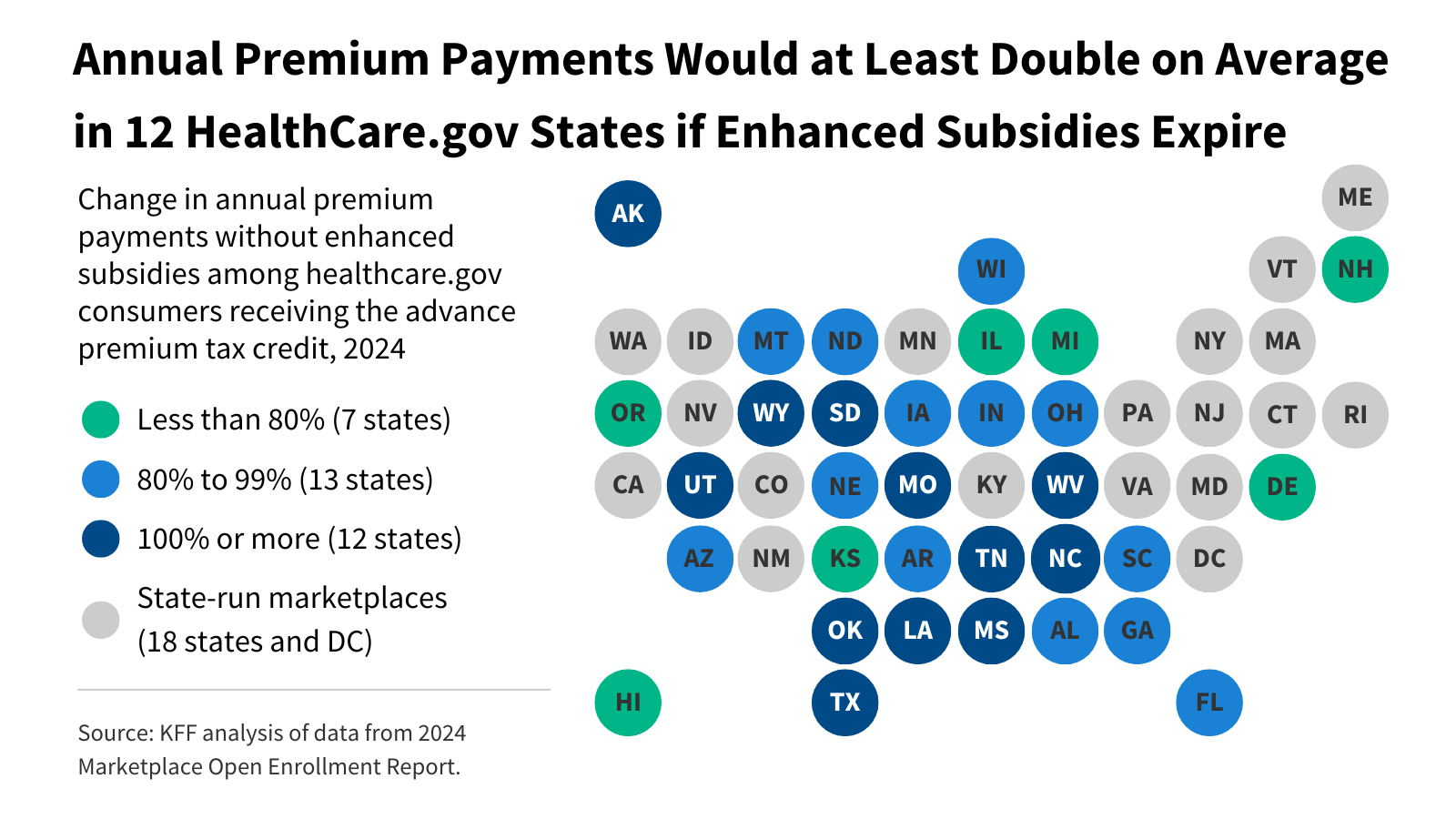
Without extension, roughly 24 million Americans face premium increases
The enhanced subsidies, which expired Dec. 31, 2025, eliminated the income cap (previously 400% of federal poverty level) and capped premiums at 8.5% of income for all enrollees
Monthly premiums have jumped by an average of 150-200% for enrollees earning over 400% FPL A family of four earning $100,000 annually saw premiums jump from $800 monthly to $2,400 monthly starting Jan. 1, 2026 CBO estimates 3.7 million fewer people will have ACA coverage in 2026 without the subsidies The House vote reflects growing political concern over health care costs ahead of midterm elections.
Related Topics
5
Four Republicans defy Johnson to force House ACA vote
Moderate Republicans revolt against Johnson but timing ensures subsidies expire
Inflation Reduction Act extends enhanced Obamacare subsidies through 2025
Expiring subsidies threaten coverage for 13 million ACA enrollees in 2026

Enhanced ACA premium tax credits expire, millions face cost hikes
9 million enrollees face doubled premiums as congressional gridlock ends enhanced subsidies

Senate rejects healthcare plans as ACA subsidies expire
22 million marketplace enrollees face premium hikes without subsidies

AbbVie pledges $100 billion for tariff and pricing exemptions
Pharma giant negotiates tariff and price control exemptions with White House
20 questions
Start the review