Judicial Review · Constitutional Law · Government · Elections·April 9, 2026
Federal judge blocks Justice Department demand for Massachusetts voter roll data
Court says DOJ skipped the statute's own process

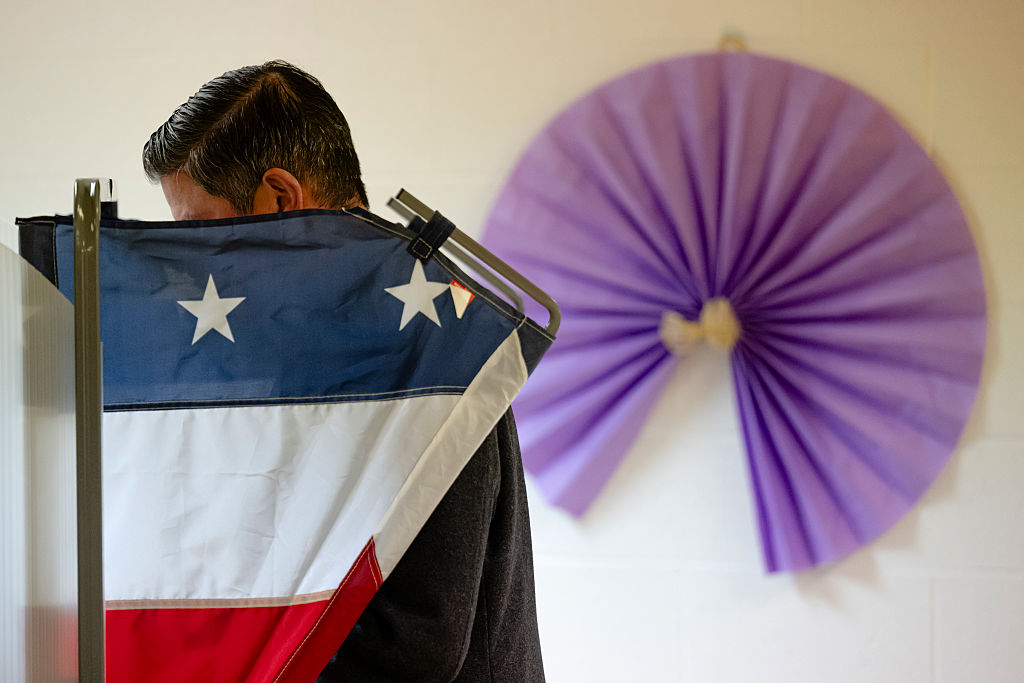
Photo: AP Photo
Judge Leo T. Sorokin dismissed the Justice Department's voter-records case against Massachusetts on April 9, 2026. He ruled that DOJ tried to sue under Title III of the without first using the administrative records demand that the statute requires. That sounds technical, but it is a direct limit on executive power: if Congress wrote a sequence into the law, the department has to follow that sequence before it reaches federal court.
The suit was part of a larger DOJ campaign to force states to hand over voter registration data. The department has leaned on the and older federal records statutes to argue that states must provide broad access to maintenance records and voter files. States have answered that the department is stretching those laws far beyond their normal meaning and trying to create a de facto national voter-data pipeline.
Massachusetts said the administration was not just asking for routine list-maintenance records. State officials argued the request reached into data the Commonwealth protects under state law and federal privacy concerns. The legal fight therefore sits at the intersection of elections law, records law, and . Democracy Docket
Sorokin's ruling focused on statutory process rather than sweeping constitutional theory. Title III of the Civil Rights Act of 1960 allows the Attorney General to inspect and copy election records, but the statute spells out a specific mechanism for demanding access. According to the Associated Press, Sorokin said DOJ could not jump directly to a lawsuit and bypass that mechanism.
That procedural holding is important for two reasons. First, it blocks the department from treating federal court as the opening move whenever a state resists. Second, it reminds agencies that old statutes cannot simply be used as broad power grants untethered from their own limits. AP News
Massachusetts Attorney General Andrea Joy Campbell and Secretary of State William Francis Galvin fought the case together. Their position was that the state had already provided information required by federal list-maintenance law and that DOJ was demanding more through an improper shortcut. They also argued that the federal government was threatening and state control over election administration.
That response is politically notable because it fits a larger pattern. Blue-state officials have been using litigation to slow the administration's election-related federal data push, especially where the White House or DOJ tries to combine citizenship verification, voter-roll access, and federal administrative leverage. The Hill Boston.com
The ruling was at least the fifth federal court defeat for the administration's voter-data campaign, according to AP. That pattern matters more than one case standing alone. When multiple judges reject the same strategy on procedural grounds, it becomes harder for DOJ to argue that resistant states are simply defying obvious federal law.
It also changes the balance of time. Every procedural loss delays any federal attempt to build or enrich a centralized voter database before the 2026 elections. In election administration, delay is not neutral. It affects what systems can realistically be built, challenged, or enforced before ballots are mailed and counted. AP News
The deeper civic issue is whether the executive branch can nationalize parts of election administration without Congress passing a new law. The Constitution gives states a large role in running elections, while Congress can regulate federal election procedures by statute. The president and DOJ do not get a free-floating power to redesign that balance on their own.
That is why procedural cases like this matter. They are often the first place courts stop an executive power grab before reaching the bigger constitutional questions. If DOJ wants broader voter-data access, the cleanest path is new legislation from Congress, not a lawsuit that skips the statute's own rules. Constitution Article I
Related Topics
6
Voting rights groups sue DOJ to block national voter database
ACLU sues to stop DOJ from building a 50-state voter surveillance file

Trump DOJ goes 0-8 as Maine and Wisconsin dismiss voter roll suits
States beat DOJ 8 times as courts reject federal voter data grab
Justice Department sues 24 states for unredacted voter files with Social Security numbers
Federal courts rejected the California and Oregon demands — and the DOJ is appealing

DOJ demands voter Social Security data from 30 states, courts say no
Federal courts reject voter data grab as midterms approach

Justice Department sues Idaho for voter roll access in national oversight campaign
Idaho reversed course on voter roll sharing — DOJ's 30th state lawsuit demands partial SSNs
DOJ quietly offered states secret deals to purge voter rolls
The DOJ privately offered to purge voters from unverified federal lists — with no public notice required
25 questions
Start the review