April 9, 2026
BIA orders deportation of Palestinian activist Mahmoud Khalil
BIA orders Khalil's deportation despite active court injunction
April 9, 2026
BIA orders Khalil's deportation despite active court injunction
On April 10, 2026, the Board of Immigration Appeals issued a final administrative removal order against Mahmoud Khalil, a 31-year-old lawful permanent resident and Columbia University graduate student, making his deportation legally final under immigration law (). The Trump administration used this rarely invoked power to advance what it characterized as the first in a broader crackdown on noncitizens involved in pro-Palestinian campus protests (). However, Khalil's legal team, led by immigration attorney Marc Van Der Hout, immediately challenged the ruling, with Van Der Hout stating: "In all my decades as an immigration lawyer, I have never seen such a baseless and politically motivated decision. The BIA's decision has absolutely no support in the record, violates a federal court order, and we'll be fighting it until the end."
Despite the BIA's administrative finality determination, Khalil remains protected from immediate deportation by a federal injunction issued earlier in his habeas corpus case (). The administrative process now being complete opens a new legal pathway for Khalil's Fifth Circuit appeal on constitutional grounds, allowing federal judges to review whether Secretary of State
Marco Rubio's foreign policy determination violated his First Amendment rights. His legal team plans to appeal the BIA's decision while simultaneously advancing the ongoing federal habeas case that argues the entire deportation proceeding is retaliation for protected speech.
Section 237(a)(4)(C) of the Immigration and Nationality Act authorizes removal of any noncitizen "whose presence or activities in the United States the Secretary of State has reasonable ground to believe would have potentially serious adverse foreign policy consequences for the United States" (). The statute, enacted as part of the Immigration and Nationality Act of 1952, requires only a written determination from the Secretary of State—no criminal conviction, no evidence presented to a court, and no opportunity for the affected person to challenge the factual basis of the Secretary's judgment (). This provision fundamentally differs from other deportation grounds under Section 237(a) because it lacks objective criteria and depends entirely on executive discretion to define what constitutes "reasonable ground" and what level of "adverse foreign policy consequences" justifies removal.
The statute does include a constitutional safeguard requiring that the Secretary of State not deport someone "because of the alien's past, current, or expected beliefs, statements, or associations, if such beliefs, statements, or associations would be lawful within the United States," according to parallel language in Section 212(a)(3)(C) (). However, legal scholars argue this protection has proven ineffective in practice because the Secretary of State's determination is not typically subject to judicial review until after deportation occurs (). This inverted burden of proof—requiring the noncitizen to prove in court that they were targeted for speech rather than requiring the government to prove the foreign policy threat—makes Section 237(a)(4)(C) a uniquely powerful tool for the executive branch.
Secretary of State
Marco Rubio personally signed a written determination in Khalil's case asserting that his presence in the United States "would have potentially serious adverse foreign policy consequences," citing specifically that Khalil's activism fosters "a hostile environment for Jewish students in the United States" (). The Rubio memo, which consists of just two pages of text, is the sole piece of evidence the Trump administration submitted to justify the deportation, containing no allegations of criminal activity, no evidence of direct threats, and no factual details beyond Rubio's conclusory assertion (). The determination explicitly bases Khalil's deportability on "information provided by the DHS/ICE/HSI regarding the participation and roles" of Khalil in what the memo characterizes as "antisemitic protests and disruptive activities."
A federal judge reviewing Rubio's determination found it "likely" violated the Constitution's First Amendment protections (), and another judge later ruled that the federal government "cannot deport or detain" Khalil based on this determination (). The mechanism by which Section 237(a)(4)(C) operates—allowing a Secretary of State to order removal with minimal factual justification and no opportunity for the affected person to cross-examine evidence or present a defense—concentrates enormous power in the executive branch with limited judicial oversight until after the administrative process concludes.
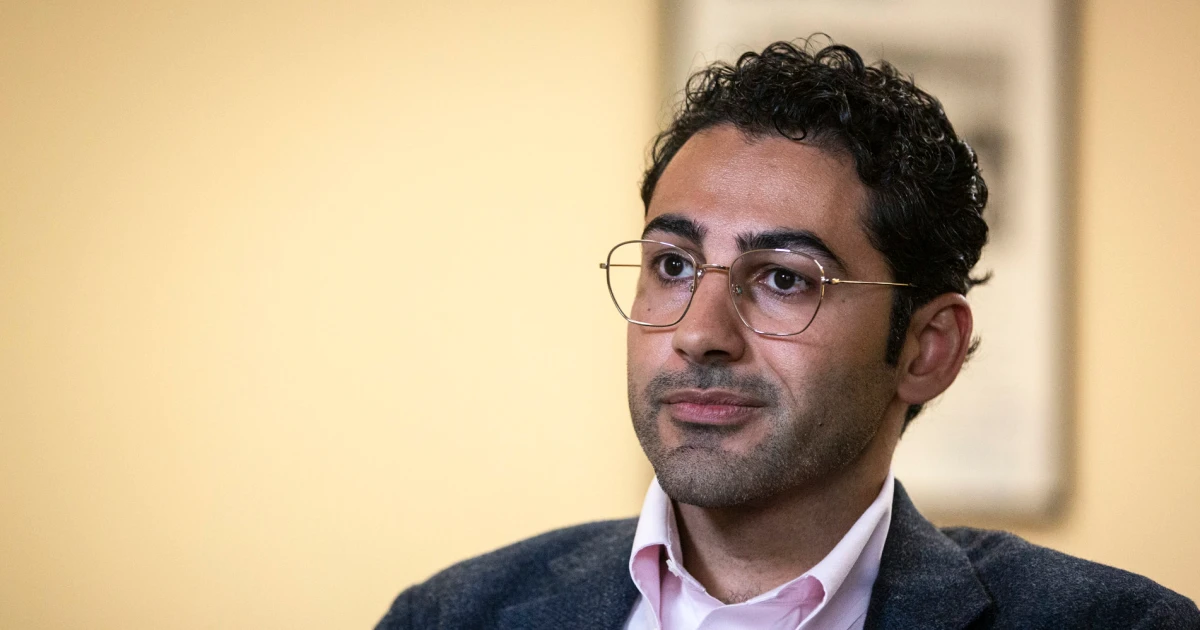
Mahmoud Khalil is a 31-year-old Syrian-born Palestinian activist and graduate student at Columbia University's School of International and Public Affairs (). Khalil obtained his green card approximately 12 years ago and has maintained lawful permanent resident status continuously until his March 2025 arrest, making him legally eligible to work, study, and reside in the United States (). Before his arrest, Khalil had no criminal record, no pending charges, and no history of violence or threats—his only documented "offense" was participation in protected political speech and student activism.
In April 2024, Khalil served as a spokesperson and lead negotiator for the Columbia University Gaza Solidarity Encampment, representing student protesters in 10 days of direct negotiations with Columbia University administration (). His role as a protest organizer and advocate for Palestinian rights—activity explicitly protected by the First Amendment—became the factual basis for his deportation under Secretary Rubio's foreign policy determination, even though no court has ever found his activism violated any law or University policy beyond Columbia's own disciplinary codes. Immigration agents arrested Khalil in his university-owned apartment in March 2025, marking what Trump officials announced would be the first in a series of deportations targeting noncitizens engaged in pro-Palestinian campus activism.
In a January 2026 decision, a split 2-1 panel of the Third Circuit Court of Appeals held that federal courts lack subject matter jurisdiction to review Khalil's constitutional claims until the immigration agency completes its administrative removal proceedings (). The majority opinion overturned a lower court's findings that Khalil's detention and deportation appeared likely unconstitutional, adopting a narrow procedural holding that pushed constitutional scrutiny into the future rather than blocking the government's action in the present (). However, the district court had previously ordered that Khalil be released from ICE detention and barred the government from deporting him based on Secretary Rubio's vague determination, finding the First Amendment claim legally meritorious even if not yet ripe for appellate review.
A federal district court judge explicitly found that Secretary Rubio's determination was "likely" unconstitutional when applied to Khalil's protected speech, granting Khalil's habeas petition and ordering his release from ICE custody while his case proceeded (). With the Board of Immigration Appeals' April 2026 determination of administrative finality, Khalil's legal team is now positioned to petition the Third Circuit to review the constitutional claims on the merits, arguing that the complete administrative record demonstrates the government weaponized immigration law to retaliate against First Amendment-protected activism. The federal injunction remains in place, meaning Khalil cannot be physically removed from the United States while his constitutional appeal proceeds.
The Board of Immigration Appeals' April 10, 2026 order finding administrative finality unlocks Khalil's pathway to full Fifth Circuit review of his First Amendment challenge to the Section 237(a)(4)(C) deportation (). Immigration law doctrine holds that federal courts generally cannot review immigration agency decisions until the administrative process is administratively final—meaning the highest agency level (the BIA) has issued its ruling—at which point the affected person can appeal to the federal courts (). Prior to this April ruling, the Third Circuit had held that it could not review the constitutional questions because the administrative proceedings were ongoing, even though a district court had already found the constitutional claims likely valid on the merits.
Khalil's legal team immediately signaled plans to appeal the BIA decision to the Fifth Circuit Court of Appeals, which will be the federal forum for challenging both the procedural regularity of the immigration proceedings and the substantive claim that Rubio's determination violates the First Amendment by targeting Khalil for protected speech (). The administrative finality determination means Khalil now has a complete record from immigration proceedings to present to federal judges, including evidence that the government's case rests entirely on Rubio's two-page memo with no corroborating evidence of the claimed foreign policy threat. The Fifth Circuit will decide whether the Constitution permits the government to use Section 237(a)(4)(C) as a tool to punish political speech or whether such use violates the First Amendment and due process rights of green card holders.
The American Civil Liberties Union, Center for Constitutional Rights, and New York Civil Liberties Union jointly represent Mahmoud Khalil in both his habeas corpus case and his expected Fifth Circuit appeal (). These organizations argue that Section 237(a)(4)(C) was weaponized against Khalil specifically because of his protected First Amendment advocacy for Palestinian rights, and that using the foreign policy grounds to deport a noncitizen for lawful speech constitutes impermissible retaliation (). The ACLU's legal theory directly challenges the Trump administration's characterization of Khalil's activism as a foreign policy threat, instead positioning the prosecution as a chilling effect on the First Amendment rights of all green card holders who might engage in controversial political advocacy.
The civil rights groups point to the timing and selectivity of the Rubio determination as evidence of retaliation: Khalil was arrested weeks before the Board of Immigration Appeals issued its removal order, and the government proceeded with the deportation case despite federal judges finding the constitutional claims meritorious (). The organizations have framed Khalil's case as a test of whether the government can use immigration law—specifically a statute designed for genuine foreign policy emergencies—to silence political dissent among lawful permanent residents. Their briefs argue that permitting the government to use Section 237(a)(4)(C) against protected speech would establish a dangerous precedent allowing future administrations to deport green card holders for any activism that the Secretary of State claims affects foreign relations.
Section 237(a)(4)(C) has been invoked only 15 times in three decades of immigration enforcement, making it one of the rarest grounds for deportation under modern U.S. immigration law (). Prior invocations of this statute involved allegations of actual espionage, direct participation in terrorist organizations, or threats to U.S. military operations—cases in which the foreign policy threat was concrete and specific rather than derived from domestic political activism (). Khalil's case marks the first known use of Section 237(a)(4)(C) against a noncitizen whose only documented conduct was peaceful protest and political advocacy on a domestic policy issue (the Gaza conflict), setting a precedent that dramatically expands the statute's potential application to routine campus activism and political organizing.
A 1996 federal court previously ruled that Section 237(a)(4)(C) was constitutionally "void for vagueness" because the statute fails to provide adequate notice of what conduct triggers deportation (), but this constitutional doctrine has not been robustly enforced in subsequent cases. Legal scholars and immigration advocates argue that Khalil's prosecution reveals the statute's dangerous vulnerability to abuse: without objective criteria defining what constitutes "serious adverse foreign policy consequences," any Secretary of State can simply declare that a noncitizen's political speech or activism harms U.S. foreign relations and order deportation (). The Khalil case exemplifies how an obscure statute enacted to address genuine security threats has become a tool for suppressing domestic political dissent by leveraging the executive's near-absolute control over immigration enforcement.
Respondent (person facing deportation)
Secretary of State
Lead legal counsel
Co-counsel
Administrative decision maker
Appellate court with jurisdiction
Next appellate destination
Co-counsel