National Security · Constitutional Law · Government · AI Governance·March 12, 2026
Microsoft and 22 retired generals back Anthropic's court fight against Pentagon
22 retired generals say Hegseth abused national security law to punish an AI company

Photo: REUTERS/Al Drago/File Photosource ↗
On March 11, 2026, Microsoft and a group of 22 retired senior U.S. military officers filed separate amicus briefs in San Francisco federal court supporting Anthropic''s lawsuit challenging the Pentagon''s designation of the AI company as a national security supply chain risk. Microsoft called the designation unprecedented and warned it would force government contractors to comply with "vague and ill-defined directions that have never before been publicly wielded against a U.S. company." The retired officers — including former CIA Director Michael Hayden, retired Coast Guard Admiral Thad Allen who led the Hurricane Katrina response, and former secretaries of the Air Force, Army, and Navy — argued that Defense Secretary Pete Hegseth''s action represents "the misuse of powerful national security authorities by civilian political leadership" as "retribution against a private company that has displeased the leadership." Both briefs were filed before Judge Rita Lin in San Francisco federal court, with a hearing scheduled for March 24. A fourth supporting brief came from civil liberties groups including the Cato Institute and the Electronic Frontier Foundation.
Key facts
On March 11, 2026, Microsoft filed an amicus curiae brief in San Francisco federal court asking Judge Rita Lin to block the Pentagon's supply chain risk designation against Anthropic. Microsoft told the court that the designation forces government contractors to comply with vague and ill-defined directions that have never before been publicly wielded against a U.S. company. Microsoft said the use of a supply chain risk designation to address a contract dispute may bring severe economic effects that are not in the public interest. The filing asked the court to issue a temporary restraining order blocking the designation to allow for more reasoned discussion. Microsoft also formally endorsed Anthropic's two ethical red lines: that AI should not be used for domestic mass surveillance, and that humans should remain in the loop for high-stakes automated decisions. Sherwood News Federal News Network
A separate amicus brief was filed on the same day by a group of 22 retired senior U.S. military officials, including former CIA Director Michael Hayden and retired Coast Guard Admiral Thad Allen, who led the federal government's response to Hurricane Katrina. Their brief explicitly set aside the substance of the Anthropic-Pentagon dispute and focused on what the group characterized as a fundamental abuse of government authority. Something more basic is at stake: the misuse of powerful national security authorities by civilian political leadership, not to address the serious concerns that led Congress to delegate the authority in question, but as retribution against a private company that has displeased the leadership. Far from protecting U.S. national security, the Secretary's conduct here threatens the rule-of-law principles that have long strengthened our military. Stars and Stripes Military.com
Earlier supporting briefs had been filed by AI developers at Google and OpenAI. A fourth amicus brief came from the Cato Institute and the Electronic Frontier Foundation. The spectrum of organizations — ranging from the Cato Institute on the right to EFF on the left, and from Microsoft as a corporate interest to retired military leaders as national security veterans — illustrated the breadth of opposition to the Pentagon's legal theory. The case is before Judge Rita Lin in San Francisco, with a hearing scheduled for March 24, 2026. The Hill CNBC
The backstory of the dispute runs through Anthropic's $200 million Pentagon contract negotiated under the Biden administration. That contract allowed Claude to be deployed across classified military networks but included two restrictions: Claude could not be used for mass surveillance of American citizens, and it could not be used to control fully autonomous weapons without meaningful human oversight. The rupture began in late January 2026 when Anthropic started pressing the Pentagon for details about how Claude had been used during the U.S. military operation that led to the capture of Venezuelan President Nicolás Maduro. The DOD insisted Anthropic must allow all lawful uses without restrictions. Anthropic CEO Dario Amodei said the company cannot in good conscience accept that condition. Sherwood News
The retired military officers' brief carries particular weight because it directly contests the Pentagon's framing that the Anthropic dispute is a national security matter. The officers argue it is the opposite — that abusing national security authorities to coerce a private company's product policies is itself a threat to the rule of law that the military exists to defend. The list of signatories includes Admiral C. Steve Abbot, Admiral Thad W. Allen, and Vice Admiral Donald C. Arthur, among 19 others. Stars and Stripes
Microsoft's brief also raised an operational concern: removing Anthropic's Claude from military systems while Operation Epic Fury is underway could hamper U.S. warfighters at a critical point in time. This argument created a paradox for the Pentagon — it is simultaneously using Anthropic's AI in active combat operations against Iran while designating Anthropic as a supply chain risk. Federal News Network
The case before Judge Lin represents a significant test of how far executive branch national security authority can extend into the commercial regulation of private AI companies. Legal analysts across the political spectrum have noted the legal theory is weak because Congress delegated supply chain authority for adversarial national security threats, not contract disagreements. OpenAI CEO Sam Altman issued a memo to staff saying OpenAI shares Anthropic's red lines on mass surveillance and autonomous weapons, while simultaneously negotiating with the Pentagon over guardrail terms. On March 26, Judge Lin blocked the Pentagon designation. CNN
Related Topics
6🤖
Pentagon threatens to blacklist Anthropic over AI weapons limits
Defense Secretary Pete Hegseth met with Anthropic CEO Dario Amodei at the Pentagon on Tuesday, February 24, 2026, and issued a stark ultimatum: allow Claude to be used for all lawful military purposes by 5:01 p.m. on Friday, February 27, or lose the contract. Hegseth also threatened to designate Anthropic a supply chain risk — effectively barring any company with Defense contracts from using Anthropic products — or invoke the Defense Production Act to compel compliance. Anthropic drew two firm lines throughout the negotiation: no AI autonomously controlling lethal weapons systems, and no AI enabling mass domestic surveillance of American citizens. CEO Dario Amodei posted publicly on Thursday that "threats do not change our position: we cannot in good conscience accede to their request." The Pentagon sent what it called a "last and final offer" on Wednesday night; Anthropic rejected it Thursday, saying the new language was "framed as a compromise but was paired with legalese that would allow those safeguards to be disregarded at will." The deadline passed. On Friday, February 27, President Trump posted on Truth Social ordering federal agencies to stop using Anthropic's technology, giving agencies six months to phase it out. Defense Secretary Hegseth declared Anthropic a "supply chain risk" — a designation normally reserved for companies tied to foreign adversaries. That label means any contractor doing business with the Pentagon must certify it does not use Anthropic products in its military work. The Pentagon said Elon Musk's xAI Grok model was "on board" as a replacement, though defense analysts noted Grok is not considered as capable as Claude. The dispute marks the first time the federal government has publicly designated a leading U.S. AI company a national security supply chain risk.
113% match
16 questions
🤖
Trump blacklists Anthropic. OpenAI steps in with Pentagon deal
President Trump ordered all federal agencies to immediately stop using Anthropic's AI technology on February 27, 2026, after the company refused to let the Pentagon deploy its Claude AI model for autonomous weapons and mass domestic surveillance. Defense Secretary Pete Hegseth labeled Anthropic a "Supply-Chain Risk to National Security", which is a designation typically reserved for Chinese companies like Huawei, effectively barring all military contractors from doing business with the firm. Within hours, rival company OpenAI announced it had struck its own deal with the Pentagon, agreeing to deploy its models on classified military networks. Anthropic, which held a $200 million Pentagon contract, had sought two specific safeguards: no use of its Claude AI for fully autonomous weapons (where AI makes targeting decisions without human approval), and no use for mass domestic surveillance of Americans. The Pentagon said requiring those limits would jeopardize military operations and demanded all AI companies make their models available for "all lawful purposes." Anthropic says it will challenge the supply-chain risk designation in court, calling it legally unsound and a dangerous precedent for any American company that negotiates with the government.
106% match
17 questions
🛡️
Pentagon confirms AI picks Iran targets. 120+ in Congress demand answers
On March 11, 2026, U.S. Central Command Admiral Brad Cooper released a video confirming the military is using "a variety of advanced AI tools" in Operation Epic Fury against Iran, saying these systems "help us sift through vast amounts of data in seconds" and compress targeting processes that once took hours or days into seconds. NBC News simultaneously confirmed, citing two congressional sources, that Palantir''s Maven Smart System — which uses Anthropic''s Claude as its reasoning engine — is the primary AI platform identifying airstrike targets. U.S. forces had struck more than 5,500 targets in Iran by March 11, including at least 60 ships. The confirmation came as a Pentagon preliminary investigation found U.S. forces responsible for a strike that killed approximately 175 people, mostly children and their parents, at Shajarah Tayyebeh elementary school in Minab, Iran on February 28. More than 120 Democratic members of Congress wrote to Defense Secretary Pete Hegseth demanding detailed information on how the military is limiting civilian casualties and what role AI played in the school bombing.
105% match
19 questions
🤖
Pentagon used Anthropic AI to target Iran after Trump declared it a national security risk
On March 3, 2026, reporting by the Wall Street Journal and Axios confirmed that U.S. Central Command used Anthropic's Claude AI for intelligence assessments, target identification, and battle simulations during Operation Epic Fury's opening strikes on Iran, just hours after President Trump had declared Anthropic a "supply chain risk to national security" and banned all federal use of its products. Anthropic had refused Pentagon demands for unrestricted access to Claude, citing two red lines it said it would not cross: no mass domestic surveillance, and no fully autonomous lethal weapons without human oversight. Defense Secretary Hegseth responded by labeling Anthropic, an American company headquartered in San Francisco, with a designation previously reserved for foreign adversaries like Huawei. By March 3, nearly 900 workers at Google and OpenAI had signed an open letter called "We Will Not Be Divided," demanding their employers refuse Pentagon demands to strip AI ethical safeguards. Google was in active negotiations to deploy its Gemini AI on classified military networks. OpenAI CEO Sam Altman, who announced his own Pentagon deal on Feb. 27, acknowledged that the treatment of Anthropic set "an extremely scary precedent." A separate open letter called on Congress to investigate the unprecedented use of the supply chain risk designation against an American company.
101% match
21 questions
🤖
Anthropic sues Pentagon over AI safety blacklisting
On March 9, 2026, Anthropic filed two federal lawsuits challenging the Pentagon''s decision to label it a "supply chain risk" — a national security designation historically reserved for foreign adversaries like Huawei and ZTE. CEO Dario Amodei had refused to allow Claude to be used for fully autonomous weapons systems or mass domestic surveillance of Americans, and the Pentagon responded by cutting Anthropic''s contracts. Anthropic argues the designation violates its First Amendment rights and bypassed required due process. The White House was simultaneously drafting an executive order to formally expel Anthropic''s AI from every federal agency — a move legal experts said had no statutory precedent for targeting a named American company. Strikingly, despite the blacklisting, Pentagon officials confirmed Claude was used in Iran war targeting operations. OpenAI was cleared for classified networks access the same day, standing to gain directly from Anthropic''s expulsion. The company said multiple billions in 2026 revenue were at risk.
99% match
21 questions
🔍
Pentagon told Congress Iran attack was not imminent as Trump claimed threat
On March 1, 2026, Pentagon officials told congressional staff in private briefings that U.S. intelligence did not suggest Iran was preparing a preemptive strike on American forces. Three people familiar with the briefings told the Associated Press. This directly undercut Trump's public justification for Operation Epic Fury, noting that the war was necessary to eliminate "imminent threats from the Iranian regime." The intelligence gap ran deeper than the question of intent. A May 2025 Defense Intelligence Agency assessment had already found that Iran could develop a militarily viable intercontinental ballistic missile by 2035 "should Tehran decide to pursue the capability" — not "soon," as Trump claimed. After the June 2025 nuclear strikes, a classified DIA report found those strikes set Iran's nuclear program back only months, not years — contradicting the White House claim that Iran's nuclear ambitions had been "obliterated." Marco Rubio, just days before the February 28 war, told reporters he wouldn't speculate on how far away Iran was from missiles that could reach the U.S. The pattern was consistent: Trump publicly escalated threat claims, his own intelligence agencies quietly contradicted them.
99% match
25 questions
Related
Categories that may be relevant to you
5 topics available
May 23, 2026
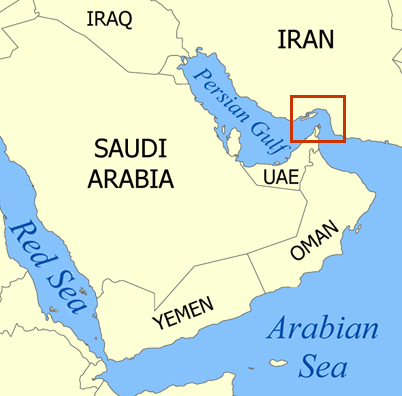
Trump declares Iran peace MOU largely negotiated
May 22, 2026
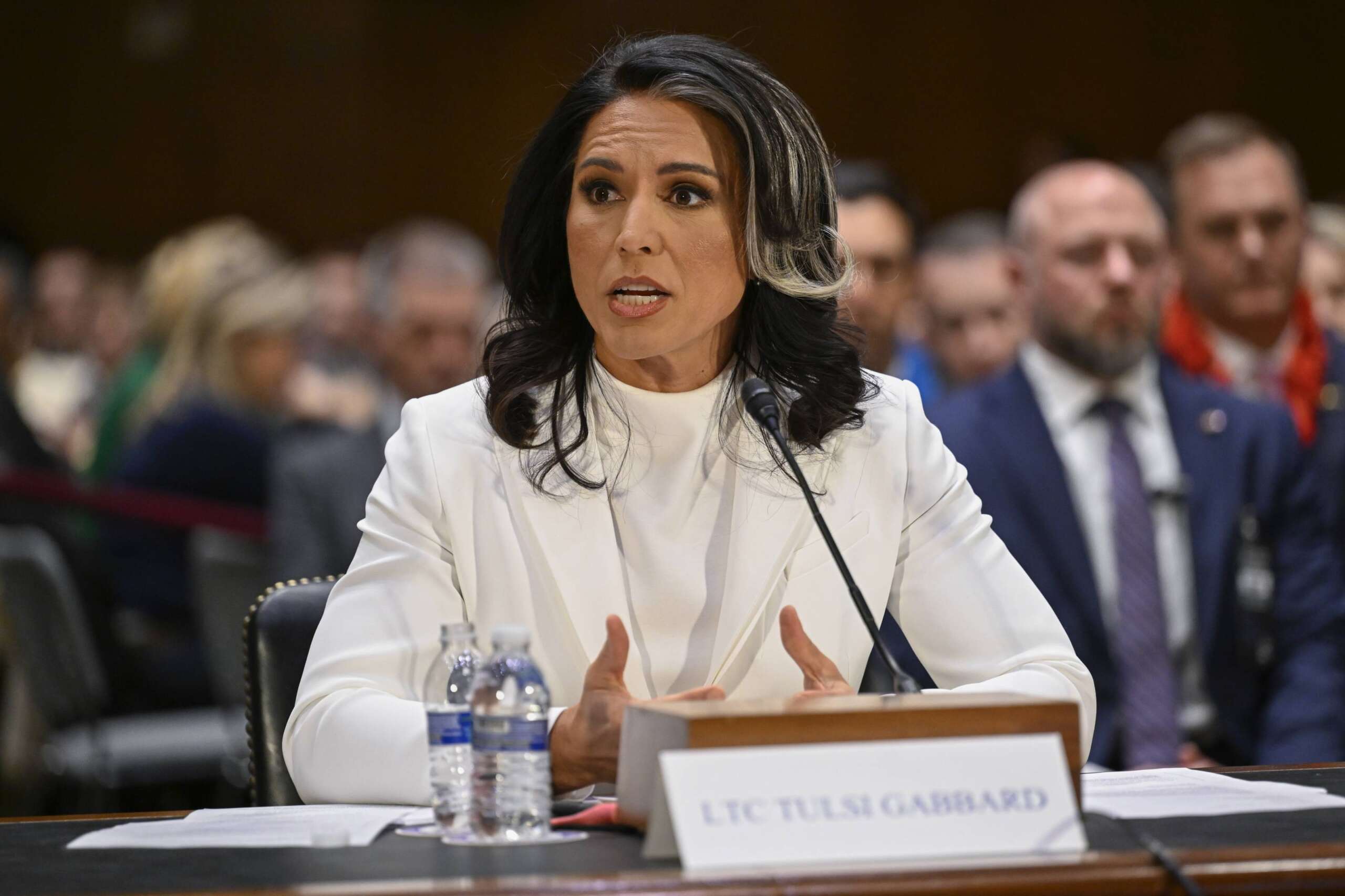
Gabbard resigns as director of national intelligence
May 21, 2026
House GOP cancels Iran war powers vote, shielding Trump from rebuke
⚖️
May 21, 2026
Supreme Court rules cruise lines liable for Cuba's confiscated docks

May 20, 2026
DOJ indicts Raul Castro over 1996 Brothers to the Rescue shootdown
View All Foreign Policy Topics
322 topics
19 questions
Start the review