Public Health · Government · Civil Rights·March 4, 2026
New York Attorney General orders NYU Langone to reopen transgender youth care program
No binding federal law required the closure but AG James demanded reopening within 10 days

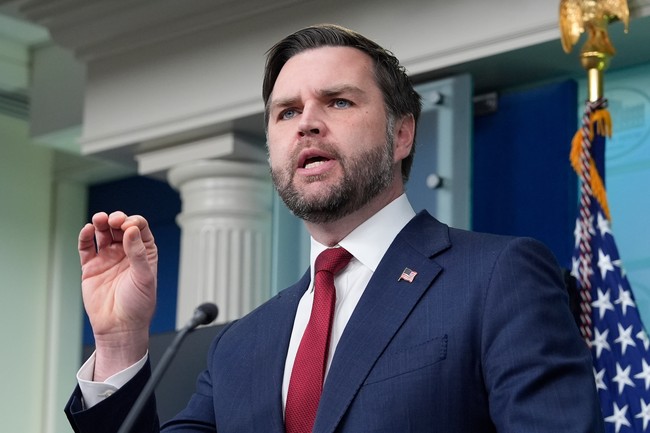
Photo: Yuki Iwamura / AP
"NYU Langone Health closed its Transgender Youth Health Program on February 17, 2026, canceling all scheduled appointments without advance public notice. The program had provided puberty blockers, hormone therapies, mental health counseling, and surgical care to patients under 19. Hospital leadership cited the departure of the program's medical director and what a spokesperson described only as the 'current regulatory environment' as the reasons for the abrupt closure.\n\nNYU Langone Health is one of the largest academic medical systems in New York City, with more than 200 locations across the metropolitan area. The transgender youth program had been one of the most comprehensive such services available in the New York region for minors, serving patients from across the tri-state area. Families who had been receiving ongoing care — including patients mid-course on hormone therapy — received notification that their appointments were being canceled."
"The Trump administration issued a directive in December 2025 warning that hospitals providing gender-affirming care to minors risked losing their Medicare and Medicaid reimbursements. Those reimbursements represent a substantial share of operating revenue at large academic medical centers. For NYU Langone, which receives billions in federal health care payments annually, the prospect of losing that funding represented an existential financial threat.\n\nThe administration's directive was issued under an executive order signed by President Trump shortly after he took office. The order directed federal health agencies to treat gender-affirming care for minors as ineligible for federal health care funding. Civil rights groups immediately challenged the directive in federal court, and several injunctions were issued in early 2026, though the legal landscape remained unsettled when NYU Langone closed its program."
"New York Attorney General Letitia James sent a formal demand letter to NYU Langone on March 3-4, 2026, ordering the hospital to reopen its Transgender Youth Health Program within 10 days. James's letter cited New York's Human Rights Law and Public Health Law, which prohibit health care facilities from denying services on the basis of gender identity or disability status. She wrote that the hospital's decision to close the program appeared to be 'jeopardizing access to medically necessary healthcare for some of the most vulnerable New Yorkers.'\n\nJames made a key legal argument that the hospital's closure was legally unjustified: no federal law had actually changed to require hospitals to stop providing trans youth care. The Trump administration's directive was in legal limbo, with multiple federal courts having partially or fully blocked its enforcement. NYU Langone had chosen to act preemptively to avoid financial risk, but James argued that a preemptive response to an uncertain threat did not satisfy the hospital's legal obligations under state law."
"The March 11 deadline James set created immediate legal uncertainty for NYU Langone. If the hospital complied with the attorney general's order and reopened the program, it risked federal retaliation in the form of Medicare and Medicaid funding cuts. If it refused, it faced potential enforcement action by the state, including fines and possible suspension of its New York State operating licenses.\n\nLegal experts told reporters that the standoff represented a textbook example of 'cooperative federalism in reverse' — a situation where the federal and state governments are issuing directly contradictory commands to the same regulated entity. The hospital found itself in a position where it could not simultaneously comply with both authorities. Constitutional scholars noted that typically have to satisfy certain legal requirements to be valid, and that courts would ultimately have to sort out which government's demands were enforceable."
"The practical impact on patients was immediate and severe. Transgender youth who had been receiving ongoing hormone therapy faced an abrupt disruption in care that medical professionals said could cause significant harm. Puberty blocker protocols require consistent administration and monitoring; an unplanned interruption can cause physical and psychological harm to patients who have been on the therapy for months or years. Mental health providers at NYU Langone who had been treating transgender patients as part of the program were also affected.\n\nClinical guidance from major medical organizations, including the American Academy of Pediatrics and the Endocrine Society, treats gender-affirming care as medically necessary for patients with gender dysphoria who meet clinical criteria. The American Medical Association filed an amicus brief in one of the related federal court cases arguing that removing access to established medical care mid-treatment poses direct clinical harm to patients."
"New York Governor Kathy Hochul had previously stated that New York would not comply with federal directives targeting transgender health care access. Her administration had issued guidance to state-licensed health facilities affirming that New York law protects access to gender-affirming care regardless of federal pressure. James's action against NYU Langone was consistent with this position, though it marked the first time the attorney general's office had issued a formal legal demand specifically ordering a hospital to reopen a suspended program.\n\nThe case put New York's enforcement infrastructure directly against the federal government's financial leverage. James could initiate civil enforcement proceedings against NYU Langone under the Human Rights Law, which carries penalties including fines, required remediation, and potential civil damages. But the federal government controls a vastly larger financial stake in the hospital's operations through Medicare and Medicaid, giving Washington a structural advantage in the standoff."
"The NYU Langone case was one of the most visible examples of a broader pattern in which large hospital systems across the country were preemptively suspending transgender care programs in anticipation of federal enforcement — before any federal action had actually been taken against them. Children's hospitals in other states had taken similar steps in January and February 2026 as the Trump administration's directives took effect. The closures were occurring even in states where state law protected the care, and even in states without active state-level enforcement.\n\nPublic health researchers noted that the pattern represented a 'chilling effect' — in which regulated entities alter their behavior not because the law requires it, but because they fear that it might. The closure at NYU Langone was not required by any binding federal legal decision. It was a risk-management choice by hospital administration. James's letter argued that hospitals do not have the legal authority to make that kind of unilateral choice when doing so requires them to violate their affirmative obligations under state civil rights law."
"The Letitia James demand letter was notable for its directness about the legal theory underlying the state's claim. Rather than simply asserting that NYU Langone had to comply with state law, James's letter walked through the argument that no existing federal mandate legally compelled the hospital's decision. She cited the series of federal court injunctions that had limited the administration's ability to immediately enforce its healthcare funding restrictions, noting that the legal landscape was actively contested and that NYU Langone had no binding order requiring it to close the program.\n\nLegal commentators across the political spectrum recognized that James's theory, if accepted by a court, would significantly limit hospitals' ability to preemptively comply with Trump administration directives that had not yet survived judicial review. Conversely, if a federal court sided with NYU Langone's position that federal funding conditions were legally sufficient to override state anti-discrimination requirements, it could open the door for hospitals nationwide to suspend services based on anticipated federal demands rather than enacted federal law."
Related Topics
3
Paxton sues Children's Health over banned transgender youth care
AG uses Medicaid fraud claims to enforce care ban at 7th-largest pediatric hospital
Vance and Oz freeze $259.5M in Minnesota Medicaid over fraud
Walz has 60 days to comply or face $1B in deferred payments this year
New York launches Legal Observation Project to monitor ICE enforcement
Purple-vested state observers monitor federal immigration enforcement starting today
27 questions
Start the review