Immigration · Foreign Policy·August 15, 2021
Biden launches Operation Allies Welcome to resettle 190,000 Afghans after U.S. withdrawal
Largest U.S. refugee operation since Vietnam evacuates Afghans who aided American military operations

President Biden directed the Department of Homeland Security to lead Operation Allies Welcome on Aug. 29, 2021, as a whole-of-government effort to evacuate, process, and resettle vulnerable Afghans following the Taliban's takeover of Kabul on Aug. 15, 2021. The operation came three days after the devastating Abbey Gate bombing on Aug. 26 that killed 13 U.S. service members and approximately 170 Afghan civilians. Over 190,000 Afghans were ultimately resettled through both Operation Allies Welcome and its successor program Enduring Welcome, making it one of the largest refugee resettlement operations in U.S. history—comparable to the evacuation of Vietnamese refugees in 1975.
Between Jul. 2021 and Mar. 2022, approximately 73,000 Afghans were paroled into the United States under Operation Allies Welcome using humanitarian parole authority under Immigration and Nationality Act Section 212(d)(5)
Humanitarian parole provides temporary legal status for up to two years but doesn't confer permanent immigration status or a pathway to citizenship
More than 40% of those brought to the U.S. were eligible for Special Immigrant Visas (SIVs) because they worked directly with U.S. forces, the U.S. embassy, or other government agencies over the prior two decades SIV holders receive green cards and permanent residency, while humanitarian parolees must separately apply for asylum or other immigration status.
The evacuation operation ran from Aug. 14-30, 2021, at Hamid Karzai International Airport in Kabul, with the U.S. military securing the airport after the Afghan government collapsed
At peak capacity, approximately 8,000 people were evacuated daily on U.S. military cargo planes
The chaotic scenes included desperate Afghans clinging to departing aircraft, with at least six people falling to their deaths or being crushed The evacuation ended abruptly on Aug. 30, leaving behind an estimated 100,000-200,000 Afghans who had worked with coalition forces or faced Taliban persecution Processing occurred at transit sites in Qatar, Germany, and other locations before evacuees flew to the United States.
The Abbey Gate suicide bombing on Aug. 26, 2021, at 5:36 p.m
Kabul time, killed 13 U.S. service members (11 Marines, 1 Army soldier, 1 Navy corpsman) and approximately 170 Afghan civilians who were waiting at the airport gate for evacuation
The bomber, identified as Abdul Rahman al-Logari, was an ISIS-K operative who had been held in a coalition detention facility in Afghanistan but was freed when the Taliban emptied prisons after taking control The bomber carried 20 pounds of explosives packed with ball bearings that explosively directed through the dense crowd Pentagon investigations determined it was a single suicide bomber, not the complex attack initially reported, and concluded the attack was not preventable given the density of crowds and security constraints.
All Afghan evacuees underwent multi-layered security vetting conducted by approximately 400 personnel from federal agencies including DHS, FBI, Department of Defense, National Counterterrorism Center, and intelligence community partners
The vetting process involved biometric screenings (fingerprints, photos, iris scans) and biographic data checks against terrorist watch lists and law enforcement databases
However, the expedited timeline meant some screenings were abbreviated compared to normal refugee vetting, which typically takes 18-24 months A 2024 DHS Inspector General report found some data inaccuracies in evacuee files, and a Jun. 2025 Department of Justice report noted that 55 individuals evacuated under Operation Allies Welcome were later identified on terrorism watch lists, though the FBI concluded the majority posed no security risk.
The federal government appropriated $6.3 billion in 2021 for Afghan resettlement efforts, including Operation Allies Welcome, covering housing and care at military bases, medical services, employment assistance, and integration support
By 2025, total spending exceeded $14 billion according to reporting citing the Office of Inspector General
One major resettlement site, Joint Base McGuire-Dix-Lakehurst in New Jersey, spent over $626 million by early 2022 Eight U.S. military bases served as temporary housing: Fort Lee and Fort Pickett in Virginia, Holloman Air Force Base in New Mexico, Marine Corps Base Quantico in Virginia, Fort McCoy in Wisconsin, Fort Bliss in Texas, Joint Base McGuire-Dix-Lakehurst in New Jersey, and Camp Atterbury in Indiana Afghans received medical care, vaccinations, English language instruction, job training, and connections to resettlement agencies before moving to communities across the United States.
Republican lawmakers, including President Trump during his 2024 campaign, heavily criticized Operation Allies Welcome as poorly planned and inadequately vetted
Rep. Clay Higgins (R-LA) raised concerns in an Oct. 21, 2021, House hearing that individuals were being paroled into the U.S. interior or leaving military bases before proper vetting
After the Nov. 27, 2025, shooting of two National Guard members near the White House by an Afghan national who entered under Operation Allies Welcome, Trump called for re-examining every Afghan who entered under Biden and announced that U.S Citizenship and Immigration Services would halt processing of all immigration requests for Afghan nationals indefinitely Critics noted this punished 190,000 Afghans for one individual's alleged actions.
The temporary humanitarian parole status created long-term uncertainty for Afghan evacuees
Parole lasts only two years and doesn't provide a pathway to permanent residency unless parolees qualify through other channels such as asylum approval, marriage to U.S. citizens, or employer sponsorship
Congress failed to pass an Afghan Adjustment Act that would have provided a pathway to citizenship for the approximately 80,000 Afghans who entered on parole As of 2025, many Afghan parolees face expiring work authorization and potential deportation back to Taliban-controlled Afghanistan, where they're considered traitors for assisting U.S. forces Asylum approval rates for Afghans whose cases have been decided exceed 97%, but the Trump administration's Nov. 2025 freeze on asylum processing left thousands in limbo.
Related Topics
4
Trump suspends all Afghan immigration after National Guard shooting
233,000 refugees face review as Trump halts all Afghan immigration indefinitely
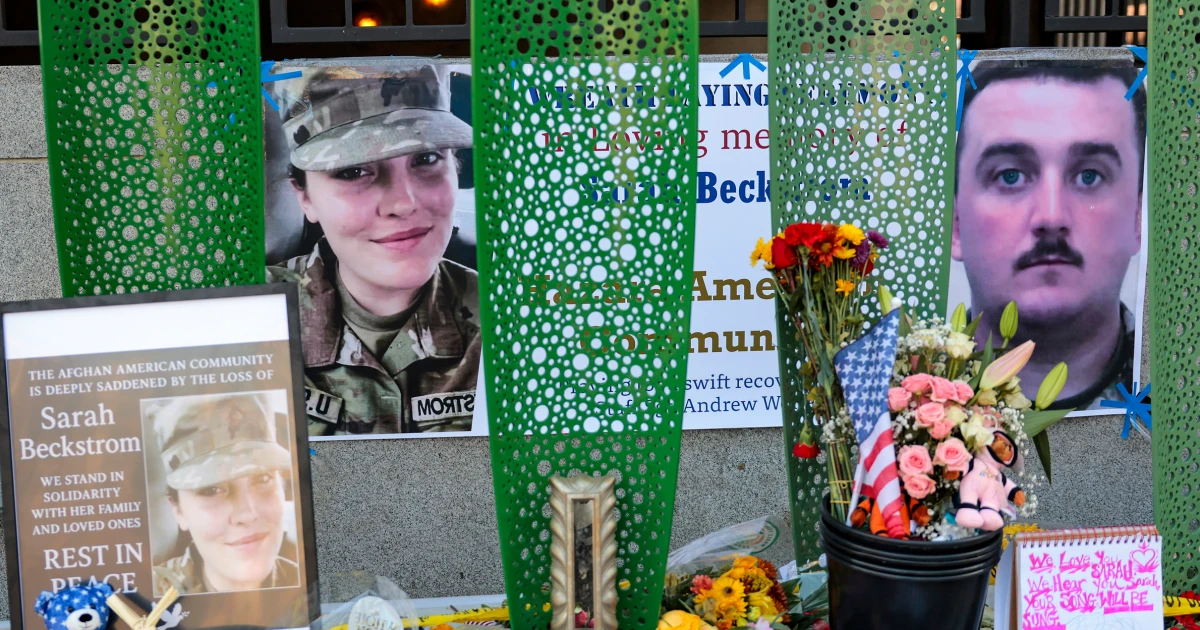
Former CIA contractor Rahmanullah Lakanwal shoots two National Guard members blocks from White House, killing one
Afghan vetted by CIA, granted Trump asylum shoots guardsmen

Trump administration halts all asylum decisions, freezing 2.2 million cases
2.2 million asylum cases frozen indefinitely after Afghan recipient shoots National Guard members

Trump expands travel ban to 39 countries, adds Palestine
19 countries face full entry ban, 20 face partial restrictions
20 questions
Start the review