January 15, 2025
Republican governors block own party's partisan school board push as voter backlash grows

GOP governors block own party's education power grab
🗳️Elections📊Electoral Systems🎓Education
January 15, 2025
GOP governors block own party's education power grab
Nine states now allow partisan school board elections, breaking from centuries of nonpartisan school governance tradition as national political battles infiltrate local education decisions. Alabama, Connecticut, Louisiana and Pennsylvania require partisan elections, while Rhode Island, Tennessee, North Carolina, South Carolina and Georgia allow districts to choose between partisan and nonpartisan systems.
Republican legislators in Iowa, New Hampshire, and Arizona introduced bills in 2024 to expand partisan school board elections further.  Rep. Dianne Pauer's New Hampshire House Bill 1099 would let districts vote to adopt partisan elections where local Republican and Democratic parties could nominate candidates appearing on ballots with party labels.
Arizona Senator Justine Wadsack sponsored Senate Bill 1097 requiring partisan designations for all school board candidates in Arizona's 200+ districts, passing the Senate Education Committee 4-3 on party lines before  Governor Katie Hobbs vetoed the measure in April 2025. Wadsack claimed partisan elections provide voters 'necessary information' about candidates' 'political ideology.'
Ballotpedia research shows that as of 2022, legislators in 14 states considered making school board elections partisan, with Republicans sponsoring all 13 bills introduced in 2025. Eleven bills originated in Republican trifecta states, while two came from divided government states, indicating partisan school boards serve Republican electoral strategy rather than educational improvement.
Matt Fioriti from the conservative Opportunity Solutions Project argued partisan school board races increase voter turnout by citing Foundation for Government Accountability research showing higher completion rates for partisan school board sections in North Carolina. However, this research ignores whether increased turnout improves educational outcomes or governance quality.
Current nonpartisan elections allow 41 states to focus school board discussions on local educational issues rather than national political talking points. Education scholar Kathleen Knight Abowitz warns partisan elections risk disrupting 'important work of nonpartisan school boards in communities across the nation' by introducing divisive political frameworks.
The shift transforms school boards from community-focused education oversight into extensions of national party politics, with candidates running on Republican or Democratic tickets rather than local education platforms. This nationalization moves local education governance away from practical problem-solving toward ideological positioning.
Arkansas provides the sole exception, with Governor Sarah Huckabee Sanders signing HB1724 in April 2025 to codify nonpartisan school board elections. The measure strengthens nonpartisan requirements while making other changes to election dates and procedures, demonstrating some Republicans recognize benefits of keeping education governance local.
How many states currently allow partisan school board elections as of 2025?
What is the main criticism opponents have of partisan school board elections?
Over {{blank_1}}% of school boards are elected in {{blank_2}} elections, but {{blank_3}} states now allow partisan options, representing a shift from the {{blank_4}}-old tradition of keeping local education separate from party politics.
What is the primary argument supporters make for partisan school board elections?
According to research, how have school board elections become increasingly politicized in recent years?
Upgrade to Premium to access all practice questions and unlock advanced quiz features.
Upgrade to PremiumThese questions are part of the Republican governors block own party's partisan school board push as voter backlash grows topic. Master this topic by completing the quiz or exploring each question in detail.
Take the full quiz to master this topic and track your progress.
Start Quiz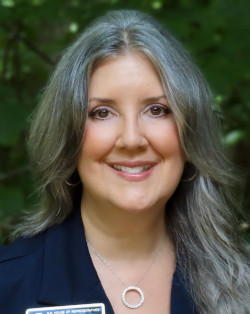
New Hampshire Republican Representative
Arizona Republican Senator

Arizona Democratic Governor
Opportunity Solutions Project representative