SCOTUS guts VRA Section 2, opens redistricting to GOP
Ruling could cost Democrats up to 19 House seats by 2028
Ruling could cost Democrats up to 19 House seats by 2028
The Supreme Court decided Louisiana v. Callais on April 29, 2026, in a 6-3 ruling along ideological lines. Justice Samuel Alito wrote the majority opinion, joined by Chief Justice John Roberts, Thomas, Gorsuch, Kavanaugh, and Barrett. The court struck down Louisiana's second majority-Black congressional district — the 6th Congressional District represented by Democrat Cleo Fields — as an unconstitutional racial gerrymander under the Equal Protection Clause.
Alito's opinion sets four new requirements courts must apply when evaluating a Section 2 claim. Plaintiffs must now show that race was the state's predominant motive and that no race-neutral explanation exists for the district lines. This standard is significantly harder to meet than the effects test Congress wrote into the 1982 VRA amendments, which allowed challengers to show that a map had the practical effect of diluting minority voting power without proving discriminatory intent.
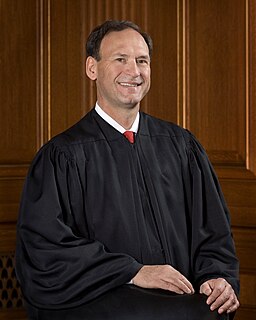
Associate Justice, U.S. Supreme Court
Alito wrote the 6-3 majority opinion in Louisiana v. Callais, striking down Louisiana's second majority-Black congressional district as an unconstitutional racial gerrymander. His opinion established four new requirements for Section 2 claims that effectively restore the pre-1982 intent standard Congress had repealed. He previously wrote a concurring opinion in the Texas redistricting case arguing that lower courts had improperly inserted themselves into redistricting.
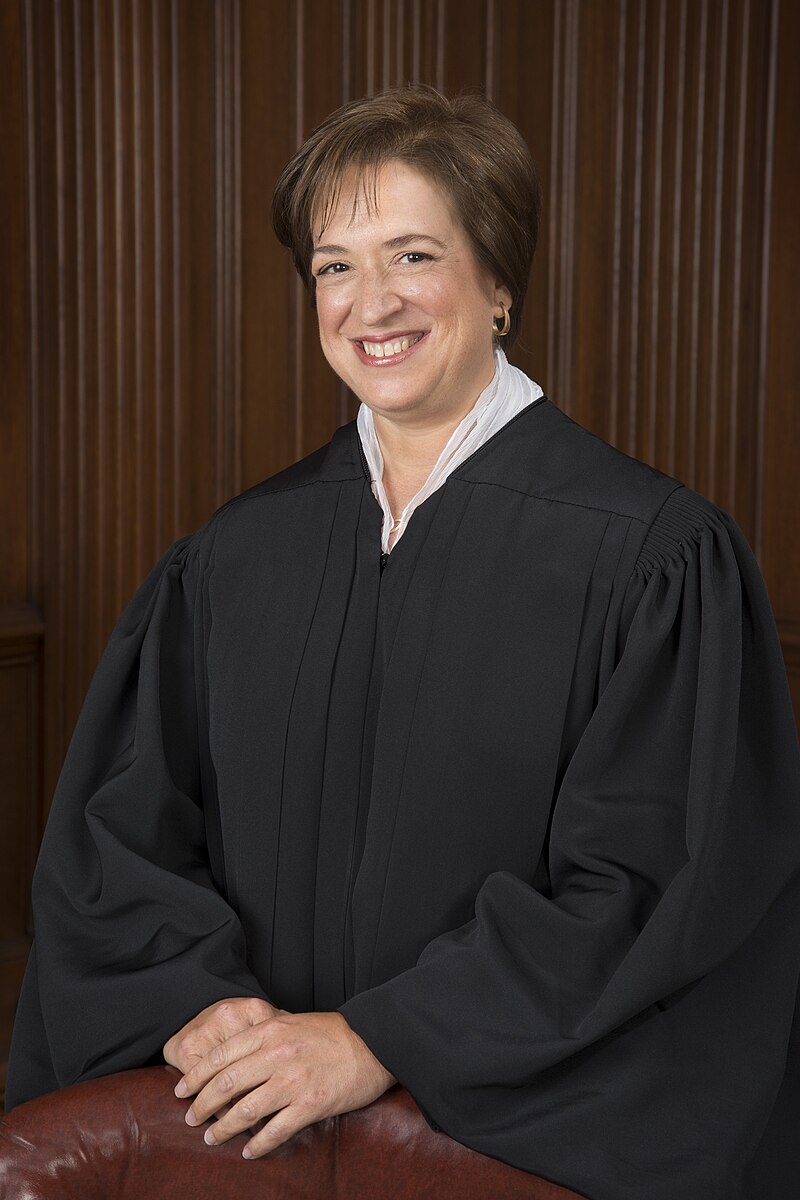
Associate Justice, U.S. Supreme Court
Kagan wrote the principal dissent in Callais, joined by Justices Sotomayor and Jackson, and read portions aloud from the bench — a sign of profound disagreement. She argued the majority invented new requirements not in the VRA's text, 'eviscerat[ing]' the statute Congress wrote. She warned the ruling renders Section 2 'all but a dead letter' and will allow states to dilute minority voting power without legal consequence.
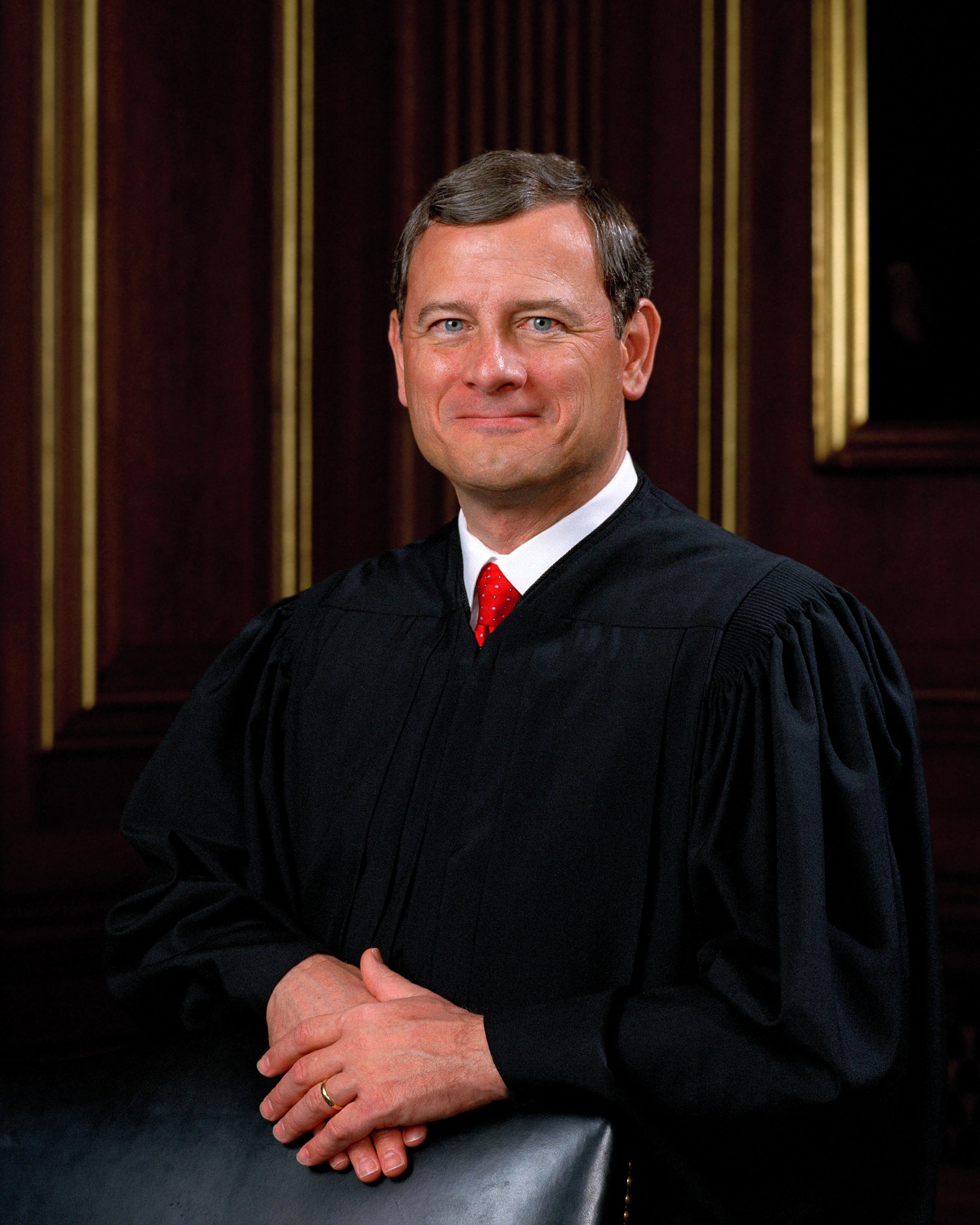
Chief Justice, U.S. Supreme Court
Roberts joined the majority in Callais and described Louisiana's 6th Congressional District as a 'snake' stretching more than 200 miles to connect parts of Shreveport, Alexandria, Lafayette, and Baton Rouge. He has been the Court's central figure in narrowing the VRA across multiple decisions since 2013, including Shelby County v. Holder, which eliminated preclearance requirements.
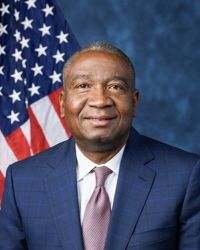
U.S. Representative, Louisiana's 6th Congressional District (D)
Fields represented the majority-Black 6th Congressional District that the Supreme Court struck down as unconstitutional. He released a statement calling the ruling 'a grave setback to voting rights and to the promise of equal political representation for all Americans' and said he would work with colleagues to evaluate legislative responses. Louisiana is not expected to immediately redraw maps, as qualifying deadlines for 2026 elections have passed.
U.S. Representative, Louisiana's 2nd Congressional District (D)
Carter, who represents Louisiana's first majority-Black district, warned that both majority-Black congressional districts in Louisiana are now at risk of being dismantled following the Callais ruling. He said the consequences would be 'immediate and severe' and that without VRA protections, Black voters in Louisiana will be unable to elect candidates of their choice.

Political Scientist, Carnegie Mellon University; Court-Appointed Special Master
Cervas has served as a special master in multiple Voting Rights Act redistricting cases and provided expert legal advice in voting rights litigation. Following the Callais ruling, he stated that 'the Voting Rights Act as a means to protect minority voters from vote dilution is essentially dead.' He estimated Republicans could redraw more than a dozen Democratic-held House districts previously protected under the VRA.
Political Scientist, University of Florida
McDonald, a redistricting and election data expert, analyzed the Callais decision and concluded that the majority holds that if a racial community votes consistently with a party, it is permissible to deny them representation because that constitutes partisan gerrymandering. This interpretation allows racially discriminatory maps to survive legal challenge by characterizing them as partisan, not racial, even when the two characteristics are nearly identical.
Election Law Specialist, Harvard Law School
Stephanopoulos estimated that nearly 70 of the 435 congressional districts have benefited from Section 2 protections in redistricting. His analysis indicates the Callais ruling will have significant implications for minority representation across the country, not just in Louisiana. He has been a leading academic voice on Section 2 enforcement and the intersection of race and partisan redistricting.
White House Spokeswoman, Trump Administration
Jackson issued a statement calling the Callais ruling 'a complete and total victory for American voters,' asserting that race should not determine congressional district allocation and praising the court for ending what she called the unconstitutional misuse of the Voting Rights Act. Her statement reflected the Trump administration's support for the litigation strategy that produced the ruling.
True
The Callais ruling was 6-3 along ideological lines
All sources confirm the 6-3 split, with the six Republican-appointed justices in the majority and three Democratic-appointed justices dissenting. [1][2]
True
Congress amended Section 2 of the VRA in 1982 to eliminate the need to prove intentional discrimination
The 1982 VRA amendments created an effects test, reversing Mobile v. Bolden (1980), which required proof of intentional discrimination. Congress made the effects test explicit because the intent standard had been shown to make challenges nearly impossible. [1][2]
True
Justice Kagan read her dissent aloud from the bench
Multiple news sources confirm Kagan read portions of her dissent aloud, which is a rare practice reserved for cases where justices believe the majority has committed a fundamental legal or constitutional error. [1][2]
True
Nearly 70 congressional districts previously benefited from Section 2 protections
AP News reports this estimate from election law scholar Nicholas Stephanopoulos of Harvard Law School, who has extensively studied Section 2 and redistricting. His estimate covers districts where minority voting population was sufficient to require consideration of majority-minority district creation under the pre-Callais Section 2 framework. [1]
True
The ruling's main impact on elections won't be felt until 2028
Most states had passed primary filing deadlines by April 29, 2026, making immediate map changes logistically difficult or legally problematic. Major redistricting efforts based on Callais are likely to occur after 2026 midterm elections in the 2027-2028 cycle, with full impact felt in 2028 congressional elections. [1][2]
Disputed
Up to 30 percent of the Congressional Black Caucus could lose their seats as a result of Callais
This figure comes from a report by Fair Fight Action and the Black Voters Matter Fund, which are advocacy organizations. The projection depends on assumptions about which states will choose to redraw maps and how aggressively. The ruling does not require any state to redraw maps; it enables redistricting that would previously have violated Section 2. The true impact will depend on political decisions in individual states and the results of future litigation. [1][2]
Misleading
The ruling reversed Allen v. Milligan, the 2023 case requiring Alabama to draw a second majority-Black district
Callais does not formally overrule Allen v. Milligan; the Court distinguished the cases on specific factual and legal grounds. However, critics argue the practical effect is to make Allen v. Milligan's reasoning inoperable, because the map Louisiana drew to comply with the Allen v. Milligan-era precedent was itself struck down as unconstitutional. The result is a logical impossibility for states trying to comply with Section 2. [1][2]
Contact your member of Congress to urge VRA Section 2 legislative repair
civic action
Congress amended Section 2 in 1982 specifically to restore an effects test after the Supreme Court narrowed the statute. Congress has the constitutional authority under the 15th Amendment to pass legislation reinstating VRA protections that the Court has narrowed. Contacting your representative and senators urges them to prioritize this legislation.
Register and participate in your state's next redistricting process
civic action
Redistricting decisions in 2027 and 2028 will determine who controls Congress for the decade after 2030. Most states hold public hearings and accept public comment on proposed maps. Participation on the record creates legal documentation that can support future challenges.
Submit a public comment to the Department of Justice Voting Section
civic action
The DOJ Voting Section retains authority to investigate and litigate intentional voting discrimination claims, which Callais left intact. The DOJ can also support state and local compliance with remaining VRA provisions. Communicating concerns about redistricting plans in your jurisdiction can inform DOJ enforcement priorities.
Support civil rights organizations challenging redistricting plans
civic action
Organizations including the NAACP Legal Defense Fund and Democracy Docket are analyzing Callais and developing legal strategies for the next redistricting cycle. Supporting these organizations financially or through volunteer efforts contributes to the litigation infrastructure needed to challenge discriminatory maps.