EthicsGovernmentJustice
December 2, 2025Trump commutes 7-year sentence of fraudster David Gentile after 12 days in prison
White-collar criminal freed after serving 12 days of 7-year sentence for defrauding more than 10,000 investors
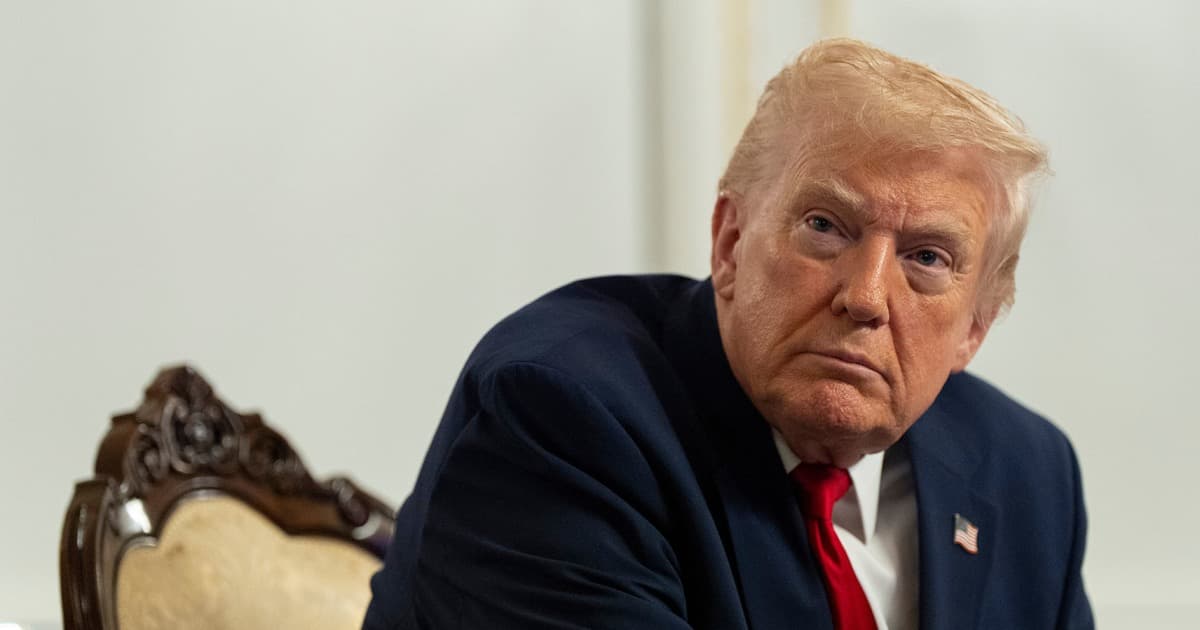
President Trump commuted the seven-year prison sentence of David Gentile on Nov. 26, 2025, after Gentile served just 12 days of his sentence. Gentile reported to federal prison on Nov. 14, 2025 and was released from Bureau of Prisons custody as of Nov. 26.
Gentile was the founder and former CEO of GPB Capital Holdings and was convicted by a federal jury in Aug. 2024 following an eight-week trial. He was found guilty of conspiracy to commit securities fraud, conspiracy to commit wire fraud, securities fraud and two counts of wire fraud.
A federal judge sentenced him to seven years in prison in May 2025 for defrauding more than 10,000 investors. The commutation eliminated Gentile's $15.5 million restitution obligation to victims. Trump's commutation undid years of work by federal prosecutors in Brooklyn who exposed the scheme.
Gentile and his co-defendant Jeffry Schneider ran a multi-year scheme to defraud more than 10,000 investors by misrepresenting the performance of three GPB Capital private equity funds and the source of funds used to make monthly distribution payments to investors. Collectively, the GPB funds raised approximately $1.6 billion from investors.
The Eastern District of New York stated that Gentile and Schneider lied to investors about GPB's financial health and the source of distribution payments. Prosecutors proved at trial that Gentile used new investor money to pay distributions to existing investors - a classic Ponzi scheme structure.
GPB Capital raised $1.6 billion in capital to acquire companies in the auto, retail, health care and housing sectors. More than 17,000 innocent Americans lost over $1 billion in life savings because of Gentile's crimes.
At the time of Gentile's sentencing, the judge received hundreds of letters from victims. Many victims lost their life savings or were retirees in their 70s, including one who said they lost $450,000 as a result of the fraud.
The victims included teachers, veterans, nurses, farmers, elderly retirees, families of disabled children, and nonprofit organizations.
These were primarily middle-class and working-class Americans who invested their retirement savings with GPB Capital through financial advisors who were paid commissions to sell the fraudulent investments. The scheme specifically targeted older Americans living on fixed incomes who couldn't afford to lose their retirement nest eggs. Victims wrote to the court describing financial devastation, cancelled retirement plans, and the stress of losing everything they'd saved over decades of work.
White House press secretary Karoline Leavitt defended the commutation, calling it 'another example that has been brought to the president's attention of the weaponization of justice from the previous administration.' This defense claimed Gentile was a victim of prosecutorial overreach by the Biden Justice Department.
However, Gentile was convicted by a jury of his peers after an eight-week trial where prosecutors presented extensive evidence of the fraud scheme.
The investigation began years before Biden took office, and the prosecution followed normal procedures for securities fraud cases. Trump's own U.S. Attorney for the Eastern District of New York had described Gentile's seven-year sentence as 'well-deserved' and a 'one-way ticket to jail.' The White House provided no evidence that the prosecution was politically motivated or that normal prosecutorial procedures weren't followed.
Gentile's co-defendant Jeffry Schneider remains in federal prison serving his six-year sentence for the same crimes. Schneider was the former CEO of Ascendant Capital and was convicted alongside Gentile in Aug. 2024 of securities fraud, securities fraud conspiracy, and wire fraud conspiracy.
Schneider did not receive clemency from Trump, raising questions about why Gentile was freed while his co-conspirator remains imprisoned. Both men were sentenced at the same time in May 2025 by the same judge for identical crimes with similar culpability.
The arbitrary distinction - one freed after 12 days, the other serving his full sentence - suggested the commutation was based on factors other than justice or the merits of the case. Congressional investigators demanded to know whether Gentile had connections to Trump or made donations to his campaign or inaugural committee.
Nine Democratic senators led by Ruben Gallego sent a letter to Trump on Dec. 12, 2025 demanding answers about the commutation. The letter asked why Gentile received clemency after serving only 12 days, why Schneider remains in prison despite identical convictions, whether any victims were consulted before the commutation, and what assurance exists that fraudsters will be held accountable going forward.
The senators who signed included Kirsten Gillibrand, Jack Reed, Adam Schiff, Catherine Cortez Masto, Tammy Duckworth, Peter Welch, Richard Blumenthal, and Chris Van Hollen.
They noted that the commutation contradicted Trump's stated commitment to law and order and his campaign promises to protect working-class Americans from fraud. The senators requested all communications between the White House and Gentile or anyone acting on his behalf regarding clemency.
Dennis Kelleher, CEO of Better Markets, condemned the commutation in a statement saying 'Trump seems hellbent on making crime great again while demonstrating no concern for the hardworking Americans who are the victims of criminals.' Kelleher argued that Trump was 'undermining the rule of law and sending a dangerous message: if you're wealthy and can buy access to Trump, then the law doesn't apply to you and you can buy a 'get out of jail free' card no matter how egregious your crimes.'
From Feb. through the first week of Dec. 2025, Trump issued 61 pardons and commutations.
Nearly half - 27 - benefited white-collar criminals who had committed securities fraud, wire fraud, money laundering, tax evasion, and similar offenses. The pattern suggested systematic clemency for wealthy defendants convicted of financial crimes while Trump showed no similar mercy for drug offenders or other non-violent criminals from less privileged backgrounds.
The Gentile commutation fits a broader pattern of Trump using clemency powers to benefit wealthy allies and political supporters. The Washington Monthly reported that the main beneficiaries of Trump's pardons and commutations were white-collar criminals similar to Trump himself, who was convicted in New York of 34 felony counts of falsifying business records.
Trump's clemency decisions appeared to reward the same types of financial crimes he's been accused of throughout his career - fraud, misrepresentation to investors, and using other people's money to cover losses.
The Gentile case was particularly egregious because victims lost over $1 billion in retirement savings while Gentile lived lavishly on stolen investor funds. Trump's decision to free Gentile after 12 days and eliminate his $15.5 million restitution obligation meant victims would never be made whole while the fraudster walked free.
Related Topics
2
18 questions
Start the review