Judicial ReviewGovernment
October 15, 2025Trump plans to attend Supreme Court tariff hearing Nov. 5
Legal experts worry presidential presence could improperly pressure justices

President Trump announced on Oct. 15, 2025, that he plans to personally attend the Supreme Court's Nov. 5 oral arguments on the legality of his global tariffs. Trump told reporters in the Oval Office "I think I'm gonna go to the Supreme Court to watch it." He called it "one of the most important cases ever brought."
This marks a rare instance of a sitting president planning to observe Supreme Court proceedings in his own case. Legal experts warn his presence could improperly pressure justices and erode separation of powers norms.
The Supreme Court consolidated two cases challenging Trump's tariffs: Learning Resources v. Trump and Trump v. V.O.S. Selections, Inc. The Court granted certiorari on Sept. 9, 2025, and scheduled oral arguments for Nov. 5.
The cases center on whether Trump overstepped his authority by imposing broad tariffs under the International Emergency Economic Powers Act (IEEPA). The Federal Circuit ruled 7-4 on Aug. 29, 2025 that IEEPA doesn't authorize broad-based tariffs but stayed the decision until Oct. 14 to allow the government to appeal.
Lower courts uniformly held that IEEPA has never been used to impose tariffs in its 48-year history since enactment in 1977. The U.S. Court of International Trade ruled on May 28, 2025 that IEEPA's delegation of power to regulate importation doesn't give the president unlimited tariff authority.
The court reasoned that limits in the Trade Act indicate Congress didn't intend for presidents to use emergency powers to respond to trade deficits. The Federal Circuit upheld this decision on Aug. 29 but allowed tariffs to remain in effect during the appeal.
Trump imposed two separate rounds of tariffs under IEEPA in early 2025. Fentanyl tariffs target imports from China, Mexico, and Canada.
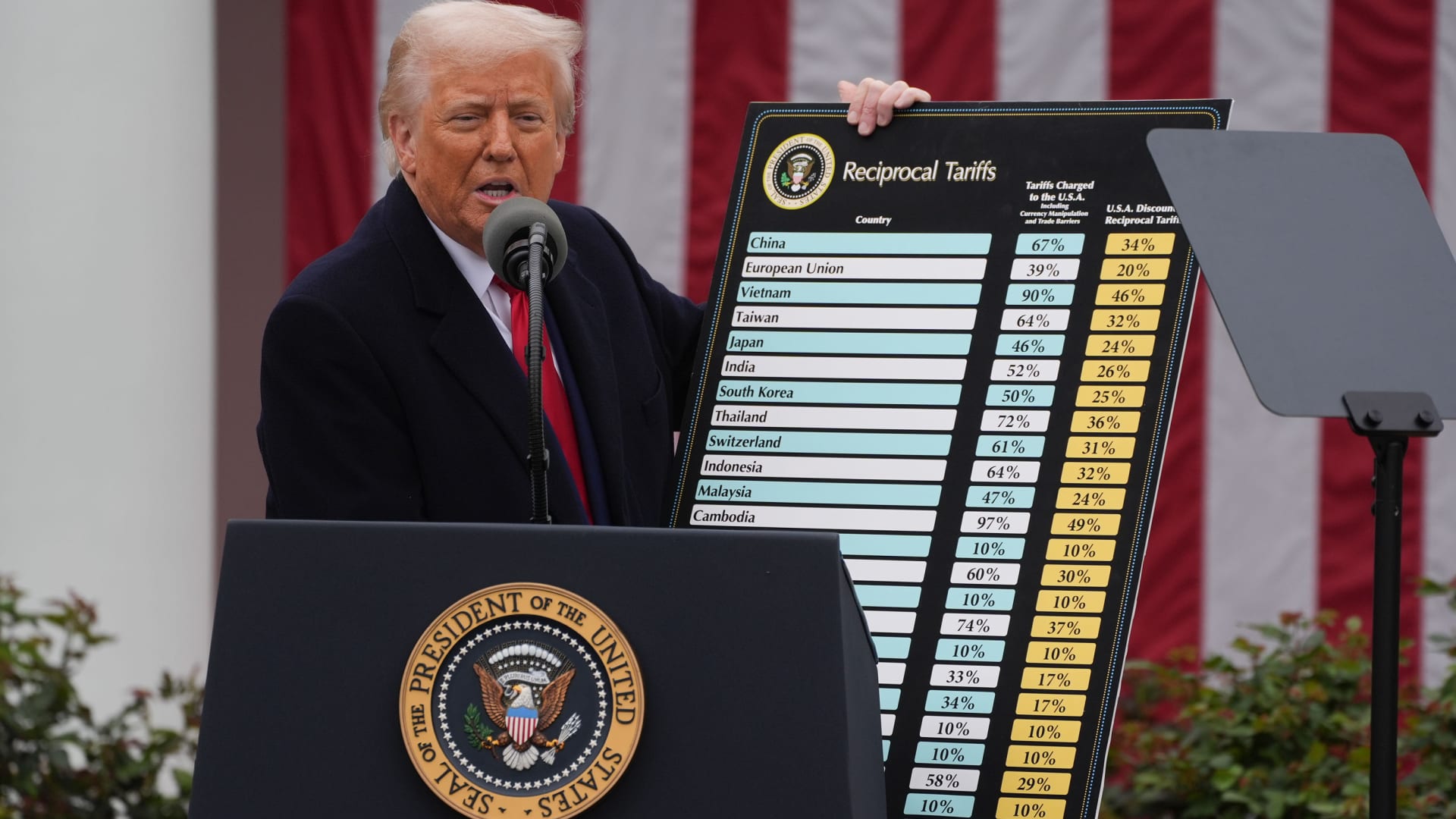
Reciprocal tariffs target imports from nearly every U.S. trading partner but exclude goods facing separate product-specific tariffs.
The tariffs raised the applied U.S. tariff rate from 2.5% in January 2025 to an estimated 27% by April 2025, then 17.9% by September 2025 after changes and negotiations. This represents the highest tariff level in over a century.
The government has collected more than $88 billion through September 2025 from the emergency tariffs, paid by U.S. importers. From 2025 through 2034, the tariffs would raise nearly $2.3 trillion in tax revenue according to Tax Foundation projections.
The tariffs would shrink GDP by 0.5% and cost 489,000 jobs before accounting for retaliation from trading partners. They increase taxes by an average of more than $1,600 per U.S. household every year.
The legal precedent most relevant to the current debate is United States v. Yoshida International, a 1975 decision by the U.S. Court of Customs and Patent Appeals. That case involved President Richard Nixon's imposition of a 10% temporary tariff in 1971 in response to a large trade deficit.
However, recent research by Peterson Institute scholars shows Nixon didn't invoke emergency powers under the Trading with the Enemy Act (TWEA) - IEEPA's predecessor - but instead claimed authority under trade agreement laws. This means there may be no legal precedent for using emergency sanctions statutes to impose tariffs.
Trump's administration argues that IEEPA grants the president authority to enact trade measures in response to national emergencies. Section 1701 of IEEPA provides that the president can use the law to deal with any unusual and extraordinary threat to national security, foreign policy, or economy if he declares a national emergency.
Section 1702 provides that during a national emergency, the president may regulate importation or exportation of property in which any foreign country has any interest. The government argues IEEPA is designed to address major questions.
The challengers contend that unlike other laws that directly deal with tariffs, IEEPA doesn't mention tariffs or duties at all
No president before Trump has ever relied on IEEPA to impose tariffs in its 48-year history
Challengers argue hundreds of statutes grant the power to regulate, and none has ever been understood to grant taxing powers Neal Katyal, representing small businesses, said in an Oct. 28 brief: "Yet the statute the President invokes, the International Emergency Economic Powers Act (IEEPA), never mentions tariffs, and in 50 years no other President has used it for that purpose."
Senator Lisa Murkowski joined Democrats in filing a Supreme Court brief challenging Trump's tariff authority. The brief argues: "The total absence of tariffs for nearly fifty years reinforces the conclusion that the statute does not authorize such measures.
If the President believes that imposing, removing, or amending tariffs is an appropriate policy measure, Congress has given him tools to pursue those goals. But IEEPA is not one of them." The Senate previously overturned Trump's Canada tariffs in April 2025, backed by all Democrats and four Republicans: Mitch McConnell, Rand Paul, Susan Collins and Murkowski.
Legal experts warn that a president attending oral arguments in his own case could improperly pressure justices and undermine judicial independence. The Washington Post editorial board noted Trump's attendance threatens to blur the separation of powers at a moment when federal judges are already under political fire.
The presence could create an unprecedented situation where justices feel presidential pressure during deliberations. This risks establishing a precedent allowing future presidents to personally lobby the Court.
Related Topics
3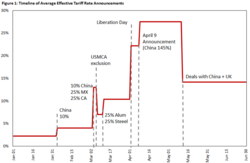
Supreme Court to rule on Trump's emergency tariff power in China trade case
First opinion day in weeks could decide fate of Trump Liberation Day tariffs costing importers $16B monthly
Appeals court kills Trump tariffs as "illegal" executive overreach
Federal appeals court kills Trump tariffs, Supreme Court showdown looms
Supreme Court opens October 2025 term with executive power docket
Supreme Court sided with Trump in 84% of shadow docket cases
24 questions
Start the review