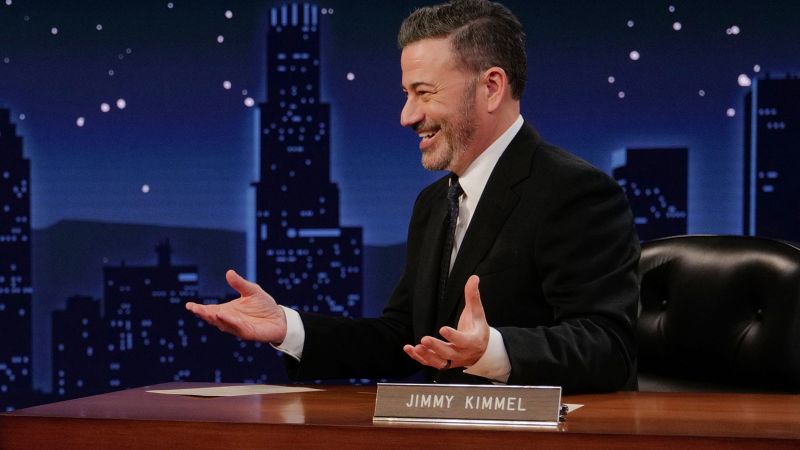
Trump urges FCC to consider revoking broadcast licenses after ABC suspends Jimmy Kimmel Live!
President threatens ABC reporter who asked about DOJ criminalizing speech
On Sept. 18, 2025, President Trump told reporters aboard Air Force One that broadcasters that give him 'bad publicity' could face license revocation and said the choice 'will be up to Brendan Carr.'

President
On Sept. 18, 2025, told reporters that networks giving him 'bad publicity' might lose broadcast licenses and that the decision 'will be up to Brendan Carr.'
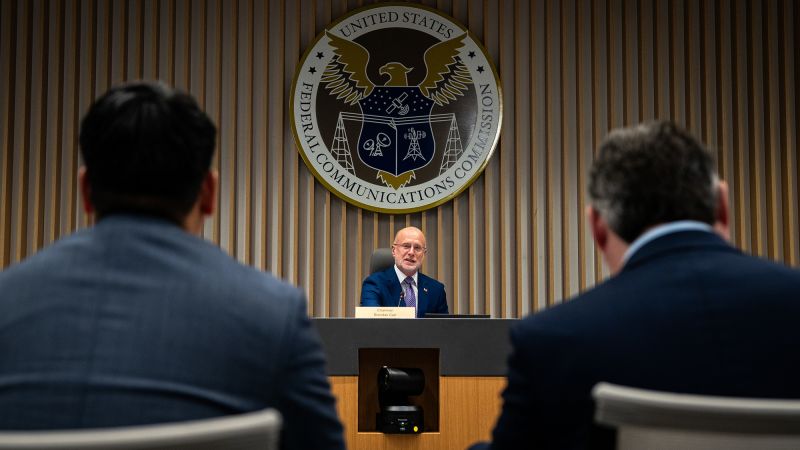
FCC Chair
Publicly warned broadcasters about potential FCC review after Jimmy Kimmel's monologue and said the FCC was 'not done yet' with changes to the media ecosystem.
The Walt Disney Company subsidiary
Late‑night host
Pulled from ABC's late‑night lineup after a monologue that drew political and regulatory backlash.
Local station group
Said it would preempt Kimmel's program on its ABC affiliates 'for the foreseeable future' amid the controversy.
True
On Sept. 18, 2025, President Trump told reporters aboard Air Force One that networks giving him 'bad publicity' might lose their broadcast licenses and that the decision 'will be up to Brendan Carr.'
On Sept. 18, 2025, President Trump told reporters aboard Air Force One that networks giving him 'bad publicity' could lose licenses. Reuters reported Trump's comment and cited audio from the White House gaggle. [1][2]. CNBC and NBC published contemporaneous reports with matching quotes and context. [2][3].
Sources
True
ABC and Disney suspended Jimmy Kimmel Live! beginning Sept. 17, 2025, while the network reviewed the host's monologue about the killing of Charlie Kirk.
ABC and its parent, the Walt Disney Company, suspended Jimmy Kimmel Live! starting Sept. 17, 2025, while the company reviewed Kimmel's monologue. NBC and Reuters reported the suspension and its link to the monologue. [1][2]. Public reporting and contemporaneous summaries record the multi‑day pause. [3].
Sources
False
Bob Iger personally ordered the suspension of Jimmy Kimmel and acted under direct instruction from the White House.
Reporting shows ABC and the Walt Disney Company suspended the program. Journalists did not find evidence that Bob Iger personally issued the order or that the White House directly commanded the suspension. [1][2]. The public record attributes the action to the network amid political and regulatory pressure, not to a documented, singular White House directive. [3].
Sources
False
There is a documented $16 million settlement by Paramount to resolve a lawsuit tied to a CBS merger approval that was delayed by Brendan Carr's review.
I found no credible reporting or public filings that identify a $16 million settlement by Paramount tied to a CBS merger approval and delayed FCC review. Major news outlets covering the controversy do not report such a payment or a direct link to Carr's review. [1][2]. Longform coverage of the episode similarly lacks any record of that settlement. [3].
Sources
Disputed
The FCC can immediately strip a broadcaster's license for editorial content; experts disagree about whether short, punitive revocation is lawful and practical.
The law requires formal FCC enforcement or non‑renewal proceedings to revoke a license, and those processes typically take years. [1][3]. Some commentators say the agency has tools for expedited action in narrow cases, while others say political pressure, not law, explains immediate preemptions by station owners. [1][2]. The question mixes settled administrative procedure with contested political strategy. [1][2][3].
Sources
Disputed
Station owners preempted or pulled Jimmy Kimmel's program to avoid regulatory scrutiny and to protect pending merger approvals, but courts and analysts debate whether the moves were voluntary capitulation or coerced.
Nexstar and other station owners said they would preempt Kimmel's show after FCC warnings and political pressure. [1][2]. Analysts and lawyers disagree about motive. Some call the moves self‑preservation to protect pending merger approvals. Others describe voluntary editorial choices by corporate owners reacting to backlash. [1][2][3].
Sources
Monitor FCC filings and notices
understanding
Track formal FCC enforcement actions, consent decrees, and merger review filings to distinguish political rhetoric from agency action.
Follow corporate statements
monitoring
Read official company statements from networks and station owners to verify who made programming decisions and why.
Watch litigation filings
civic action
Track lawsuits and ACLU or other filings challenging any regulatory or administrative steps that affect editorial content.