National Security · Foreign Policy · Economy·March 14, 2026
US bombs Kharg Island military targets as Iran war hits day 14
Sparing oil terminals, Trump turns Iran's export hub into a hostage

Photo: 2026 Planet Labs PBC/Handout via REUTERSsource ↗
On the night of March 13, 2026, U.S. forces struck more than 90 military targets on Kharg Island, Iran's primary oil export hub, in what President 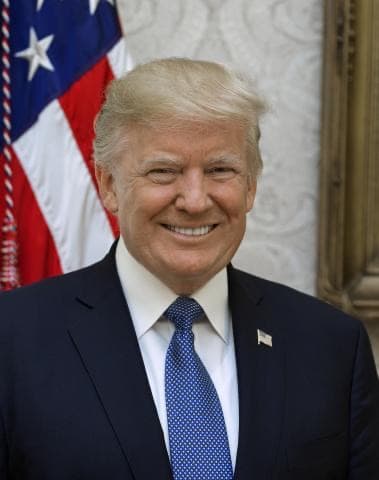 Trump called "one of the most powerful bombing raids in the history of the Middle East." The strikes destroyed naval mine storage facilities, missile bunkers, a short airstrip, air defense positions, docks linked to the IRGC's Joushan naval base, a control tower, and helicopter hangars — but deliberately left the sprawling oil terminals untouched. Trump posted that "for reasons of decency" he chose not to wipe out the oil infrastructure, while openly warning he'd reconsider if Iran interfered with 📖Strait of Hormuz shipping.
Kharg Island, a 13-square-mile coral outcrop 25 miles off Iran's southern coast, handles roughly 90% of Iran's crude exports. The strikes came on day 14 of Operation Epic Fury, the joint U.S.-Israel campaign that began February 28. Defense Secretary  Pete Hegseth declared the operation had now hit more than 15,000 Iranian military targets and had injured the country's newly installed Supreme Leader, Mojtaba Khamenei.
Also on March 13, U.S. Central Command confirmed that all six crew members of a KC-135 refueling aircraft that crashed in western Iraq on March 12 were dead, bringing the confirmed U.S. military death toll in the war to at least 13. CENTCOM said the crash was not due to hostile fire, though the Islamic Resistance in Iraq claimed it shot the plane down. The escalation deepened an already acute global energy crisis, with Iran threatening to strike Gulf oil infrastructure and the 📖Strait of Hormuz effectively closed to commercial shipping.
Key facts
"Kharg Island is the beating heart of Iran's oil economy. The 13-square-mile coral island sits 25 miles off Iran's southern coast in the Persian Gulf and funnels roughly 90% of all Iranian crude exports through its terminals and tanker loading platforms. Iran earns the vast majority of its government revenue from oil sales, and Kharg is the chokepoint through which that money flows. During the Iran-Iraq War in the 1980s, Iraqi forces bombed Kharg repeatedly in an effort to strangle Iran's finances — they never succeeded in destroying the oil infrastructure entirely, but the attacks forced Iran to reroute some exports and caused significant economic damage.\n\nOn the night of March 13, 2026, U.S. forces hit more than 90 military targets on the island. CENTCOM confirmed the strikes destroyed naval mine storage facilities, missile storage bunkers, a short airstrip, air defense positions, docks linked to the IRGC's Joushan naval base, a control tower, and helicopter hangars. The oil terminals were left intact. Trump posted on Truth Social that he had chosen 'NOT to wipe out the Oil Infrastructure on the island' out of decency — then immediately warned that any Iranian interference with 📖Strait of Hormuz shipping would change that calculus."
"The distinction between military targets and oil infrastructure was not just tactical — it was a threat. By striking the military components of Kharg while visibly sparing the terminals, Trump communicated that he could destroy Iran's primary revenue source at will. Iran threatened to retaliate by targeting Gulf oil infrastructure belonging to U.S. allies, a move that could crash global energy markets far beyond what the Hormuz closure had already done.\n\nIRGC Navy chief Alireza Tangsiri pushed back on Trump's framing. He told state media that the 📖Strait of Hormuz 'has not yet been militarily closed and is merely under control,' and warned that any attempt by foreign vessels to move through without authorization would be targeted. Iran had been laying naval mines in the strait, and U.S. officials said Iran's forces were 'laying them faster than the United States can clear them.'"
"Defense Secretary Pete Hegseth claimed on March 13 that Operation Epic Fury had now hit more than 15,000 Iranian military targets since February 28, and that the strikes had injured Iran's newly installed Supreme Leader, Mojtaba Khamenei. Vice President  JD Vance told reporters that 'we know that he's hurt; we don't know exactly how bad, but we know that he's hurt.'\n\nThe Trump administration's public messaging on the war's goals had shifted repeatedly. Officials described it alternately as a mission to destroy Iran's nuclear program, eliminate ballistic missile capacity, degrade the IRGC, and force a new Iranian government. Trump used the phrase 'short-term excursion' with House Republicans in early March, but Hegseth told 60 Minutes the public wouldn't be told if U.S. troops entered Iran. The mixed messages on objectives created political friction with Congress and allies alike."
"The human cost became more visible on March 13. U.S. Central Command confirmed that all six crew members of a KC-135 refueling tanker that crashed in western Iraq on March 12 had died. CENTCOM said the loss was not caused by hostile fire or friendly fire, attributing it to a non-combat accident. The Islamic Resistance in Iraq — an Iran-backed militia coalition — disputed that account and claimed it had shot the aircraft down with 'the appropriate weapon.'\n\nThe six deaths brought the confirmed U.S. military fatality count in Operation Epic Fury to at least 13. An earlier Pentagon disclosure had acknowledged 140 wounded service members. The crash generated immediate attention in Congress, where members were already demanding more transparency about casualties and operational costs. The administration had already disclosed that the first 100 hours of the war burned through approximately $3.7 billion in munitions."
"Turkey announced on March 13 that NATO air defenses had intercepted a third Iranian ballistic missile. The missile was part of a pattern of Iranian attacks on Turkey — a NATO member that had not endorsed the U.S.-Israel campaign — raising the prospect of NATO treaty obligations being triggered if Iranian strikes caused Turkish casualties.\n\nThe Kharg Island strikes also intensified pressure on global shipping. The 📖Strait of Hormuz carries roughly one-fifth of all traded oil and liquefied natural gas. Commercial vessels had largely stopped transiting the strait after Iran's IRGC issued blanket warnings. Insurance premiums for Middle East cargo had surged to historic levels. Cargo deliveries were stranded worldwide, with downstream effects on food prices, medicine costs, airline ticket prices, and electricity rates across multiple continents."
"On March 14, Trump said the United States was 'way ahead of schedule' in its war with Iran and called on 'many countries' to send warships to help reopen the 📖Strait of Hormuz. He named China, France, Japan, South Korea, and the United Kingdom as countries he hoped would contribute — though none had publicly committed. The call for a multinational naval coalition came after the UK had already reversed an earlier commitment to allow U.S. use of British bases for Iran strikes.\n\nA Marine Expeditionary Unit aboard the USS Tripoli was reported en route to the Middle East, adding to U.S. forces already deployed in the region. The Pentagon had not publicly confirmed when or whether a ground incursion into Iran was being considered, though Hegseth had refused to rule it out on national television."
Related Topics
6🎖️
Six Air National Guard airmen die in KC-135 crash over Iraq
Six U.S. Air Force airmen were killed on March 12, 2026, when a KC-135 Stratotanker refueling aircraft went down in western Iraq during Operation Epic Fury, the name the Pentagon gave to military operations against Iran. U.S. Central Command confirmed the loss was not caused by hostile or friendly fire. Two aircraft were involved in an incident over western Iraq; the second plane landed safely. The Pentagon identified the six crew members on March 14: Maj. John A. Klinner, Capt. Ariana G. Savino, Tech. Sgt. Ashley B. Pruitt, Capt. Seth R. Koval, Capt. Curtis J. Angst, and Tech. Sgt. Tyler H. Simmons. Three were from the 6th Air Refueling Wing at MacDill Air Force Base in Florida, and three from the 121st Air Refueling Wing at Rickenbacker Air National Guard Base near Columbus, Ohio. Their deaths brought the total U.S. service member death toll in Operation Epic Fury to at least 13, with roughly 140 more wounded across the first two weeks of the conflict. The KC-135 is the backbone of the Air Force's aerial refueling fleet, essential to long-range strike missions against Iran. Despite CENTCOM's statement, an Iran-backed militia in Iraq, the Islamic Resistance in Iraq, claimed responsibility for the crash on its Telegram channel.
112% match
24 questions
💥
US and Israel launch Operation Epic Fury seeking regime change in Iran
On February 28, 2026, the United States and Israel launched coordinated military strikes on Iran, a joint operation the Pentagon named "Operation Epic Fury" and Israel called "Operation Roaring Lion." The strikes hit over 30 sites including areas near Tehran, Isfahan, Qom, Karaj, and Kermanshah, targeting Iran's missile infrastructure, military headquarters, and senior IRGC commanders. President Trump announced the attacks in an eight-minute video on Truth Social, calling them "major combat operations" and urging Iranians to "take over your government." Iran retaliated within hours, firing ballistic missiles and drones at Israel and U.S. military bases in Bahrain, Kuwait, Qatar, and Saudi Arabia. The strikes followed the collapse of the latest round of nuclear negotiations: just one day earlier, Oman's foreign minister had declared peace was "within reach" after Iran agreed to degrade its enriched uranium stockpiles. This is the second time the Trump administration launched military action against Iran in eight months, following the 12-day war in June 2025 that significantly weakened Iran's air defenses and nuclear infrastructure. At least 57 people were killed when an Israeli strike hit an elementary school in southern Iran, according to Iran's state-run IRNA news agency.
108% match
24 questions
🔄
They all promised no regime change in Iran. The record says otherwise
For a decade, Donald Trump built his political identity on opposing the kind of foreign wars that cost the United States trillions of dollars and thousands of lives. He said it at the 2016 Republican National Convention, in countless rallies, and in campaign ads that ran through the 2024 election. Vice President JD Vance wrote op-eds about it. Defense Secretary Pete Hegseth pledged it just two months before Operation Epic Fury launched. Secretary of State Marco Rubio said it explicitly on Fox News after the June 2025 nuclear strikes: "We're not into the regime change business here." Then, at 3 a.m. on February 28, 2026, Trump announced "massive and ongoing" combat operations in Iran, and called on Iranians to topple their own government. The fracture that followed split not just Democrats and Republicans but the MAGA movement itself. Former Rep. Marjorie Taylor Greene published a 694-word denunciation calling it "the worst betrayal." Tucker Carlson, who had visited the White House the week before trying to stop the war, called it "absolutely disgusting and evil." Former Vice President Kamala Harris said Trump was "dragging the United States into a war the American people do not want." Sen. Bernie Sanders called it "an illegal, premeditated and unconstitutional war." And Rand Paul quoted the Founders. The politicians who spent years telling voters they stood against regime change now had to answer for the one they launched.
108% match
44 questions
🛡️
US deploys F-22 fighters to Israel for first time amid escalating Iran tensions
By Feb. 22, 2026, the United States had assembled what military analysts and former commanders described as the largest American military buildup in the Middle East since the 2003 invasion of Iraq. The USS Abraham Lincoln carrier strike group had been in the region since late January. The USS Gerald R. Ford, carrying Carrier Strike Group 12, was seen transiting Gibraltar on Feb. 20 heading toward Israel''s coast. Long-range B-52 bombers and B-2 stealth aircraft were placed on higher readiness. F-16s, F-22s, and F-35s were moved forward to regional bases. Alert levels at Al Udeid Air Base in Qatar were raised. CNN reported on Feb. 18 that senior national security officials met in the White House Situation Room to discuss Iran, and that anonymous sources said the military was prepared to strike as early as Feb. 21 — though Trump had not made a final decision. Trump himself had set a public deadline of roughly 10 days at the Feb. 19 Board of Peace meeting. He said, "We may have to take it a step further, or we may not. Maybe we''re going to make a deal." As of Feb. 23, no strike had occurred. Experts warned that Iran has signaled it won''t respond with the relative restraint it showed after the June 2025 U.S. strikes on its nuclear facilities — when Iran gave the U.S. advance warning before targeting Al Udeid with missiles.
108% match
13 questions
🌍
Gulf states targeted by Iran retaliation despite refusing US base access for strikes
Saudi Arabia, Qatar, the UAE, Kuwait, Turkey, and Oman all told the White House before Feb. 28, 2026, that they wouldn't allow American forces to use their territory or airspace to strike Iran. Their reasons were strategic: Gulf states didn't want to be dragged into a wider conflict, and Saudi Arabia and the UAE were protecting trillion-dollar economic transformation projects from regional war. Privately, the picture was more complex. The Washington Post reported Feb. 28 that MBS made multiple private calls to Trump urging a US strike on Iran, even as he publicly backed diplomacy and assured Iran its airspace was safe. The US worked around the refusals by deploying 14 air-refueling tankers to Israel's Ben Gurion Airport and positioning USS Gerald R. Ford off the Israeli coast. When Iran retaliated on Feb. 28, it struck US military bases in Qatar, Kuwait, the UAE, and Bahrain, countries that host American troops. Iran's National Security Council chief Ali Larijani said Tehran viewed those bases as American targets, not the territory of the host nations.
108% match
48 questions
🛡️
Trump gives four different reasons for the Iran war in four days
On March 3, 2026, the fourth day of Operation Epic Fury, the Trump administration had offered at least four distinct and contradictory justifications for going to war with Iran. Trump initially said the goal was to "defend the American people by eliminating imminent threats from the Iranian regime." By Monday, March 2, he expanded the list to include destroying Iran's conventional missile capabilities, sinking its navy, preventing a nuclear weapon, and cutting off funding to proxy terrorist groups. Defense Secretary Pete Hegseth told reporters Monday that the war "is not a so-called regime change war" — the same day Trump's Saturday video explicitly called on Iranians to "take over your institutions" and topple their government. Secretary of State Marco Rubio then offered a fifth explanation: that the U.S. struck preemptively because "we knew that there was going to be an Israeli action" and American forces would face Iranian retaliation. On Tuesday, Trump contradicted Rubio directly, saying "No, I might've forced their hand" — suggesting the U.S. led rather than followed Israel. Trump never gave a televised address to the nation before or after launching the war, a departure from every prior modern president who took the country into armed conflict.
107% match
20 questions
Related
Categories that may be relevant to you
5 topics available

May 23, 2026
DOJ scrubs hundreds of Jan. 6 prosecution records from website
May 22, 2026
Gabbard resigns as director of national intelligence
May 22, 2026
Colorado closes legal gap for defendants found unfit to stand trial
🔍
May 22, 2026
FTC fines Cox Media Group $930K for fake AI listening ad service
🏫
May 22, 2026
Tennessee governor signs Memphis schools state takeover into law
View All Government Topics
769 topics
19 questions
Start the review