National SecurityConstitutional LawForeign PolicyGovernmentLegislative Process
April 13, 2026Representative Chris Smith blocks Democrats' Iran war powers resolution in pro forma session
House Republican ended session before Democrats could vote to end U.S. attacks on Iran

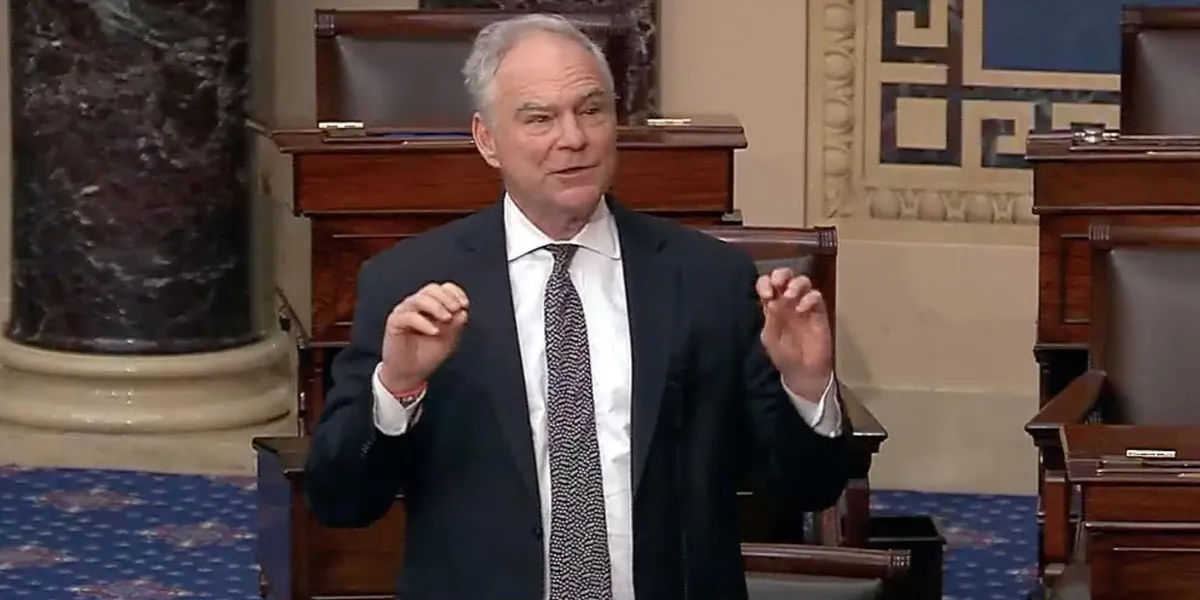
Senate Democrats forced a fourth vote on a to end U.S. military operations against Iran on April 13, 2026, the day the Senate returned from a two-week Easter and Passover recess. The resolution — H.Con.Res.38 in the Senate — directed President Trump to remove U.S. Armed Forces from unauthorized hostilities in Iran under section 5(c) of the War Powers Resolution. The resolution failed again, blocked by Senate Republicans with one Democratic crossover: Sen. John Fetterman (D-PA) voted against it, as he had on previous attempts.
The lone Republican to support the resolution was Sen. Rand Paul (R-KY), who has consistently backed congressional war authorization across parties and presidents. The April 13 vote came hours after CENTCOM announced the start of a naval blockade of Iranian ports — a new escalation that Democrats argued made the need for congressional authorization more urgent, not less. PBS NewsHour Time
The War Powers Resolution (50 U.S.C. §§ 1541–1548) was enacted in 1973 over President Nixon's veto. It requires the president to notify within 48 hours of deploying military force into hostilities and then — from that notification — to receive congressional authorization or begin withdrawing forces within 60 days. Trump filed his notification with Congress on March 2, 2026. That 60-day clock expires approximately April 28 or April 30, depending on interpretation.
The resolution is a , meaning it passes both chambers but is not presented to the president for signature. The War Powers Resolution was deliberately written this way to prevent a veto — but the 1983 Supreme Court decision in INS v. Chadha raised unresolved constitutional questions about whether a concurrent resolution can constitutionally compel executive action. No court has ever ordered a president to comply with a withdrawal directive. Republicans argue this legal ambiguity renders the resolution toothless. .gov Kaine Senate
The core dispute between congressional Democrats and Republicans on this vote is not whether Iran poses a threat but whether the Constitution requires congressional authorization for the level of force already deployed. Twelve senators — including Cory Booker, Chris Murphy, Mazie Hirono, and Elizabeth Warren — signed a letter to Trump in March warning that the 60-day clock created a legal obligation to seek authorization or withdraw. Republicans including Mitch McConnell argued that Trump's notification itself satisfied the consultation requirement and that the president retains inherent authority to respond to attacks on U.S. forces.
Sen. Susan Collins (R-ME) had said publicly that if 'boots on the ground' were committed or hostilities lasted 60 days or more, she believed congressional authorization would be necessary — a threshold that is now about two weeks away. Collins' vote on April 13 was not immediately reported in detail, but her prior statement makes her a potential pressure point if a fifth vote occurs after April 28. Kaine Senate
The House companion resolution, H.Con.Res.40, was introduced by House Foreign Affairs Committee Ranking Member Greg Meeks (D-NY). It mirrored the Senate text in directing Trump to remove forces from Iran. On April 9, 2026, during a House pro forma session, Rep. Glenn Ivey (D-MD) attempted to pass the resolution by — a shortcut that requires no recorded vote and would pass if no member objects. Speaker Pro Tempore Chris Smith (R-NJ) presided over the session, ignored Ivey's request, and gaveled the session closed while Democrats shouted on the floor. House Minority Leader Hakeem Jeffries called the maneuver an outrage and announced a proper vote when the House returned April 14.
Axios reported in late March that House Democratic leaders had strategically delayed forcing a war powers vote until mid-April — after the recess — because they believed the balance of votes was tipping. Several moderate Republicans in swing districts had grown uncomfortable with the war's cost and the lack of any congressional authorization. Democrats calculated they had a better chance of picking up Republican crossover votes after members had spent two weeks at home hearing from constituents. Democracy Now C-SPAN
The April 28 deadline matters for reasons that go beyond this particular conflict. The War Powers Resolution has been tested — and largely ignored — 53 times since its passage in 1973. Presidents from Ford to Biden have deployed forces, filed notifications, and then either received congressional authorization retroactively, claimed the conflict ended before 60 days elapsed, or simply continued operations past the deadline without any congressional enforcement. Congress has never actually forced a president to withdraw under the resolution. Courts have consistently declined to hear war powers cases, citing the political question doctrine — the principle that courts should not adjudicate disputes between the executive and legislative branches that are political rather than legal in nature.
If Congress does nothing by April 28, it will have once again tacitly accepted that the War Powers Resolution is unenforceable — and that presidents can sustain open-ended military campaigns against foreign nations without ever asking for a vote. The naval blockade begun on April 13 adds a new dimension: it is arguably a separate use of force that starts its own 60-day clock, meaning Congress may have more time if it chooses to treat the blockade as a new conflict rather than a continuation of the existing one. Washington Post
Six American servicemembers died during the initial strikes on Iran, according to Senate Democratic press releases citing administration notification. The conflict has cost an estimated $4 to $6 billion in the first six weeks, per Congressional Budget Office estimates cited by Democrats. Three different war powers resolutions had failed in the Senate by late March: votes on March 4, March 24, and a third attempt, all lost by similar margins with Fetterman voting no and Paul voting yes.
Former President Jimmy Carter's national security attorney Lloyd Cutler testified before the Senate Foreign Relations Committee in 1980 that the War Powers Resolution was 'constitutionally unsound.' The Reagan, Clinton, George W. Bush, and Obama administrations all maintained that the resolution was advisory, not binding. Trump's legal team has taken the same position. The debate has played out for over five decades without a definitive judicial resolution. Chris Smith statement
Related Topics
6🗳️
House GOP blocks Iran war powers vote during pro forma session
GOP pro tempore gavels out before Ivey can speak on Iran war powers
Senate rejects Iran war powers resolution 47-53
Eight failed votes leave Trump''s Iran war legally unchecked as April deadline nears
House rejects Iran war powers resolution by one vote
One Democrat's no vote left Trump's unauthorized Iran war unchecked

The sixty-day clock on Iran strikes just ran out. Congress can't stop it.
The sixty-day deadline under the War Powers Resolution passed May 1 with no congressional authorization in place. The Senate voted for the sixth time to end the strikes. The House hasn't moved.

House Iran war powers resolution fails on historic 212-212 tie
Three GOP defections aren't enough as House ties 212-212 on Iran war powers
Senate advances Iran war powers resolution for first time, 50-47
Four Republican defections force first-ever Senate procedural win
18 questions
Start the review