Civil Rights · Elections·May 19, 2026
Alabama splits its primary under post-Callais maps
Alabama split its primary: 4 of 7 congressional districts voided, August redo ordered

Photo: AP Photo/Mike Stewartsource ↗
Alabama held a fractured primary on May 19, 2026, the first federal election conducted under congressional maps redrawn after the Supreme Court's April 29 ruling in Louisiana v. Callais gutted Section 2 of the 📖Voting Rights Act. Voters in only three of Alabama's seven congressional districts cast ballots that will actually count toward choosing party nominees. Residents of the 1st, 2nd, 6th, and 7th districts, the four redrawn under a Republican-drawn 2023 map that federal courts had previously struck down as racially discriminatory, had their primary votes voided and must return to the polls on August 11 for a special primary. The August election, which carries no runoff provision, will cost Alabama taxpayers an estimated $4.4 million.
The open U.S. Senate seat left by Tommy Tuberville, who gave up his seat to run for governor, also appeared on the May 19 ballot. Rep. 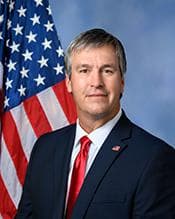 Barry Moore (endorsed by President Trump on January 17, 2026), Attorney General Steve Marshall, and former Navy SEAL Jared Hudson competed in a tight three-way race. Pre-election polls showed Moore at 28%, Marshall at 27%, and Hudson at 24%, a spread narrow enough that a June 16 runoff looked likely if no candidate cleared a majority.
Key facts
Alabama's May 19 primary was the first federal election held under congressional maps adopted after the Supreme Court's April 29 ruling in Louisiana v. Callais. In that 6-3 decision authored by Justice Samuel Alito, the Court rewrote the 40-year-old framework for challenging discriminatory district maps under Section 2 of the 📖Voting Rights Act of 1965, requiring plaintiffs to prove intentional racial discrimination rather than just statistical dilution of minority voting strength.
The Callais ruling gave Alabama the legal opening it needed. State AG Steve Marshall filed an emergency motion with SCOTUS on May 8 to lift the injunction blocking Alabama's 2023 congressional map. On May 11, the Court granted the request 6-3. That order vacated the district court's injunction that had required Alabama to maintain a second majority-Black congressional district.
Gov. 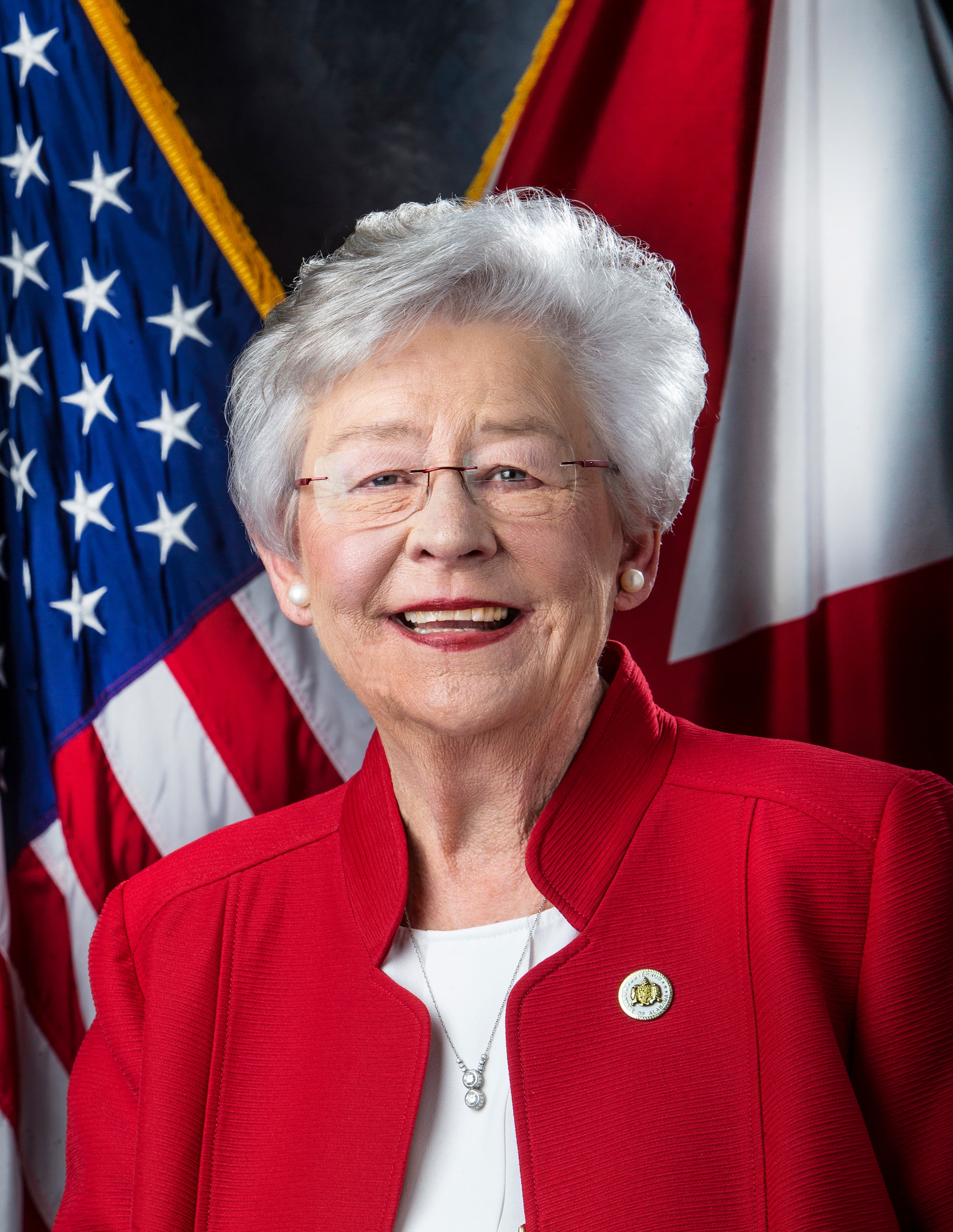 Kay Ivey had been preparing for this moment since the Callais ruling. On May 1, she called a special legislative session and signed House Bill 1 and Senate Bill 1, laws authorizing the governor to call special elections in specific congressional districts contingent on court action. Once SCOTUS cleared the way on May 11, Ivey immediately announced special primaries for the 1st, 2nd, 6th, and 7th congressional districts on August 11, 2026.
Candidate qualifying for those four redrawn districts opened May 20 and closed May 22, a 48-hour window giving candidates almost no time to prepare. The August 11 special primary will have no runoff, meaning a candidate can win with a plurality.
Alabama's Secretary of State  Wes Allen announced that votes cast on May 19 in the four postponed districts would still be tabulated and reported publicly but would be "void for the purposes of determining the party nominees." That left thousands of voters in limbo: their ballots would be counted but wouldn't count.
Community organizers in those districts reported widespread confusion in the days leading up to May 19. One voting advocacy group founder told reporters, "A lot of people are confused about whether they should show up." NAACP Board Chairman Leon Russell called on voters to turn out regardless: "Alabama voters must turn out, and they must turn out in numbers."
The four districts reshuffled under the new map include the seats held by Alabama's only two Democratic members of Congress. Rep. Shomari Figures, a Democrat who won the court-ordered majority-Black 2nd District in November 2024, could see his district redrawn or eliminated entirely. Rep.  Terri Sewell, who holds the historically Black 7th District, faces similar uncertainty.
Figures said the SCOTUS order "sets the stage for Alabama to go back to the 1950s and 60s in terms of Black political representation." Sewell called Callais "a stunning departure from legal precedent and another direct attack on Black voters in Alabama." The two Democrats represent the only districts in the state where Black voters had sufficient concentration to elect candidates of their choice.
The three districts that held binding primaries on May 19, the 3rd, 4th, and 5th, were already Republican-held seats where Black voter concentration was well below majority. In the 3rd District, incumbent Rep. Mike Rogers faced a primary challenger. In the 4th, Rep. Robert Aderholt did the same. The 5th District's incumbent Rep. Dale Strong ran unopposed on the Republican side.
For voters in these three districts, May 19 worked as a normal primary. Their nominees will advance to November's general election. For the other four districts' residents, Election Day got more complicated: they'll have to show up again on August 11 to make their House votes count.
The Senate race on May 19 was Alabama's most-watched contest. The seat opened when Sen. Tommy Tuberville announced in May 2025 he'd give up his Class II Senate seat to run for governor in a state where term-limited Gov. Kay Ivey couldn't run again. The Tuberville-for-governor candidacy created the first open Alabama Senate race since 1996.
Ten Republicans qualified for the Senate primary, but the race narrowed to three leading candidates. Pre-election polling from the Tarrance Group (April 11-14, 500 likely Republican voters) put Rep. Barry Moore at 28%, AG Steve Marshall at 27%, and Jared Hudson at 24%. Those numbers made a likely June 16 runoff the probable outcome.
Rep. Barry Moore received President Trump's endorsement on January 17, 2026, the most prominent imprimatur in the Alabama Republican primary. Moore had previously represented Alabama's 2nd District before 📖redistricting moved him to the 1st District. He campaigned on extending Trump's agenda in the Senate, telling voters, "I was one of the first elected officials to endorse President Trump. We need more allies in the Senate who will help move his agenda forward."
AG Steve Marshall was the other major establishment figure in the race. His office filed the May 8 emergency petition to SCOTUS that ultimately cleared the way for the new maps. Marshall's supporters pointed to that victory as evidence he could deliver results in Washington. His critics noted the conflict of interest in running for Senate while actively reshaping the districts he'd compete in.
Jared Hudson entered the race as a political newcomer who surged from obscurity into the top three. A former Navy SEAL, Hudson founded Covenant Rescue Group, an anti-human trafficking nonprofit whose operations led to more than 500 arrests. Sen. Markwayne Mullin (R-OK) backed Hudson in the primary. Hudson represented the anti-establishment wing that mirrored the outsider energy that propelled Trump in 2016 and recurred in several 2026 Republican primaries.
If no Senate candidate cleared 50% on May 19, Alabama election law required a June 16 runoff between the top two finishers, and pre-election polls made that outcome probable.
The Callais ruling's reach extends far beyond Alabama. Democracy Docket research found the decision derailed at least 28 pending lawsuits that had been defending minority voting rights across the country. Section 2 cases in Texas, North Carolina, Georgia, Mississippi, and South Carolina were all put in jeopardy.
Todd Cox of the NAACP Legal Defense Fund said the Court "substituted its views for Congress's considered judgment, repudiating the 1982 amendments and making discriminatory maps almost impossible to challenge." The Campaign Legal Center warned that Callais had "eviscerated" the VRA. Alabama's fractured May 19 primary was the first electoral test of a post-Callais America, one where the structure of minority political representation is now being actively contested across dozens of states.
Related
Categories that may be relevant to you
5 topics available

May 23, 2026
DOJ scrubs hundreds of Jan. 6 prosecution records from website
🔍
May 22, 2026
FTC fines Cox Media Group $930K for fake AI listening ad service
May 22, 2026
Colorado closes legal gap for defendants found unfit to stand trial
May 22, 2026
Gabbard resigns as director of national intelligence
🏫
May 22, 2026
Tennessee governor signs Memphis schools state takeover into law
View All Government Topics
769 topics
30 questions
Start the review