Agriculture · Legislative Process·February 20, 2026
Farm bill extended to September 2026 as Thompson releases new draft
Bill provides food assistance for 42 million Americans but faces partisan fights over climate programs

The farm bill deadline was extended to September 30, 2026, through the continuing resolution that ended a record 43-day government shutdown in November 2025. The current extension marks the fifth consecutive year without a new comprehensive farm bill, extending the 2018 Farm Bill that was itself a reauthorization of the 2014 bill.
The One Big Beautiful Bill Act, signed July 4, 2025, preemptively resolved the major farm safety net provisions — adding $59-65 billion in new spending and extending commodity support programs (crop insurance, commodity payments) through the 2031 crop year. This means the upcoming farm bill primarily addresses the remaining policy areas: nutrition programs already cut by OBBBA, conservation, trade, research, and rural development.
House Agriculture Committee Chairman Glenn 'GT' Thompson (R-PA) released the Farm, Food, and National Security Act of 2026 on February 16, 2026, with committee markup scheduled for the week of February 23. Senate Agriculture Chairman John Boozman (R-AR) has expressed support for completing a bill in 2026. Committee leaders are targeting House floor action before the Easter recess.
If Congress fails to pass a new farm bill by the September 30, 2026 deadline, the 'permanent law' — the Agricultural Adjustment Act of 1938 and the Agricultural Act of 1949 — automatically takes effect. Under 1949 law, the government must buy milk, wheat, corn, cotton, tobacco, and peanuts at 90% of parity prices — an economic formula tied to Depression-era commodity prices that would make American farm products internationally uncompetitive and cost the government hundreds of billions of dollars.
The farm bill is typically reauthorized every five years and covers a massive range of programs: commodity supports and crop insurance (roughly 40% of spending), SNAP nutrition assistance (roughly 80% in the 2018 bill before OBBBA cuts), conservation programs, trade promotion, rural development, beginning farmer assistance, and agricultural research. With SNAP and commodity programs largely settled, the 2026 bill focuses on the remaining programs.
Thompson's draft takes aim at California's Proposition 12 — a state law requiring that pork sold in California meet minimum animal welfare standards — by prohibiting states from regulating the production methods of agricultural goods produced in other states. The Supreme Court upheld Prop 12 in 2023 (National Pork Producers Council v. Ross), and any federal override would face immediate legal challenges.
The record 43-day government shutdown in fall 2025 affected USDA programs including farm loan processing, crop insurance reimbursements, and rural development grants. It demonstrated how farm policy and government funding are intertwined — and how shutdown crises can force farm bill extensions through must-pass legislation.
The farm bill's reauthorization deadline functions as a legislative forcing mechanism — if Congress doesn't act, the catastrophic consequences of permanent law reversion create enormous pressure to pass something. This mechanism has kept farm legislation moving even during periods of intense congressional dysfunction, making the farm bill more durable than many other policy areas.
Related Topics
2
House delays farm bill after E15 and pesticide revolt
GOP rebels forced a two-hour procedural standoff before leadership retreat
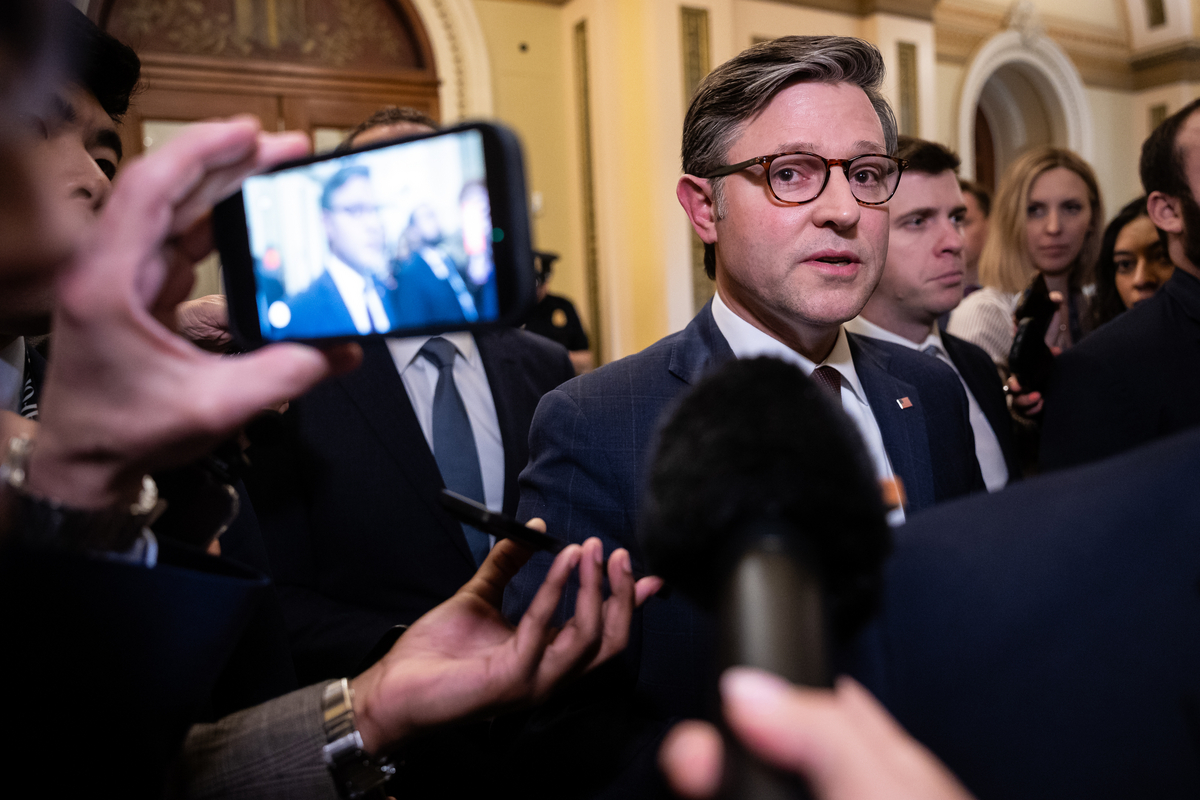
The House just passed the first new Farm Bill in eight years. Now it faces the Senate.
The House passed the first new Farm Bill in eight years, 224-200. It heads to the Senate where 60 votes are needed — and the SNAP cuts that passed the House may not survive.
23 questions
Start the review