Immigration · Judicial Review · Constitutional Law · Civil Rights·April 8, 2026
Federal judge blocks Trump administration from ending deportation protections for 5,000 Ethiopians
Judge Brian Murphy rules DHS violated congressional rules in terminating Temporary Protected Status

Judge Brian E. Murphy postponed the Ethiopia TPS termination on April 8, 2026 after finding the plaintiffs were likely to prove Homeland Security skipped steps Congress wrote into the statute AP News. His order kept Ethiopia's TPS designation alive and said the government had to keep honoring the legal consequences of that status, including work authorization and protection from deportation tied to TPS.
Murphy wrote that the record pointed to a decision that was already made before the required consultation and review were finished. He said the agency appeared to treat President Donald Trump's January 20 executive order on immigration as the command to terminate, then later tried to assemble the process around that outcome The Hill. That mattered because the TPS law requires the secretary to make an actual statutory determination, not just carry out a White House instruction.
is not something a president created by proclamation. Congress created TPS in the Immigration Act of 1990 and gave the Homeland Security secretary a narrow job: review country conditions, consult other agencies, and decide whether extraordinary conditions still make return unsafe USCIS. People approved for TPS can live and work in the United States while the designation lasts, but they do not get permanent residency from TPS alone.
That structure is the center of the case. The administration argued that ending TPS sits within broad executive immigration power. Murphy treated the question differently. He said the government still has to follow the process Congress chose, and he pointed to evidence that the agency had not shown a lawful decision-making sequence before announcing Ethiopia's termination Civil Rights Litigation Clearinghouse.
Kristi Noem announced in December 2025 that Ethiopia's designation would terminate on February 13, 2026. The department said conditions in Ethiopia had improved enough that the country no longer met the statutory test for TPS. Plaintiffs responded that Ethiopia was still dealing with armed conflict, mass displacement, political violence, and humanitarian instability, and they sued in federal court before the cutoff took effect JURIST.
Murphy first entered a stay on January 30 to preserve the status quo while the court reviewed the administrative record. That earlier order already kept work permits and deportation protections in place. His April 8 ruling went further by finding the plaintiffs were likely to succeed on their claim that DHS acted unlawfully when it tried to end the designation Civil Rights Litigation Clearinghouse.
The order repeatedly focused on consultation. The statute requires the secretary to consult with appropriate government agencies before deciding whether to extend or terminate TPS for a country. Murphy said the evidence suggested DHS officials were asked to gather consultation materials only after the White House had already signaled the answer it wanted The Hill.
That finding matters beyond one immigration program. When courts say an agency reversed the order of decision and justification, they are saying the government treated the legal process as theater. Agencies can change policy, but they cannot lawfully stage a review after the real choice has already been locked in by political instruction.
More than 5,000 Ethiopians currently protected by TPS kept their status because of the ruling, according to the Associated Press AP News. USCIS estimated in 2024 that thousands more Ethiopian nationals could qualify under the country's redesignation, which had been extended through December 2025 before the Trump administration moved to end it USCIS. For families already living in the United States, the practical stakes were immediate: legal work, protection from removal, and time to pursue other forms of status if available.
The ruling did not give TPS holders permanent security. It postponed the termination while the case moves forward, and the administration can keep fighting in the district court or appeal. But it stopped a near-term status collapse that would have pushed thousands of people out of legal work authorization and closer to detention or removal CBS News.
The case also exposes how immigration power moves through different layers of government. Trump set the political direction through Executive Order 14159 on his first day back in office. DHS then issued the formal termination notice. Career and political officials assembled the administrative record that the court later examined, and a federal judge reviewed whether those actors complied with the statute Congress enacted decades earlier Civil Rights Litigation Clearinghouse.
That chain is what makes the story civically useful. The fight is not only about Ethiopia. It is about whether a president can use a broad executive order to collapse the space Congress reserved for agency judgment, consultation, and . If courts accept that approach, the same template can be used against other TPS populations and other immigration protections.
Related Topics
4
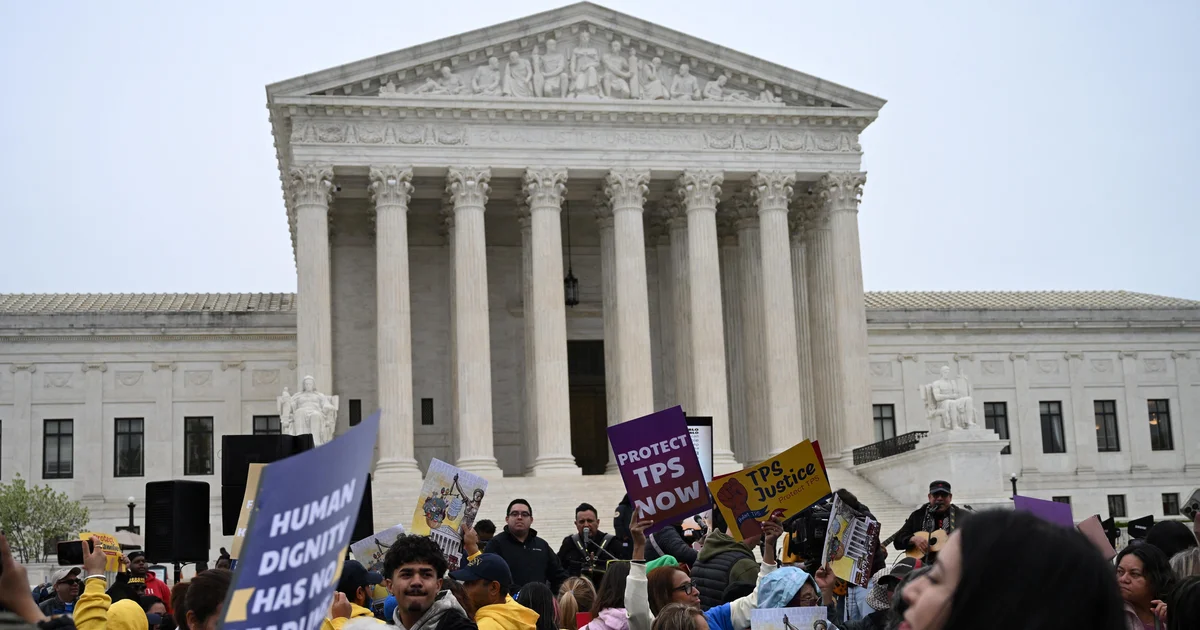
Supreme Court weighs ending TPS for 356,000 Haitians and Syrians
More than 350,000 Haitians face immediate deportation if the Supreme Court allows Trump to end their protected status
Supreme Court hears arguments on ending Haiti and Syria protections, pauses deportations
Court rejects Trump request, schedules Haiti and Syria TPS arguments
Judge blocks Trump from ending TPS for 2,800 Yemenis
2,800 Yemenis keep work permits as judge blocks May 4 deadline
Federal judge blocks Somalia TPS end, protecting 1,100 from deportation
Court steps in four days before 1,100 Somalis lose deportation protection
25 questions
Start the review