Public Policy · Foreign Policy · Ethics · Government·February 19, 2026
Trump convenes Board of Peace, pledges $10 billion
Trump creates parallel institution to UN with no congressional funding authority

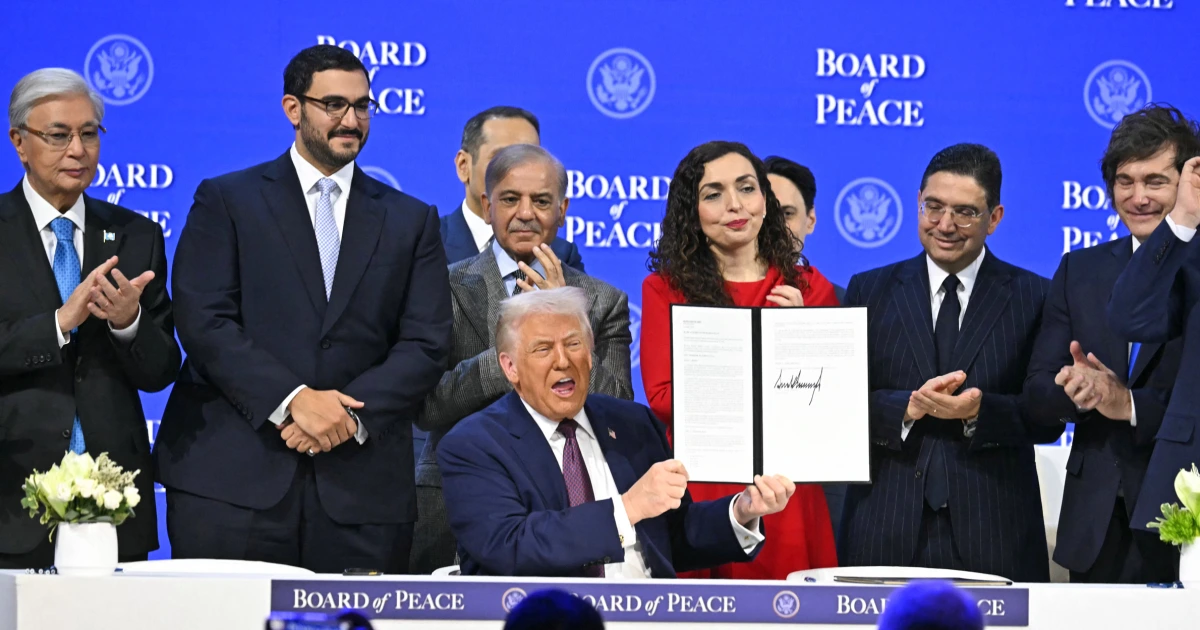
President Trump convened the Board of Peace inaugural meeting on February 19, 2026, at the U.S. Institute of Peace headquarters in Washington, D.C. — a building that now bears his name after he seized it from its independent nonprofit leadership earlier this year. Representatives from more than 40 countries attended, with a dozen more as observers.
Trump pledged $10 billion from the United States toward the board's operations, but provided no explanation of where the money would come from, how it would be spent, or whether he had congressional authority to commit it. The Appropriations Clause of the Constitution requires Congress to authorize any federal spending.
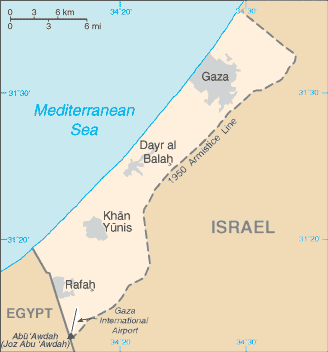
Nine Gulf and Central Asian countries — Kazakhstan, Azerbaijan, the UAE, Morocco, Bahrain, Qatar, Saudi Arabia, Uzbekistan, and Kuwait — pledged a combined $7 billion for Gaza reconstruction. The UN estimates total reconstruction of Gaza will cost $70 billion and take years. The pledged amounts represent about 24% of what is needed.
Indonesia, Morocco, Kazakhstan, Kosovo, and Albania committed troops to an International Stabilization Force (ISF) led by U.S. Major General Jasper Jeffers, with Indonesia's President Prabowo Subianto accepting the deputy commander role. The force aims to eventually deploy 20,000 soldiers in five brigades across different parts of Gaza, starting in Rafah.
The board's charter names Trump as 'chairman for life' — a title independent of his presidency — and grants him exclusive authority to invite countries, modify the charter, dissolve subsidiary bodies, veto decisions, and nominate his own successor. Countries seeking permanent voting membership must pay a $1 billion fee; others rotate on three-year terms.
The charter contains no mention of Palestine, Palestinians, the right of return, or Palestinian self-determination, according to an analysis by journalist Sharif Abdel Kouddous of Drop Site News. The Palestinian technocratic government, led by Ali Shaath, sits on a subordinate 'Gaza Executive Board' that implements policies rather than setting them.
Canadian Prime Minister Mark Carney was uninvited from the board after delivering a speech at the World Economic Forum warning of a 'rupture' in the world order. Germany, Italy, the UK, and Norway declined to join or expressed reservations, with Italian Prime Minister Giorgia Meloni saying participation would be incompatible with Italy's constitution.
Hamas issued a statement after the meeting accusing Israel of violating the ceasefire and calling on board members to hold Israel accountable, signaling that Hamas has not committed to the disarmament that Israel and the U.S. demand as a condition for reconstruction to begin.
Related Topics
3
Trump launches Board of Peace with $1 billion permanent membership fee as major allies refuse to join
Western allies reject Trump's pay-to-play peace initiative as potential UN rival
Trump's Board of Peace announces $5 billion for Gaza reconstruction
Trump announces $5B Gaza pledge while UN estimates $70B needed for reconstruction
UN authorizes Trump-controlled Gaza force and transitional administration
UN resolution gives Trump direct control over Gaza with 20,000-troop enforcement force, offering only vague path to statehood
12 questions
Start the review