Public HealthForeign PolicyVeterans
November 14, 2025Bộ trưởng Quốc phòng Hegseth công bố "Operation Southern Spear" (Chiến dịch Ngọn giáo phương Nam) nhắm vào "những kẻ khủng bố ma túy" trên khắp bán cầu
20 boat strikes killed 80 people with no war vote in Congress
Defense Secretary Pete Hegseth, who now uses the title "Secretary of War" after the administration renamed the Department of Defense, announced Operation Southern Spear on Nov. 13, 2025. He said the mission "defends our Homeland" and "removes narco-terrorists from our Hemisphere." The name didn't describe a new war. It put a formal label on a campaign U.S. Southern Command had run since early September, now coordinated by a new Joint Task Force Southern Spear the Pentagon stood up in October under SOUTHCOM commander Adm. Alvin Holsey.
The announcement landed the same week the Pentagon carried out its 20th lethal strike on a boat it said carried drugs. By then the campaign had killed at least 80 people in the Caribbean and Eastern Pacific over about 10 weeks.
The campaign started on Sept. 2, 2025, when Trump said a U.S. strike killed 11 people on a boat he tied to Tren de Aragua, a Venezuelan gang the administration had labeled a foreign terrorist organization. Venezuelan Interior Minister Diosdado Cabello later said the country's own investigation found none of the 11 belonged to Tren de Aragua.
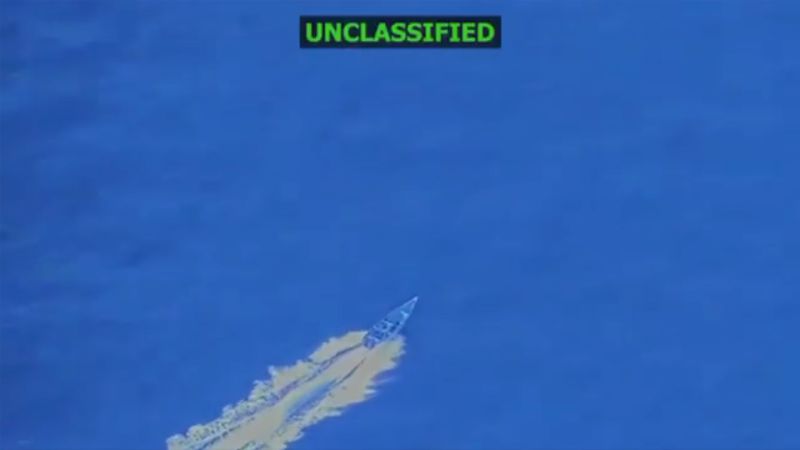
The strikes ran at about one a week until late October, then picked up and spread to the Eastern Pacific. The Pentagon released video of burning boats but didn't publish evidence that the vessels carried drugs or that the people aboard were traffickers.
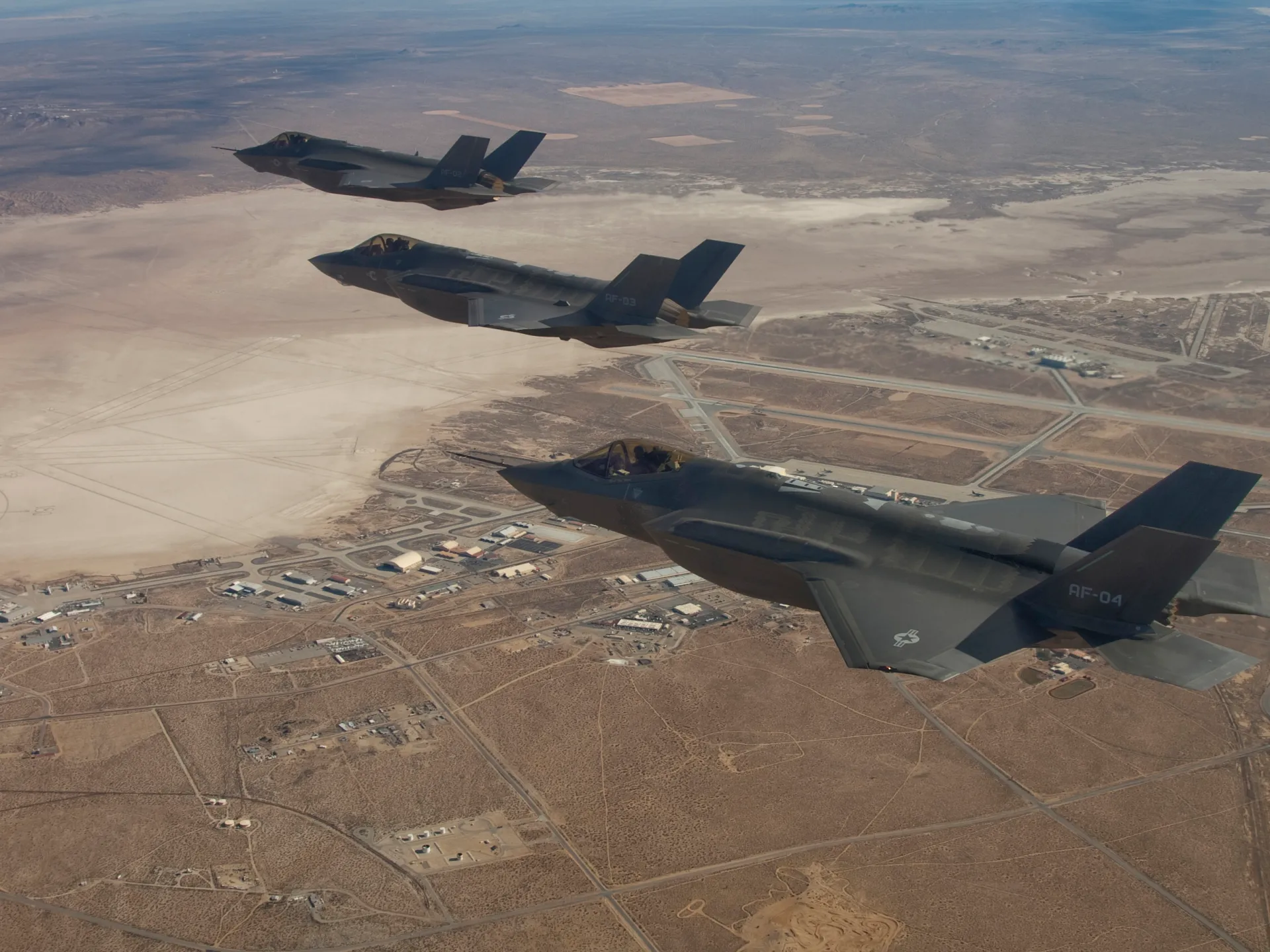
The USS Gerald R. Ford, the world's largest aircraft carrier, reached waters off Latin America on Nov. 11, 2025, carrying about 4,500 sailors and nine air squadrons. Three Navy destroyers escorted it. The carrier pushed the total U.S. force in the region to about 15,000 troops and more than 10 warships, with roughly 2,200 Marines, 10 F-35 fighters in Puerto Rico, and an estimated 170 Tomahawk missiles within range.
Military analysts at CSIS noted the buildup was far too small for a ground invasion, which would need 50,000 troops or more, but more than enough to launch air and missile strikes inside Venezuela.
Trump never asked Congress to authorize the strikes. The Constitution gives Congress the power to declare war, and the of 1973 requires a president to notify Congress within 48 hours of sending forces into hostilities and to stop after 60 days without authorization.
The Senate twice refused to rein the campaign in. On Oct. 8, 2025, it rejected a resolution from Sens. Adam Schiff and Tim Kaine to end the boat strikes, voting 48 to 51. In November it turned down a second Kaine measure aimed at Venezuela, 49 to 51, with Sens. Rand Paul and Lisa Murkowski the only Republicans in favor.
The administration's legal case rested on a classified Justice Department opinion written over the summer to shield troops from prosecution. It argued the U.S. is in a "non-international armed conflict" with the cartels, that the people on the boats are "unlawful combatants" rather than criminal suspects, and that the cocaine itself is a lawful military target because it funds the cartels.
The administration kept the memo from the public and let members of Congress read it only in December 2025. The American Civil Liberties Union and the Center for Constitutional Rights sued for its release. Lawmakers who saw classified briefings said the military doesn't even require a boat to carry drugs or weapons to be hit.
Justice Department lawyers told Congress the 60-day clock in the War Powers Resolution didn't apply because the strikes used unmanned systems and put no U.S. troops in harm's way. Sen. Tim Kaine warned that the theory, taken to its conclusion, would let any future president kill people abroad indefinitely without telling Congress, as long as no American was at risk.
The 60-day limit has rarely constrained presidents. Congress has never forced a president to withdraw forces under it since it passed the resolution in 1973 over President Nixon's veto.
The Washington Post reported on Nov. 28, 2025 that Hegseth gave a verbal order to "kill everybody" before the first strike on Sept. 2, and that after the missile hit, two men survived in the water and a second strike killed them. The paper attributed the account to people with direct knowledge of the operation.
The Pentagon denied it. Chief spokesman Sean Parnell called the account "completely false," and Hegseth said he never ordered anyone to leave no survivors. Adm. Frank "Mitch" Bradley, the special operations commander who ordered the second strike, told Sens. Tom Cotton and Rep. Jim Himes he acted on his own authority and believed the survivors were still a threat. Gen. Dan Caine, the chairman of the Joint Chiefs of Staff, and Bradley briefed congressional committees. The conflicting accounts left the public without an agreed record of who ordered two men killed in the water.
The Pentagon often couldn't say who it killed. By Nov. 8, 2025, most of the dead remained unidentified; those publicly named included two Colombians, one Ecuadorian, two men from Trinidad and Tobago, and nine Venezuelans. Families in fishing communities across the southern Caribbean said they couldn't get answers about missing relatives.
Two men survived an Oct. 16 strike and were sent home to Colombia and Ecuador instead of being charged. CNN profiled the Ecuadorian survivor, Andrés Tufiño, whose family said he was a fisherman, not a trafficking boss. No survivor was brought to a U.S. court, where the government would have had to prove its drug claims.
The administration called Venezuela the source of the drugs killing Americans, but federal data points elsewhere. The Drug Enforcement Administration's 2025 threat assessment says about 90% of U.S. cocaine comes from Colombia and travels up the Pacific coast through Central America and Mexico, not through Venezuela. The DEA's cocaine section doesn't mention Venezuela. Fentanyl, the drug driving U.S. overdose deaths, comes through Mexico and isn't produced in Venezuela.
United Nations data and independent analysts estimate only a small share of Colombian cocaine moves through Venezuela at all. The mismatch between the stated target and the trafficking data fed suspicion that the campaign was about pressuring Maduro, not stopping drugs.
The Trump administration paired the strikes with direct pressure on President Nicolás Maduro. The Justice Department had indicted him for narco-terrorism in 2020, and in August 2025 Attorney General Pam Bondi raised the reward for his capture to $50 million. The administration designated the Cartel de los Soles, which it says Maduro leads, a foreign terrorist organization. On Nov. 3 Trump said Maduro's "days are numbered."
Foreign governments and the United Nations pushed back hard. UN human rights chief Volker Türk called the strikes "unacceptable" and said the U.S. "must halt" them to prevent "." Colombian President Gustavo Petro told U.S. soldiers to "disobey the orders of Trump," and the State Department revoked his visa on Sept. 27. Mexico's President Claudia Sheinbaum said, "We do not agree with these attacks."
Timeline
Jeffrey Epstein accountability timeline
Nov 14, 2025
Main
Defense Secretary Hegseth announces "Operation Southern Spear" targeting "narco-terrorists" across hemisphere
Defense Secretary Pete Hegseth announced "Operation Southern Spear" on Nov. 14, 2025, a military campaign against alleged narco-terrorists across the Western Hemisphere. The Pentagon has conducted 20 lethal strikes on vessels in the Caribbean and Eastern Pacific, killing at least 79 people. The U.S. deployed 15,000 military personnel to the region, including the USS Gerald R. Ford, the world's largest aircraft carrier. Critics including the UN human rights chief, Mexico, Colombia, and some U.S. lawmakers have condemned the strikes as unlawful extrajudicial killings. The Trump administration has not sought Congressional war authorization.
Related Topics
528 questions
Start the review