Energy · National Security · Foreign Policy·March 16, 2026
Bessent confirms US lets Iran's oil tankers sail Hormuz while others are blocked
US bombs Iran's military while protecting the oil revenue keeping its government funded

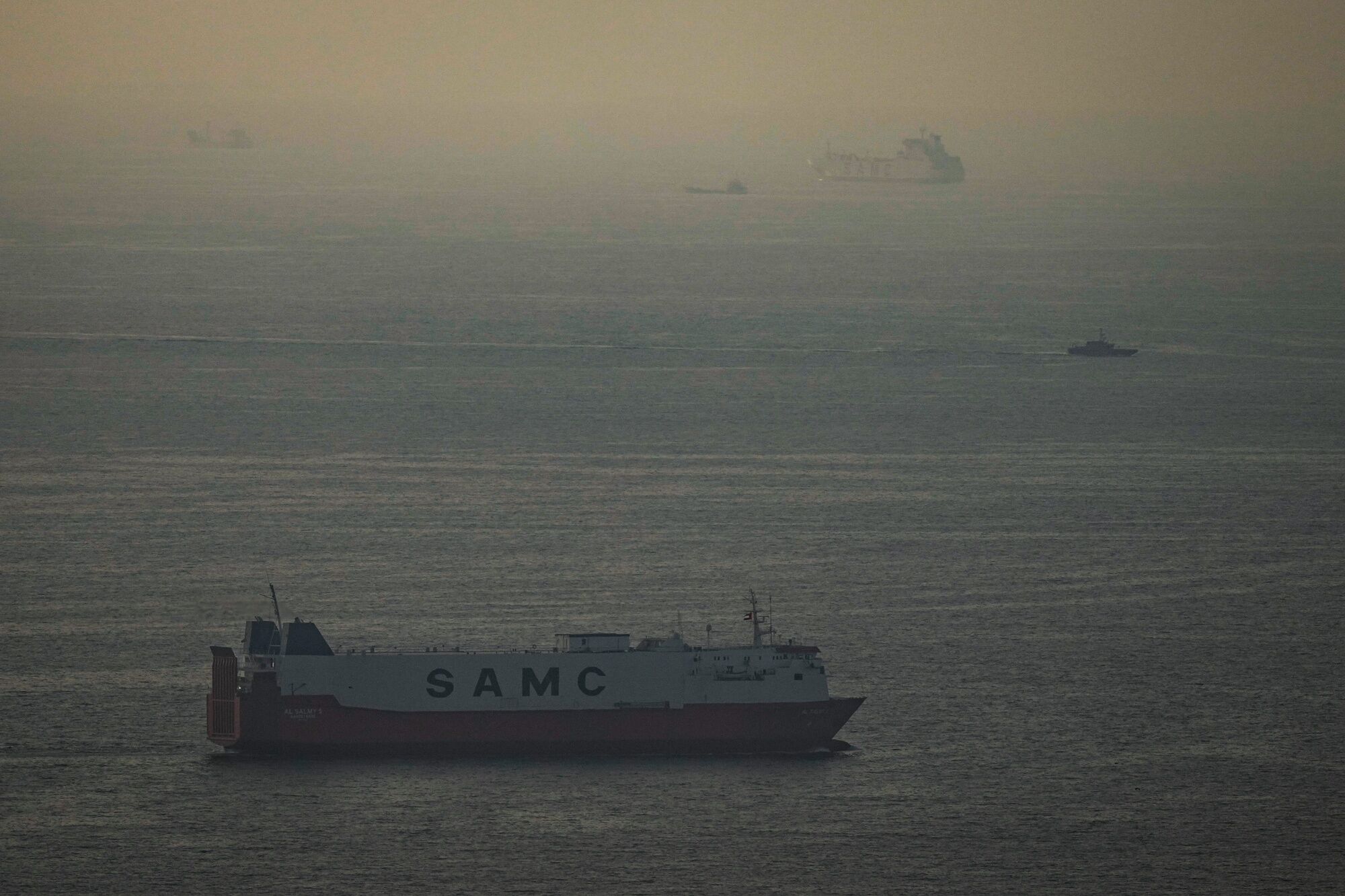
Photo: Abdul Saboor / Reuters
"Treasury Secretary Scott Bessent confirmed on March 16, 2026 that the United States is allowing Iranian oil tankers to pass through the Strait of Hormuz even while Iran uses the strait as leverage against global shipping. "We've let that happen to supply the rest of the world," Bessent told CNBC from Paris, where he was attending international economic meetings. He said the U.S. believes a "natural opening" exists as Iran selectively allows its own tankers through.\n\nBessent said tankers supplying India had already transited the strait, and that the U.S. believes Chinese vessels are also getting through. India's Ministry of External Affairs confirmed to CNBC that one LPG ship had arrived and a second was expected. India was waiting for Iranian confirmation that 22 additional ships could sail."
"The policy creates a significant strategic contradiction. The United States launched Operation Epic Fury with Israel on February 28, 2026, striking Iranian military and nuclear facilities with the stated goal of degrading Iran's power. Yet Iran's oil revenue, derived from the tankers the U.S. is choosing not to intercept, funds the Iranian government and the Islamic Revolutionary Guard Corps that is attacking commercial shipping.\n\nIran declared the Strait of Hormuz closed to commercial shipping on March 4, 2026. Daily oil exports through the strait dropped 61 percent compared to February, falling from 25.13 million barrels per day to 9.71 million barrels the week of March 15. Oil prices surged approximately 40 percent since the war began, with prices closing above $103 per barrel."
"Trump has asked NATO allies and other countries to send warships to escort commercial shipping through the Hormuz Strait, framing it as a coalition responsibility. As of March 15, no country had publicly committed to sending ships. House Speaker Mike Johnson called the coalition request "reasonable." Senate Minority Leader Chuck Schumer said Trump was "flailing" without a coherent strategy.\n\nEnergy Secretary Chris Wright told NBC's Meet the Press on March 15 that the war will end in "a few more weeks" and gas prices will then fall, but he acknowledged there are "no guarantees." The Energy Information Administration, part of Wright's own department, forecasts gas prices will not return to pre-conflict levels before the end of 2027."
"The exemption for Iranian tankers is framed by U.S. officials as a measure to prevent deeper global oil supply shocks. Roughly 20 percent of global oil trade passes through the Strait of Hormuz. Iran's closure has already disrupted supplies to Asia, which depends heavily on Middle Eastern crude. Allowing Iran's tankers through reduces some of the pressure on global markets without requiring U.S. military escort missions.\n\nCritics of the policy argue it undermines the strategic purpose of the war. If the goal is to force Iran to negotiate or capitulate, allowing Iran to continue profiting from oil sales removes a major source of economic pressure. The Trump administration has declined to reimpose the maximum-pressure oil sanctions it lifted on Russia in a separate deal around the same time, creating a broader picture of selective economic enforcement during the conflict."
"Bessent added a key qualifier on March 16: the U.S. would maintain "maximum pressure" on Iran's ability to access the international financial system. His argument was that Iran could ship oil but wouldn't be able to spend the revenue freely because U.S. financial sanctions blocked Iran's banks from the global payment system.\n\nThat framing collapsed four days later. On March 20, 2026, the Treasury Department issued a 30-day sanctions waiver authorizing buyers to purchase Iranian oil stranded in tankers at sea, covering approximately 140 million barrels. (CNBC) The same day, Iraq declared force majeure on its own exports, citing disruption from the Iran war, and oil prices topped $112 per barrel. (CNBC) The U.S. was no longer passively allowing Iranian tankers through a gap in enforcement. It was actively removing sanctions to let buyers purchase Iranian crude."
"The closest historical precedent for U.S. military involvement in the strait is Operation Earnest Will in 1987-88, when the Reagan administration deployed more than 40 warships to the Persian Gulf to escort Kuwaiti oil tankers reflagged as U.S. vessels during the Iran-Iraq War. Iran had attacked 37 ships between 1984 and 1987 in what became known as the Tanker War. The escort operation kept shipping moving but produced the deadliest incident in the strait's modern history: on July 3, 1988, the USS Vincennes shot down Iran Air Flight 655 in Iranian airspace, killing all 290 people aboard. The U.S. paid Iran $61.8 million in compensation in 1996 without admitting legal liability. (HISTORY)\n\nThe key difference from 2026: in 1987-88, the U.S. was not itself at war with Iran. It was protecting neutral shipping from Iranian harassment during a conflict between Iran and Iraq. In 2026, the U.S. launched Operation Epic Fury directly against Iran on February 28 while simultaneously exempting Iranian oil tankers from military interception."
"The Strait of Hormuz is governed by the United Nations Convention on the Law of the Sea (UNCLOS), which grants all nations the right of "transit passage" through international straits. Iran ratified UNCLOS in 1996. Under UNCLOS Article 38, Iran can't legally close the strait to international shipping. The U.S. has never ratified UNCLOS but treats its navigation provisions as binding customary international law. (Congress.gov CRS Report)\n\nIran's March 4, 2026 closure declaration violates its treaty obligations. The State Department formally called the closure illegal. But U.S. policy hasn't resolved a central contradiction: if Iran's blockade violates international law, why isn't the U.S. using its naval presence in the Gulf to enforce for all ships, not just Iranian-flagged tankers?"
"Congress has not authorized Operation Epic Fury under the Resolution of 1973 or a specific Authorization for Use of Military Force (AUMF). Under the War Powers Resolution, the president must notify Congress within 48 hours of committing forces to hostilities and must withdraw within 60 days unless Congress authorizes the action. The administration notified Congress of the initial February 28 strikes but hasn't sought formal authorization for the ongoing conflict.\n\nThe decision to exempt Iranian tankers from military interception is executive branch policy made without congressional input, public comment, or formal rulemaking. The Senate blocked a Democratic effort to force debate on the war's legal authorization in a 51-48 procedural vote on March 17, 2026. No Senate committee has scheduled a public hearing on the tanker exemption policy as of March 22, 2026."
Related Topics
6
Iran threatens to block all Middle East oil. Trump weighs Russia sanctions relief
The diplomatic maneuvering shows how the Iran war affects global energy markets and alliances
Israel kills IRGC Navy commander who ordered Hormuz blockade
Israel kills IRGC Navy chief commanding the Hormuz blockade
Trump gives Iran 48-hour ultimatum, threatens power plants
Iran warns it will mine the Gulf and permanently close the Strait of Hormuz if power plants are targeted
Iran re-closes Strait of Hormuz, fires on Indian oil tankers
Indian sailors caught in crossfire as U.S.-Iran ceasefire nears expiration

Trump and Netanyahu escalate Iran tensions risking wider war
Three leaders gamble with millions of lives while lying to their people
US Navy begins blockade of Iranian ports after peace talks fail
Naval blockade of Iran begins without congressional authorization
28 questions
Start the review