November 13, 2025
DOJ sues California over Prop 50 redistricting map while Texas and Florida Republican gerrymanders go unchallenged
AG Pam Bondi sued to block California's voter-approved map but left GOP-drawn maps in Texas and Florida untouched
November 13, 2025
AG Pam Bondi sued to block California's voter-approved map but left GOP-drawn maps in Texas and Florida untouched
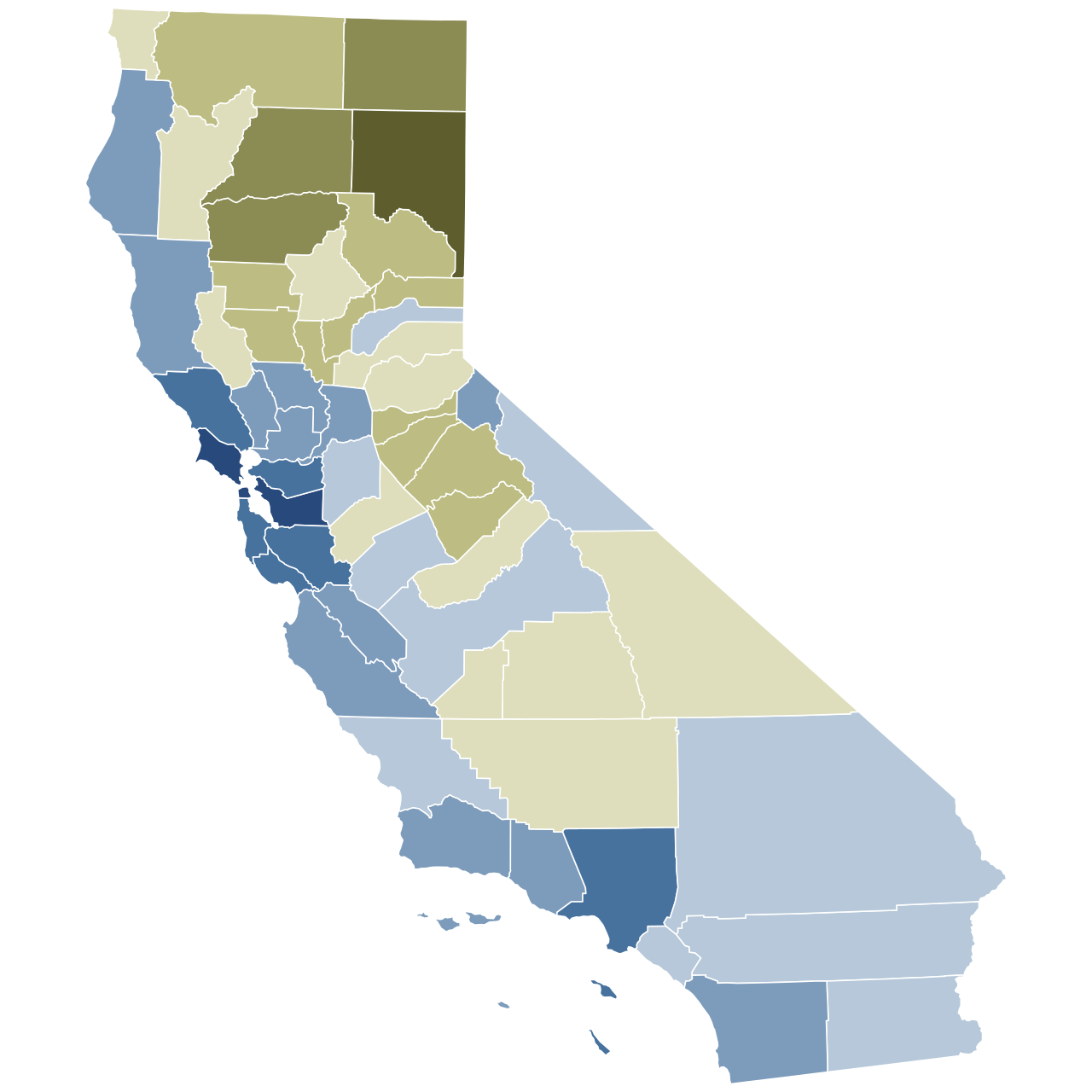
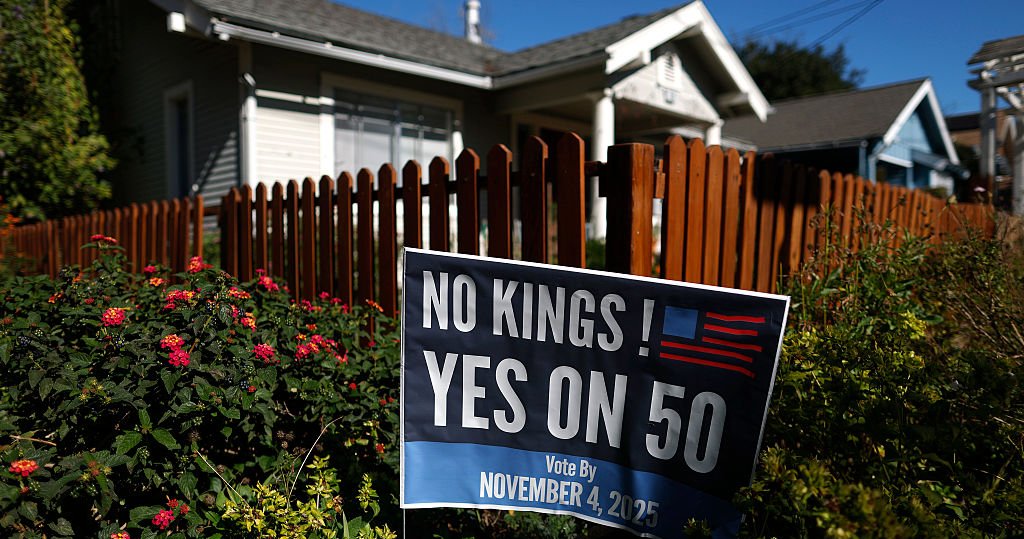
California voters approved Proposition 50, officially named the Election Rigging Response Act, on November 4, 2025, by a 64.4% margin. The measure temporarily suspended the state's independent Citizens Redistricting Commission and allowed the Democratic-controlled legislature to draw new congressional lines.
Governor
Gavin Newsom proposed Prop 50 explicitly as a response to Texas Republicans redrawing their own mid-decade congressional map. Newsom argued that Democrats needed to match Republican gerrymanders or concede House seats without a fight.
Democratic redistricting expert Paul Mitchell drew the new congressional map. The Democratic Congressional Campaign Committee formally submitted it to the California legislature. The map moved five Republican-held House seats into districts with more Democratic voters, targeting incumbents in Southern California, the Central Valley, and Northern California.
Attorney General
Pam Bondi announced the DOJ lawsuit on November 13, 2025, nine days after voters approved Prop 50. Bondi called the map a brazen power grab and said Latino demographics had improperly dominated the line-drawing process, violating the Fourteenth Amendment Equal Protection Clause.
DOJ joined an existing lawsuit filed by the California Republican Party, which had challenged Prop 50 before the election. By intervening as a plaintiff, the federal government added its enforcement weight against a map California voters had just approved by a 21-point margin.
Critics noted that DOJ challenged the California map while taking no action against Republican-drawn mid-decade maps in Texas and Florida. Justice
Samuel Alito, writing separately in the Supreme Court proceedings, acknowledged that both states acted out of partisan advantage but the federal government treated them differently.
On January 14, 2026, U.S. District Court judges Josephine Staton and Fred Jahan Hsu voted 2-1 to uphold the California map, ruling it did not constitute an illegal racial gerrymander. On February 4, 2026, the Supreme Court denied the Republican and DOJ appeal without comment or recorded dissent, clearing the map for the 2026 midterms.
Complete the sentence: DOJ intervened to argue Prop 50 used _____ over traditional criteria.
Which trend best summarizes litigation activity across states?
If courts order a new map before filing deadlines, candidate filings for 2026 could change.
Why do critics call DOJ's action selective enforcement?
DOJ's intervention guarantees courts will remove Prop 50 from the ballot.
Upgrade to Premium to access all practice questions and unlock advanced quiz features.
Upgrade to PremiumThese questions are part of the DOJ sues California over Prop 50 redistricting map while Texas and Florida Republican gerrymanders go unchallenged topic. Master this topic by completing the quiz or exploring each question in detail.
Take the full quiz to master this topic and track your progress.
Start QuizU.S. Attorney General
Governor of California
California Secretary of State
Democratic redistricting expert and map author
U.S. District Court Judge, Central District of California
U.S. Supreme Court Associate Justice