Trade · Economy·May 15, 2026
Trump touts China trade deals, but all commitments remain verbal
Verbal trade promises worth billions lack any signed contract or enforcement mechanism

President 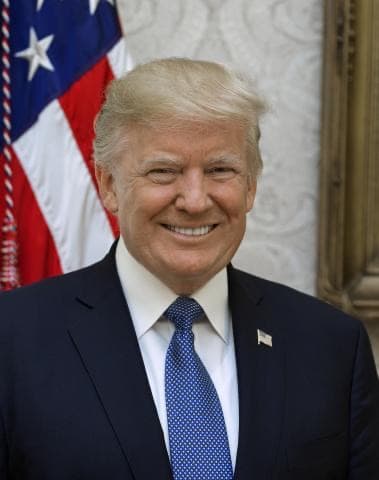 Trump announced what he called "fantastic trade deals" at the close of a two-day Beijing summit on May 15, 2026, claiming China agreed to buy 200 Boeing jets, GE Aerospace engines, agricultural products, and crude oil. None of the announcements came with signed agreements. China didn't publicly confirm the proposed Boeing order, and both countries disagreed on what they'd actually committed to. Wall Street responded with global sell-offs after UBS analysts called the outcome "nothing of real substance." The summit produced a proposed Board of Trade and Board of Investment to manage tariff reductions on roughly $30 billion in goods, but those bodies have no timeline, no membership, and no binding authority. The pattern echoes Trump's 2017 China trip, where $250 billion in announced deals largely never materialized.
Key facts
Trump told Fox News on May 15 that Xi Jinping agreed to purchase 200 Boeing aircraft, with an option for up to 750 planes over time. He said the deal includes 400 to 450 GE Aerospace engines. Boeing confirmed an later that day but provided no details on aircraft models, delivery schedules, or contract terms.
China's National Development and Reform Commission met with Boeing CEO Kelly Ortberg and GE Aerospace CEO Larry Culp on May 15 but in its readout of those meetings. Trump himself described the arrangement as rather than a firm commitment.
Trump also claimed China would purchase billions of dollars in soybeans, crude oil, and liquefied natural gas. He said Chinese tankers would soon head to US ports. USTR Jamieson Greer had in agricultural commitments before the trip.
US soybean exports to China have been declining structurally. Brazil now supplies over 70% of China's soybean imports, while the US share sits at 21%. China met a in January 2026 but fresh purchases have gone quiet since.
The summit's centerpiece institutional proposal was a Board of Trade and a Board of Investment. The Board of Trade, first proposed by Greer in March 2026, would create a for non-sensitive goods. Each side would identify roughly $30 billion in goods where tariffs could be reduced without crossing national security lines.
The Board of Investment would handle investment disputes on a slower track. Neither body has announced members, timelines, or a charter. No text was signed establishing either board.
Every deal announced at the summit remained a verbal commitment only. No written agreements were signed during the two-day visit. Al Jazeera reported that the US and China , with each side issuing contradicting characterizations of the talks.
NBC News reported Trump on any thorny issues. CNN described the delegation leaving with .
Wall Street reacted negatively. UBS economist Paul Donovan told clients that came from the summit, saying much jet fuel had been burned for no concrete result. Global stocks sold off on May 15 as traders concluded no meaningful trade barrier reduction had occurred.
CBS News reported that for the United States. The lack of any signed document means enforcement depends entirely on goodwill between the two governments.
This follows a historical pattern. During Trump's first state visit to China in November 2017, the Commerce Department announced $250 billion in nonbinding trade deals. Most never materialized. A dissolved as US-China tensions grew.
The Phase One trade deal signed in January 2020 committed China to buy $200 billion in additional US exports by end of 2021. The Peterson Institute found China , purchasing only 58% of the committed total.
The summit takes place in a transformed legal landscape for presidential trade authority. The Supreme Court ruled on February 20, 2026 that IEEPA , striking down Trump's emergency-based tariff framework in a 6-3 decision. The Court held tariffs are different in kind from other IEEPA authorities.
Trump now relies on Section 301 and 📖Section 232 for existing China tariffs. The proposed Board of Trade represents an executive workaround: managing tariff reductions without seeking new Congressional authorization. Under the Constitution's 📖Commerce Clause, trade authority belongs to Congress.
The Constitution vests tariff power in Congress through Article I. Congress has delegated some authority to the president through statutes like Section 301 and 📖Section 232, but details how Congress remains ultimately responsible for determining what tariff authorities the president holds.
The proposed Board of Trade operates as an 📖executive agreement rather than a treaty or congressionally approved trade deal. Unlike 📖Trade Promotion Authority, which required Congressional vote on completed deals, this mechanism would let the executive branch reduce tariffs on $30 billion in goods without a floor vote.
The shift in US negotiating posture is significant. Washington is no longer demanding China reform its state-directed economic model. The Wire China reported that the Board of Trade concept . Instead, the framework focuses on numerical trading targets in non-strategic sectors while maintaining broad tariffs on sensitive technologies.
This represents managed trade rather than free trade. Both governments would pick winners and losers by selecting which $30 billion in goods qualify for tariff relief.
American farmers face the most immediate uncertainty. US agricultural exports to China hit their lowest level since the 2018 trade war. Bloomberg reported soy growers as planting season slips away. Without a signed purchase agreement, farmers can't plan production or secure financing against guaranteed orders.
Boeing's workforce of over 170,000 employees depends partly on whether China follows through. Boeing hasn't received a Chinese order in nearly a decade. The 200-plane commitment would be worth roughly $20 billion at list prices, but list prices rarely reflect actual sale terms.
Related
Categories that may be relevant to you
5 topics available

May 23, 2026
DOJ scrubs hundreds of Jan. 6 prosecution records from website
🔍
May 22, 2026
FTC fines Cox Media Group $930K for fake AI listening ad service
May 22, 2026
Warsh sworn in as Fed chair at White House in first such ceremony since 1987
May 22, 2026
Colorado closes legal gap for defendants found unfit to stand trial
May 22, 2026
Gabbard resigns as director of national intelligence
View All Government Topics
770 topics
30 questions
Start the review