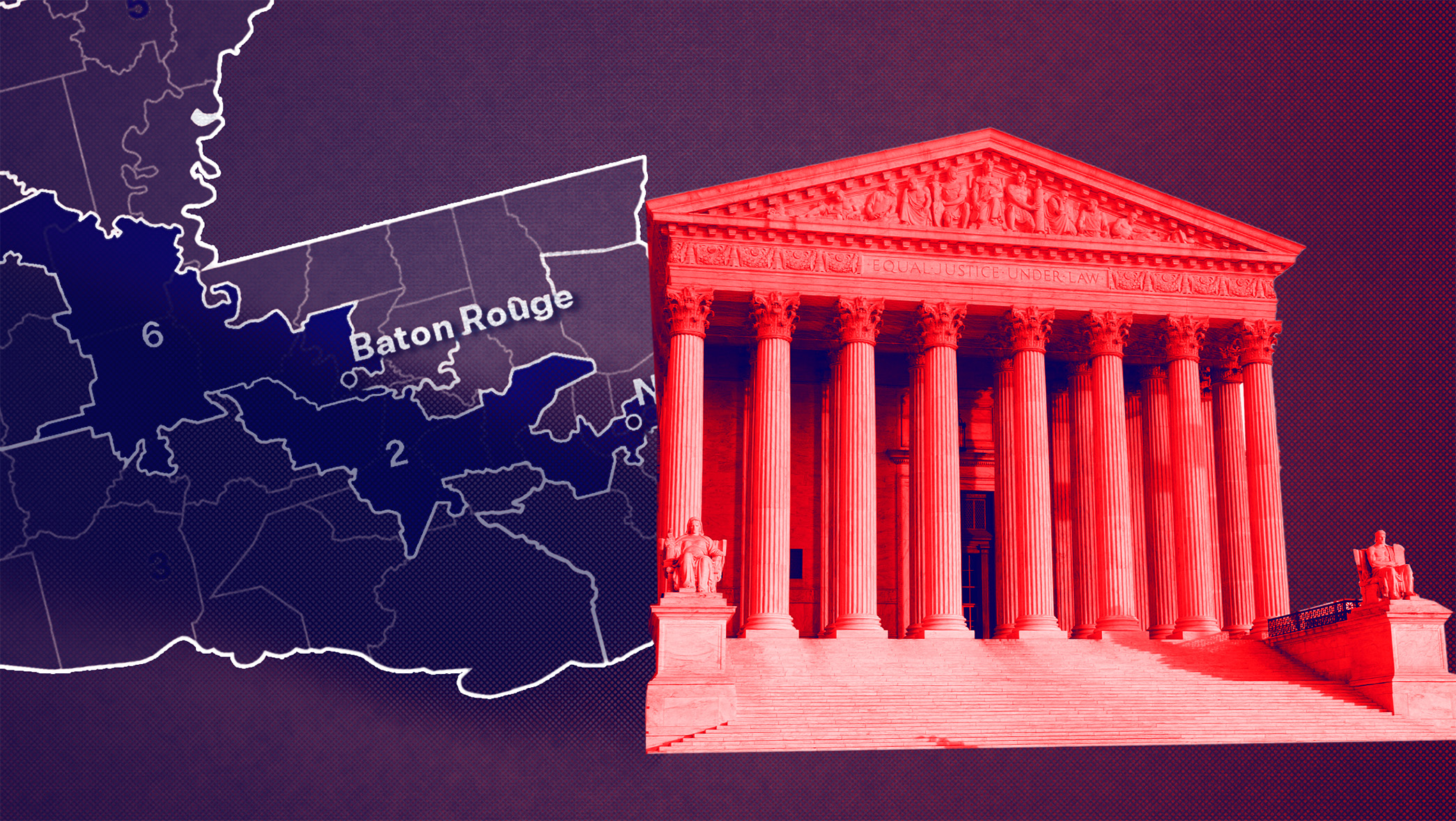
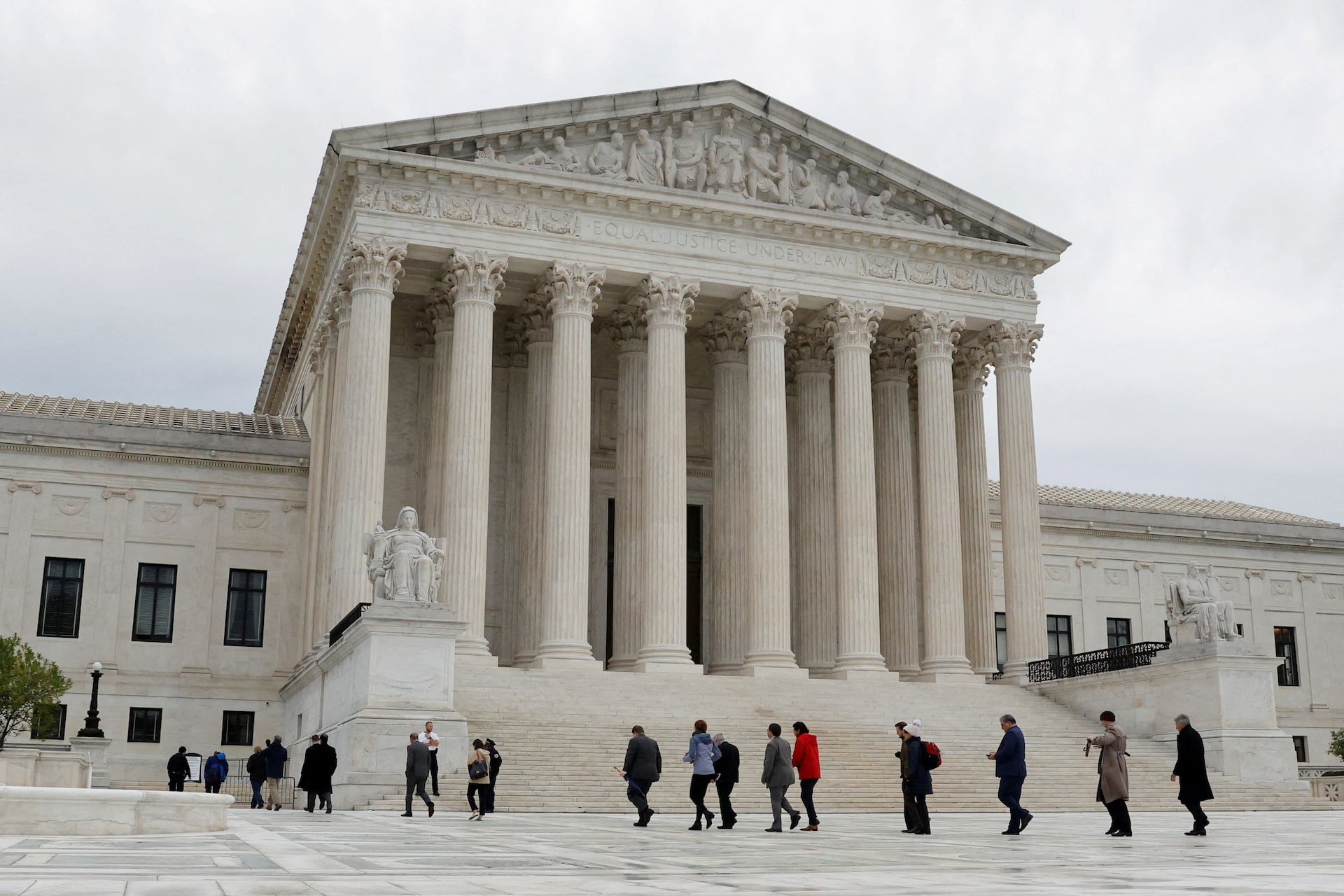
The Supreme Court's 2025-26 term opened Oct. 6, 2025, with a docket legal scholars called the most consequential for elections since Bush v
Gore
Three cases — Louisiana v Callais, NRSC v FEC, and Bost v Illinois — were accepted for argument in the same term, meaning the Court could issue rulings in all three by June 2026, weeks before states must finalize congressional maps and months before November 2026 midterm balloting The timing gives the 6-3 conservative majority maximum structural influence over the midterm rules before a single ballot is cast.
Louisiana v. Callais was reargued before the full Court on Oct. 15, 2025, after a fractured first argument produced no majority opinion. The case concerns Louisiana's congressional map, which a federal district court ordered redrawn in 2024 to add a second majority-Black district as a remedy for Section 2 Voting Rights Act violations.
Louisiana and Republican intervenors then argued the remedial map itself violates the Equal Protection Clause by relying too heavily on race. The Court's decision will determine whether states can be compelled to draw majority-minority districts as Section 2 remedies — or whether such remedies are themselves unconstitutional racial classifications.
The legal stakes in Callais are enormous. Allen v. Milligan (2023) upheld Section 2 vote-dilution claims 5-4, with Chief Justice Roberts joining the four liberal justices. Justice Kavanaugh provided the critical fifth vote but wrote separately to signal skepticism about the scope of Section 2 remedies.
If the Court in Callais holds that court-ordered majority-minority districts violate the 14th Amendment, it would effectively nullify Section 2 as a practical tool — allowing states to dilute minority voting power with impunity even after courts find violations. Voting rights advocates said that outcome would be the most significant rollback of the Voting Rights Act since Shelby County v. Holder (2013).
NRSC v. FEC challenges the constitutionality of federal caps on coordinated expenditures — money political parties spend in coordination with their candidates. Under current law (2 U.S.C. § 441a), parties can spend only a set amount in coordination with candidates in each race; the NRSC argues this limit unconstitutionally restricts the party's First Amendment right to support its own candidates.
The FEC and the Democratic challenger argue that coordinated spending is indistinguishable from direct candidate contributions and that the limit serves the same anti-corruption interest. A ruling for the NRSC would allow parties to spend unlimited amounts in coordination with candidates — blurring the line between party and candidate treasuries and potentially overwhelming the remaining campaign finance architecture.
Bost v. Illinois centers on a narrow but election-decisive question: can a federal candidate sue in federal court over a state mail ballot receipt rule? Illinois allows mail ballots postmarked by Election Day to be counted if received up to 14 days later. Republican federal candidates argue this practice effectively extends the election beyond Election Day, diluting their votes.
The threshold question is Article III standing — whether the candidates have suffered a legally cognizable injury. But the substantive question beneath it is whether states can count late-arriving ballots at all in federal elections. A ruling on the merits could affect similar laws in more than 20 states.
The three cases collectively trace a unified structural logic: Callais determines whether minority communities can obtain remedial districts after proven vote dilution; NRSC v. FEC determines how much money parties can pour into individual races; and Bost determines whether mail-in voters in extension states have their ballots counted. Voting rights advocates argue the Court is being asked to simultaneously weaken the remedy for racially discriminatory maps, unleash party money in targeted races, and potentially invalidate late-arriving mail ballots — three changes that would each individually favor Republican candidates in competitive districts.
The cases arrive in the shadow of the Court's 2023 Moore v
Harper ruling, which rejected the Independent State Legislature theory — the doctrine that would have let state legislatures set federal election rules with no judicial review
Moore preserved judicial checks on state legislatures in federal elections Callais, Bost, and NRSC v FEC now ask the Court to draw the precise limits of those checks: what racial remedies can courts order (Callais), whether Congress can limit party spending (NRSC), and whether federal candidates can challenge state ballot-counting rules (Bost).
The political valence of the cases is largely asymmetric: a ruling for the challengers in all three would benefit Republican candidates. Majority-minority districts currently elect Democrats in the South; unlimited coordinated party spending would advantage the party with more money (Republicans); and striking down late mail ballot windows would disproportionately affect Democratic voters, who use mail ballots at higher rates. Legal scholars including Richard Hasen of UCLA Law and Franita Tolson of USC Gould School of Law have both warned that a sweep for challengers in all three cases would represent a structural reordering of electoral rules before the 2026 midterms.