Infrastructure · Government · Justice·May 12, 2026
DOJ indicts Dali operators for Key Bridge crash that killed 6
Ship operator hid faulty fuel pump for years. Six workers paid with their lives.

Two years after the M/V Dali rammed the Francis Scott Key Bridge and killed six construction workers, the U.S. Department of Justice unsealed a criminal indictment on May 12, 2026, charging two Singapore- and India-based Synergy Marine companies and their technical superintendent with conspiracy, obstruction, false statements, and maritime misconduct. Federal prosecutors say the crash was preventable: Synergy employees secretly swapped in a non-standard flushing pump to fuel two of the Dali's four generators, then fabricated safety records to hide it. When the ship blacked out leaving Baltimore's port on March 26, 2024, that pump couldn't restart automatically — standard pumps could — and the vessel lost propulsion and steering before striking the bridge.
The DOJ indictment charges 18 counts against Synergy Marine Pte Ltd (Singapore), Synergy Maritime Pte Ltd (Chennai, India), and Radhakrishnan Karthik Nair, 47, the Dali's technical superintendent who prosecutors say lied to NTSB investigators about knowing the flushing pump was in use. Nair remains in India; the U.S. is pursuing extradition. Synergy has called the allegations "baseless" and says the DOJ is "criminalising a tragic accident."
On the same day the indictment was unsealed, Maryland Attorney General 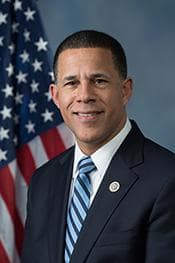 Anthony Brown announced a $2.25 billion civil settlement with Grace Ocean Private Ltd (the ship's owner) and Synergy Marine — a settlement that far exceeds the roughly $43.7 million cap the companies sought to invoke under the 📖Limitation of Liability Act of 1851, a pre-Civil War statute that allows ship owners to limit damages to the post-disaster value of the vessel. The DOJ's indictment separately alleges the collapse caused at least $5 billion in economic loss.
The six workers killed were all members of a highway maintenance crew patching potholes on the bridge when it fell: Maynor Yasir Suazo-Sandoval, 38; Miguel Angel Luna Gonzalez, 49;  José Mynor López, 37; Dorlian Ronial Castillo Cabrera, 26; Alejandro Hernandez Fuentes, 35; and Carlos Daniel Hernández Estrella, 24. Most were immigrants from El Salvador, Guatemala, Honduras, and Mexico who had built lives working construction in the Baltimore region. The National Transportation Safety Board issued its final report in November 2025, finding that a loose signal wire — installed improperly by Hyundai Heavy Industries — caused the Dali's initial power loss. The DOJ's criminal case focuses not on who caused the first blackout but on who made the second one unavoidable.
Key facts
At 1:27 a.m. on March 26, 2024, the container ship M/V Dali lost propulsion and steering while leaving the Port of Baltimore and struck the Francis Scott Key Bridge, collapsing it into the Patapsco River. Six highway maintenance workers — who were filling potholes on the bridge — died in the fall. The Dali crew had issued a mayday call minutes before impact, allowing Baltimore police to stop traffic on the bridge, but the construction crew in the center span had no time to evacuate.
The NTSB's found that a loose signal wire, improperly installed by Hyundai Heavy Industries during the ship's construction, caused the Dali's initial blackout. The wire's plastic label banding prevented its ferrule from seating fully in a terminal block, causing intermittent power loss. That finding assigned manufacturing fault to Hyundai — but it didn't answer why the ship couldn't restore power quickly enough to avoid the bridge.
The DOJ's criminal case answers that second question. According to the indictment unsealed May 12, 2026, Synergy Marine companies had been operating the Dali since at least 2020 using a non-standard flushing pump to supply fuel to two of the ship's four generators. The flushing pump was not designed to automatically restart after a blackout. Standard fuel supply pumps have an automatic restart capability — meaning that if the ship lost power and the pumps cut out, standard pumps could come back online on their own. The flushing pump couldn't.
Prosecutors say made a recoverable power loss unrecoverable. When the loose wire triggered the first blackout, the flushing pump failed to restart, generators lost their fuel supply, and the ship experienced a second, total blackout — taking out propulsion and steering just as the Dali approached the bridge.
Synergy employees didn't just use the unapproved pump — they actively hid it, the indictment alleges. Workers fabricated safety inspection records and engineering certifications related to the vessel's fuel systems. Any reference to the flushing pump was removed from audit logs, engineering notes, and crew documentation before external inspectors reviewed the ship.
That cover-up, prosecutors say, prevented 📖port state control officers and flag state inspectors from detecting the unsafe configuration during the years the Dali operated worldwide. The with conspiracy to defraud the United States by obstructing the Coast Guard's vessel safety inspection regime.
Radhakrishnan Karthik Nair, 47, served as technical superintendent for the M/V Dali and worked for both Synergy Marine Pte Ltd (Singapore) and Synergy Maritime Pte Ltd (Chennai, India). After the collapse, Nair gave statements to National Transportation Safety Board investigators. Prosecutors say he told NTSB officials he was unaware that the Dali was using the flushing pump to supply fuel to generators — a statement the DOJ calls false.
Nair faces charges of conspiracy, willfully failing to inform the U.S. Coast Guard of a known hazardous condition, obstruction of an NTSB proceeding, and making false statements to federal investigators. He remains in India. The is pursuing his extradition.
The DOJ handed the indictment up to a grand jury on April 8, 2026. It was sealed at the time to allow investigators to prepare for the announcement. On May 12, 2026, federal prosecutors unsealed it at a press conference — the same morning Maryland Attorney General Anthony Brown announced the civil settlement. The dual announcement on a single day was coordinated: the for over a year, and the settlement cleared the way for the criminal charges to be made public.
Baltimore Mayor Brandon Scott called the charges long overdue. Attorneys for the families of the six victims described the indictment as a "bombshell" that confirmed what they had alleged in civil suits — that Synergy knew about the pump problem and chose to hide it rather than fix it.
The six workers killed were members of a Brawner Builders highway maintenance crew contracted to fill potholes on the Key Bridge. All six were immigrants: Maynor Yasir Suazo-Sandoval, 38, of Honduras, had lived in the U.S. for 18 years, ran a small maintenance company, and had two children; Miguel Angel Luna Gonzalez, 49, of El Salvador, was an active member of the Baltimore immigrant advocacy organization Casa; José Mynor López, 37, from Guatemala; Dorlian Ronial Castillo Cabrera, 26, from Guatemala; Alejandro Hernandez Fuentes, 35, from Mexico; and Carlos Daniel Hernández Estrella, 24, from El Salvador.
The are among dozens of parties suing Grace Ocean and Synergy in civil court. Baltimore Gas and Electric and local businesses whose supply chains ran through the port also filed claims. The DOJ's indictment alleges the economic loss from the collapse totals at least $5 billion.
Maryland Attorney General Anthony Brown announced the $2.25 billion civil settlement with Grace Ocean Private Ltd and Synergy Marine Pte Ltd on May 12, 2026. Grace Ocean owns the M/V Dali; Synergy Marine operated it. The settlement resolves Maryland's state-level claims arising from the collapse and the months-long closure of the Port of Baltimore.
The companies had sought to invoke the , a federal maritime statute that allows ship owners to cap their civil liability at the post-disaster value of the vessel — in this case, approximately $43.7 million. The settlement of $2.25 billion is roughly 51 times that cap. Brown said Maryland examined the companies' available insurance limits and concluded the settlement maximized available recovery. Brown separately announced he intends to pursue claims against Hyundai Heavy Industries for its share of the state's damages.
The 📖Limitation of Liability Act of 1851 was designed to protect 19th-century ship owners from ruinous losses caused by storms, pirates, and other events beyond their control. The law caps a shipowner's liability at the value of the vessel at the end of the voyage plus any freight earnings — but only if the owner can prove it had no prior knowledge of the problem that caused the disaster. In cases involving Titanic (1912) and Deepwater Horizon (2010), companies invoked the statute to dramatically reduce exposure.
In the Key Bridge case, Maryland argued — and the settlement agreement implies — that Grace Ocean and Synergy couldn't credibly claim ignorance of the flushing pump, given the DOJ's allegations that company employees actively hid it. The gap between $43.7 million and $2.25 billion — a difference of more than $2.2 billion — represents what state lawyers won by refusing to accept the statutory cap.
The indictment charges Synergy Marine Pte Ltd and Synergy Maritime Pte Ltd with misdemeanor violations of the Clean Water Act, Oil Pollution Act, and Refuse Act for pollutants discharged into the Patapsco River during and after the collapse. Those pollutants included shipping containers and their contents, fuel oil, and structural debris from the bridge itself.
The felony charges against the Synergy entities include conspiracy to defraud the United States, willful failure to immediately notify the of a known hazardous condition aboard the vessel, and obstruction of the NTSB's accident investigation. Nair faces an additional charge under 18 U.S.C. § 1115 — the 📖Seaman's Manslaughter Statute, a pre-Civil War law that makes it a felony for ship officers to cause death through misconduct or neglect, carrying a maximum sentence of 10 years in prison.
In March 2025, the NTSB issued a separate safety report recommending that owners of 68 bridges across 19 states conduct vessel-strike vulnerability assessments. The agency determined that the Francis Scott Key Bridge's collapse risk was 30 times above the acceptable threshold for critical bridges — and that 68 other U.S. spans built before 1991, including the Golden Gate Bridge, the Brooklyn Bridge, and Florida's Sunshine Skyway Bridge, lack current vulnerability assessments.
The same month the DOJ indictment was unsealed, DHS initiated deportation proceedings against Zoila Guerra Sandoval, the partner of victim José Mynor López. The Biden administration had extended temporary immigration protections to about 30 people with close ties to the victims; the Trump administration reversed those protections and converted Guerra Sandoval's USCIS application — submitted with her fingerprints in exchange for a promised work permit — into a deportation referral. Guerra Sandoval's daughter lost her father in the bridge collapse. Her mother now faces removal from the country as the criminal case against the companies responsible for the collapse moves forward in federal court.
Related
Categories that may be relevant to you
5 topics available
May 23, 2026
SC Senate cloture vote advances map to end Clyburn's Black district
May 23, 2026
Trump declares Iran peace MOU largely negotiated

May 23, 2026
DOJ scrubs hundreds of Jan. 6 prosecution records from website
May 22, 2026
Colorado closes legal gap for defendants found unfit to stand trial
May 21, 2026
House GOP cancels Iran war powers vote, shielding Trump from rebuke
View All Constitutional Law Topics
545 topics
25 questions
Start the review