Elections · Civil Rights · Legislative Process · Constitutional Law·May 23, 2026
SC Senate cloture vote advances map to end Clyburn's Black district
A 26-18 cloture vote moves South Carolina toward a 7-0 Republican delegation.

Photo: U.S. House of Representatives Portraitsource ↗
On May 23, 2026, on Day 7 of a 📖special session Gov. Henry McMaster called after the regular legislative session failed, the South Carolina Senate invoked 📖cloture by a 26-18 vote to limit debate on a congressional 📖redistricting bill. The bill would eliminate the state's only majority-Black 6th Congressional District, held by Rep. Jim Clyburn since 1993, and give Republicans a 7-0 advantage in the state's seven-seat U.S. House delegation.
The 📖special session opened May 15 after McMaster issued Executive Order 2026-09 forcing the legislature back into session. Five Republican senators had joined Democrats to block 📖redistricting during the regular session, and six Republicans voted against a rules-suspension attempt on May 22 that required a two-thirds supermajority. Because that fast-track failed, Senate Republicans invoked a slower 📖cloture-equivalent procedure under existing chamber rules, a majority-only threshold, setting the earliest governor's desk arrival at May 28-29.
The push comes five weeks after the U.S. Supreme Court's April 29 ruling in Louisiana v. Callais, which struck down Louisiana's second majority-Black district as an unconstitutional racial gerrymander and significantly narrowed the 📖Voting Rights Act's protection for majority-minority districts. South Carolina Republicans cite Callais as clearing the legal path to redraw the 6th District, which concentrates roughly 57% Black voting-age population. Civil rights groups and Democratic legislators argue the move is racial cracking, dispersing Black voters across Republican-majority districts where they can't elect a candidate of their choice.
Key facts
South Carolina's regular legislative session ended in mid-May 2026 with 📖redistricting dead. Five Republican senators had joined all 12 Democrats to block a rule extension by a 29-17 vote, short of the two-thirds majority required. Those five Republicans — Shane Massey (Edgefield),  Sean Bennett (Dorchester), Chip Campsen (Charleston), Tom Davis (Beaufort), and Greg Hembree (Horry) — argued the rushed process risked legal exposure and ignored the Senate's own 📖redistricting rules.
Gov. Henry McMaster responded by issuing Executive Order 2026-09 on May 14, calling the General Assembly back into a 📖special session beginning May 15 at 11 a.m. Under South Carolina's constitution, the governor can convene extraordinary sessions when circumstances warrant. McMaster said the session was 'necessary and appropriate' to address 📖redistricting 'ahead of the 2026 election cycle.'
President  Trump applied sustained pressure throughout the process. He , called in to a GOP caucus meeting, and posted on Truth Social: 'The South Carolina State Senate has a big vote tomorrow on 📖Redistricting. I'm watching closely, along with all Republicans across the Country.' He called on senators to 'BE BOLD AND COURAGEOUS, just like the Republicans of the Great State of Tennessee,' a reference to Tennessee's legislature, which had eliminated that state's only 📖majority-minority district weeks earlier.
Trump's public posts named and criticized the Republican holdouts individually, creating primary-election pressure on senators in safe Republican districts.
The 📖redistricting effort accelerated after the U.S. Supreme Court's April 29, 2026, ruling in . In a 6-3 decision, the Court held that Louisiana's second majority-Black congressional district, drawn under 📖Voting Rights Act pressure, was itself an unconstitutional racial gerrymander under the Equal Protection Clause. The ruling significantly narrowed the Gingles framework that courts had used to require majority-minority districts and triggered 📖redistricting moves across the South within weeks.
Tennessee, Florida, and Alabama all moved to redraw maps immediately after Callais. South Carolina Republicans cited the ruling to argue the 6th District's majority-Black composition could now be legally dismantled.
The South Carolina House passed the new congressional map in the early hours of May 20, after blocking Democratic attempts to delay the vote. The map would cut Black voting-age population in Clyburn's 6th District by , redistributing Black voters from Columbia and Charleston into adjacent Republican-majority districts. Under the new lines, the 6th District would no longer be a majority-Black seat, and Republicans project they'd win all seven U.S. House seats in the state.
The 6th District currently includes most majority-Black precincts around Columbia and Charleston and most of the Black Belt outside Beaufort. It has been Jim Clyburn's congressional base since voters first elected him in 1992.
On Friday, May 22, Senate Republicans tried to fast-track the bill by suspending chamber 📖redistricting rules, a procedure requiring a two-thirds supermajority of at least 31 of 46 votes. That motion , with six Republicans joining Democrats in opposition. Senate Majority Leader Shane Massey voted no again, along with Bennett, Campsen, Davis, Hembree, and Rex Rice of Pickens County.
The failed vote meant the bill couldn't reach Gov. McMaster's desk before early voting began May 26. Even if signed before June 9, U.S. House primaries would need to be delayed to allow time for candidate filing under the new district lines.
With the rules-suspension path closed, Senate Republicans shifted on Saturday, May 23, to invoking 📖cloture under the chamber's existing procedural rules, a mechanism that limits each senator to one hour of debate and bars new amendments. Unlike the supermajority threshold for rule suspension, 📖cloture under existing rules required only a simple majority.
The Senate voted on Saturday, with the vote split largely along party lines. The Senate had also agreed the previous day to convene on Sunday, May 24, the first Sunday legislative session in at least four decades. Democratic senators noted that previous emergencies including the , historic flooding, and the Great Recession had not prompted Sunday sessions.
Jim Clyburn, 85, announced his re-election bid on March 12, 2026, and has served in Congress since 1993. He represented South Carolina's 6th District for 17 terms and served as House Majority Whip from 2007 to 2011 and 2019 to 2023, the highest congressional post ever held by a South Carolinian. The 6th District was created after the 1990 Census when the U.S. Department of Justice, enforcing Section 5 of the VRA, that would have cracked Black voters across multiple districts with no majority-Black seat.
Clyburn's district became the first majority-Black congressional district the federal government forced South Carolina to create since Reconstruction. Its proposed elimination under the new map represents a direct reversal of that 35-year-old federal mandate.
The Brennan Center for Justice and Democracy Docket have both flagged potential legal challenges to the new map. Civil rights attorneys argue that even under the narrowed Callais standard, a map drawn with the express purpose of eliminating a majority-Black seat crosses the line from permissible 📖partisan gerrymandering into unconstitutional racial targeting. The notes that challengers must now prove a legislature acted on racial rather than political grounds, a higher evidentiary bar, but not an impossible one.
Taiwan Scott, lead plaintiff in a prior NAACP 📖redistricting lawsuit, said 📖racial gerrymandering has already caused Black voters in South Carolina to disengage from voting. Black voters and community leaders in the 6th District have said the 📖redistricting effort would deprive them of any realistic chance to elect a candidate of their choice to Congress.
If the Senate passes the bill and McMaster signs it, South Carolina's U.S. House primaries would shift from June 9 to approximately August 18, with candidate filing reopening June 1. The compressed timeline means a 35-year-old district, the only majority-Black congressional seat in a state where Black residents make up 26% of the population, could be eliminated within weeks of a Supreme Court ruling that changed the rules.
The notes that South Carolina Republicans face midterm risk if the rushed process generates a backlash from Black and independent voters. Five of the six Republican senators who voted against fast-tracking represent suburban and coastal districts where Democratic performance has been improving.
Related Topics
5🗳️
Louisiana committee advances map to erase majority-Black district
On May 21, 2026, the Louisiana House and Governmental Affairs Committee voted 10-7 along party lines to advance Senate Bill 121, a congressional redistricting plan that creates a 5-1 Republican-majority map and eliminates the majority-Black 6th Congressional District held by Democratic Rep. Cleo Fields. The committee vote came three weeks after the U.S. Supreme Court ruled 6-3 in Louisiana v. Callais that the state's previous two-majority-Black-district map was an unconstitutional racial gerrymander. Republicans, citing Callais, used the ruling to justify redrawing lines that would reduce Black congressional representation from two districts to one. The bill, authored by Sen. Jay Morris (R-West Monroe), passed the Louisiana Senate 27-10 on May 14, 2026. It still needs full House approval before going to Gov. Jeff Landry. If enacted, the map would end a decade-long legal fight by Black voters to secure a second majority-Black seat — a fight that produced two Supreme Court rulings.
98% match
30 questions
⚖️
Louisiana Republicans move to abolish clerk's office won by exonerated man
Calvin Duncan spent 28 years in prison for a murder he didn't commit before a Louisiana judge vacated his conviction in 2021. In November 2025, Duncan won 68 percent of the vote in New Orleans to become the Orleans Parish clerk of criminal court, pledging to reform the very system that had failed him. Before he could take office, Louisiana Gov. Jeff Landry and the Republican-controlled Legislature moved to eliminate his position entirely. On April 8, 2026, the Louisiana Senate voted 25-11 to pass Senate Bill 256, authored by Sen. Jay Morris of Monroe, which merges the Orleans Parish criminal and civil clerk's offices into one position. The bill would abolish Duncan's office before his scheduled May 4 swearing-in. Critics, including the Louisiana ACLU, called it a racist power grab targeting a majority-Black city. The bills' author acknowledged the legislation was timed to Duncan's arrival, and officials admitted the savings from eliminating the position amount to approximately $27,300 per year.
95% match
25 questions
⚖️
Supreme Court sends Voting Rights Act cases in Mississippi and North Dakota back to lower courts
On May 18, 2026, the U.S. Supreme Court issued brief, unsigned orders vacating and remanding two redistricting cases — one from Mississippi and one from North Dakota — directing lower courts to reconsider under the standards set by the Court's April 29, 2026 decision in Louisiana v. Callais. The orders came via a GVR (grant-vacate-remand), a procedural mechanism SCOTUS uses to clear cases without writing a full opinion on the merits. The Mississippi case stemmed from a December 2022 lawsuit by the Mississippi State Conference of the NAACP. A three-judge federal panel ruled in July 2024 that the state's legislative maps violated Section 2 of the Voting Rights Act by diluting Black voting power. Mississippi was ordered to redraw districts and hold special elections; in November 2025, Democrats flipped two Senate seats, breaking the Republican supermajority for the first time in 13 years. The May 18 order vacates the ruling that required those elections. The North Dakota case involves the Turtle Mountain Band of Chippewa Indians and the Spirit Lake Tribe, who challenged the state's 2021 legislative map under the VRA. The Eighth Circuit had ruled in May 2025 that only the Justice Department — not private individuals or groups — can sue to enforce Section 2. The Fifth Circuit reached the opposite conclusion in 2023. Justice Ketanji Brown Jackson, the sole dissenter in both orders, argued the Court should have resolved that circuit split instead of remanding. The Callais ruling tightened VRA Section 2 standards significantly, requiring plaintiffs to prove intentional discrimination and revamping the 40-year-old Gingles framework. The GVR orders send both cases back to lower courts to apply those harder standards.
94% match
30 questions
⚖️
SCOTUS vacates order requiring Alabama's second Black district
On May 11, 2026, the U.S. Supreme Court issued an unsigned 6-3 order vacating the district court's injunction that had required Alabama to maintain two majority-Black congressional districts. The ruling came eight days before Alabama's May 19 primary and twelve days after the Court's April 29 Louisiana v. Callais decision gutted Section 2 of the Voting Rights Act. The order in Allen v. Caster (No. 25-243) lets Alabama use its 2023 congressional map, a map a federal court had already found to violate the VRA and to constitute intentional racial discrimination under the 14th Amendment. Alabama Attorney General Steve Marshall filed the emergency application on May 8 after Gov. Kay Ivey signed special session legislation authorizing new primaries in up to four districts if courts cleared the way. The practical consequence is immediate. Alabama's congressional delegation shifts from 5 Republicans and 2 Democrats to 6 Republicans and 1 Democrat. Rep. Shomari Figures, who won the redrawn majority-Black 2nd District in November 2024, was the first time in decades Alabama sent two Black members to Congress simultaneously. He now faces a district reconfigured to favor Republicans. Justice Sonia Sotomayor dissented, joined by Justices Elena Kagan and Ketanji Brown Jackson, arguing the Court discarded a "meticulously documented" finding of intentional discrimination without sound basis.
93% match
25 questions
🗺️
Virginia court voids redistricting referendum, keeps GOP maps
The Supreme Court of Virginia struck down a voter-approved redistricting amendment on May 8, 2026, in a 4-3 ruling that voided the results of Virginia's April 21 special election. More than 3.1 million Virginians had voted in that referendum, with 1,604,276 casting "yes" ballots to authorize the Democrat-controlled General Assembly to redraw congressional maps mid-decade. Justice D. Arthur Kelsey wrote for the majority that the legislature violated Article XII, Section 1 of Virginia's constitution by submitting the amendment after early voting had already begun in the 2025 House of Delegates elections, meaning more than 1.3 million Virginians who cast ballots in that election were denied a constitutional voice on whether to change the amendment process. The ruling keeps Virginia's current congressional map in place for 2026, preserving the existing 6-5 Democratic advantage and blocking a redrawn map that Democrats argued could have produced a 10-1 Democratic majority. Gov. Abigail Spanberger, Attorney General Jay Jones, and House Speaker Don Scott filed an emergency motion to pause the ruling and appeal to the U.S. Supreme Court. The decision landed one week after the U.S. Supreme Court's ruling in Louisiana v. Callais gutted key Voting Rights Act protections, accelerating Republican redistricting efforts in southern states.
93% match
34 questions
Related
Categories that may be relevant to you
5 topics available

May 23, 2026
DOJ scrubs hundreds of Jan. 6 prosecution records from website
🔍
May 22, 2026
FTC fines Cox Media Group $930K for fake AI listening ad service
May 22, 2026
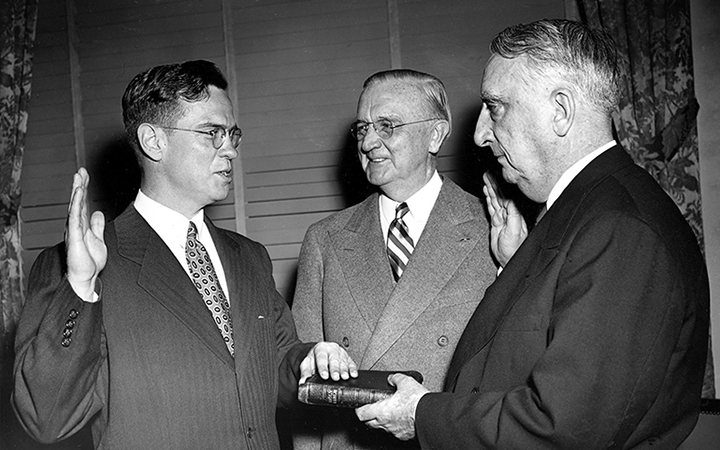
Warsh sworn in as Fed chair at White House in first such ceremony since 1987
May 22, 2026
Colorado closes legal gap for defendants found unfit to stand trial
May 22, 2026
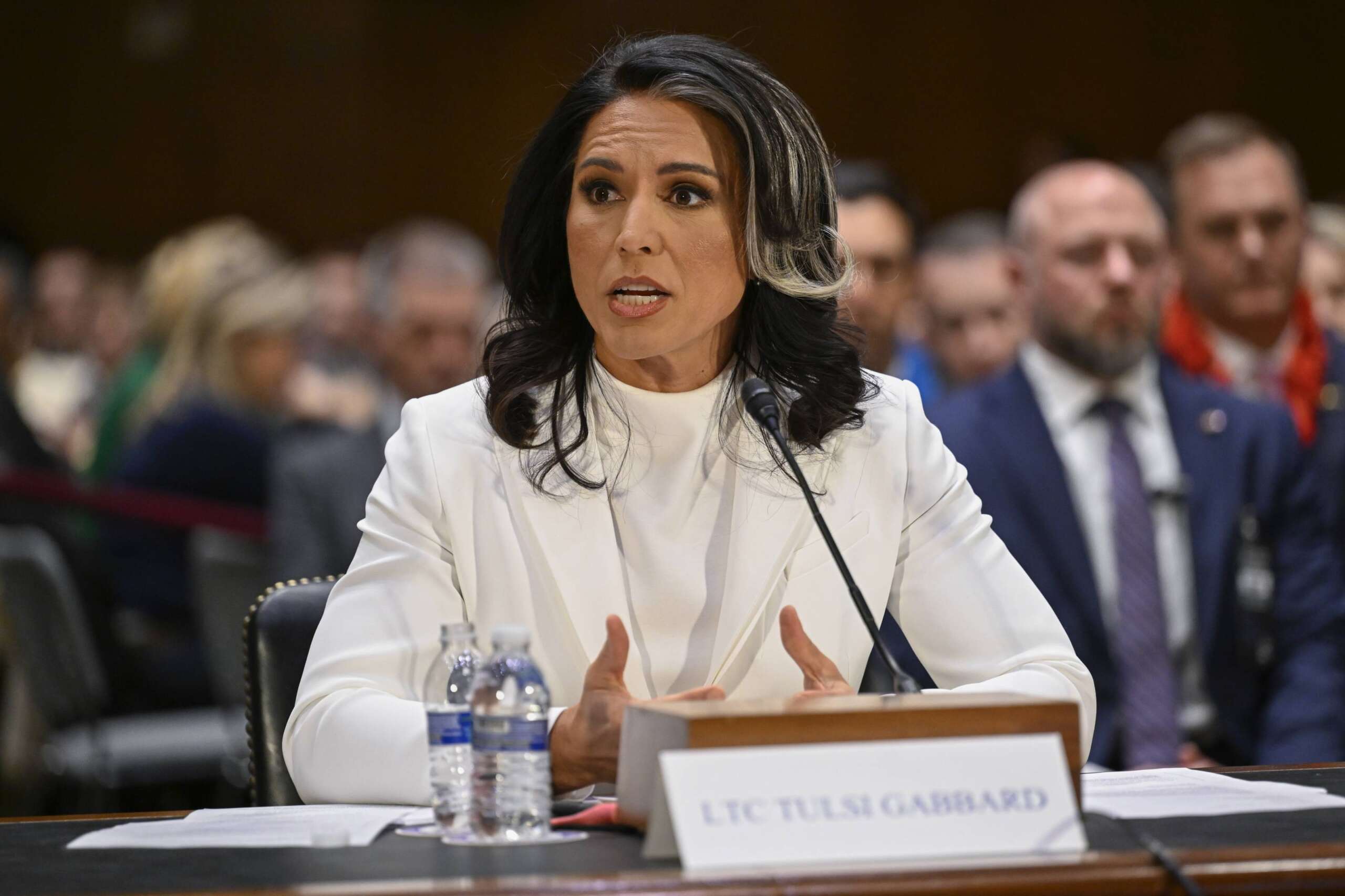
Gabbard resigns as director of national intelligence
View All Government Topics
770 topics
30 questions
Start the review