National Security · Constitutional Law · Legislative Process·April 9, 2026
House GOP blocks Iran war powers vote during pro forma session
GOP pro tempore gavels out before Ivey can speak on Iran war powers

During a pro forma House session on April 9, 2026, Rep. Chris Smith (R-NJ) — presiding as Speaker Pro Tempore — brought the session to an abrupt close before recognizing Rep. Glenn Ivey (D-MD), who was attempting to request a vote on a limiting Trump's Iran operations. The session lasted only minutes. Other Democrats in the chamber objected loudly, but Smith gaveled out without acknowledging them. The Hill and Roll Call both reported the scene.
Ivey was attempting to call up H.Con.Res. 40, introduced by Rep. Gregory Meeks (D-NY), which directs the president under section 5(c) of the to remove U.S. Armed Forces from hostilities against Iran unless explicitly authorizes the conflict. Congress.gov shows the resolution's full text. Using during a is an acknowledged longshot — it requires every member present to agree — but Democrats viewed the worsening military situation as justifying the attempt.
Pro forma sessions are brief, mostly ceremonial meetings Congress holds during recesses to keep itself technically in session. Their main purpose, reinforced by NLRB v. Noel Canning (2014), is to prevent the president from making recess appointments by holding sessions at least every three days. The Speaker assigns a single member to preside — the Speaker Pro Tempore — and that member has nearly unlimited discretion to recognize or not recognize other members, and to close the session at any point. This discretion is what Chris Smith exercised.
The procedure reveals something important about how power is distributed within Congress. Democrats, as the minority party, cannot schedule floor votes — only the majority controls the floor calendar. Pro forma sessions and unanimous consent requests are among the few tools available to the minority to try to force floor action the majority doesn't want. When the majority sends a member to preside who simply gavels out, those tools are effectively neutralized. Common Dreams reported Democrats' frustration with the blocking tactic.
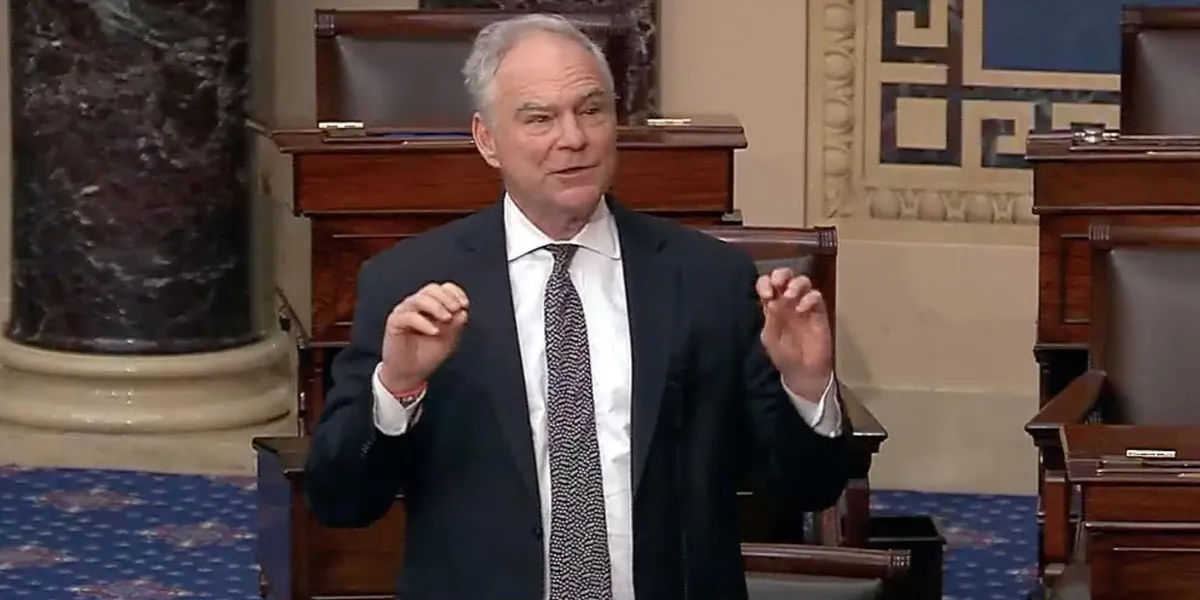
The April 9 failure is part of a longer pattern of failed congressional attempts to assert authority over the Iran conflict. Trump notified Congress of military operations against Iran on March 2, triggering the War Powers Resolution's 60-day clock under 50 U.S.C. sections 1541-1548. On March 4, the Senate voted 47-53 to reject a war powers resolution. On March 5, the House voted 212-219 to reject the Khanna-Massie bipartisan resolution (H.Con.Res. 38). House Democratic leaders then delayed action, declining to force a second vote before the April recess — a decision that Rep. Meeks publicly criticized. Democracy Now! and Axios both reported the internal Democratic debate.
The 212-219 margin means Democrats need at minimum seven additional votes to reach 218. Jeffries said Democrats were close to that threshold and hoped that escalating military events — including Trump's threats to eliminate entire Iranian civilization, and the April 11 mine-clearing operation in the Strait of Hormuz — would move persuadable Republicans. The 60-day clock expiring around May 1 is the critical upcoming deadline: after that point, under the War Powers Resolution's terms, the president must withdraw forces unless Congress has authorized the conflict.
H.Con.Res. 40 is one of two war powers resolutions Democrats have used to press Trump on Iran authority. Rep. Meeks (with co-sponsors Rep. Adam Smith of Washington and Rep. Jim Himes of Connecticut) introduced H.Con.Res. 40 under section 5(c) of the War Powers Resolution, which gives Congress power to direct the president to end hostilities by concurrent resolution — a procedure that does not require the president's signature. The bipartisan Khanna-Massie resolution (H.Con.Res. 38), which failed 212-219 in March, invoked a different subsection of the War Powers Resolution. Both direct the president to remove forces from Iran hostilities unless Congress passes a separate authorization. Congress.gov and GovTrack have the full texts.
The key difference between H.Con.Res. 40 and the Khanna-Massie resolution is political constituency: H.Con.Res. 40 was authored by Democrats and has largely Democratic support, while H.Con.Res. 38 was a bipartisan effort that attracted some Republican votes. Democrats' strategy has been to pass whichever resolution can attract enough Republican crossovers to reach 218. Smith's closing of the April 9 session prevented any test of whether that threshold had been reached.
Rep. Chris Smith (R-NJ) issued a statement after the April 9 session urging Democrats to focus on ceasefire negotiations rather than war powers votes, reflecting the majority Republican position that forcing a congressional vote would constrain Trump's negotiating leverage and embolden Iran. The counterargument from Democrats is that the absence of congressional authorization is itself a constitutional problem regardless of whether a vote passes. Save Jersey and The Hill both reported Smith's response.
The tension between executive flexibility and legislative authorization sits at the heart of American war powers disputes. Congress passed the War Powers Resolution in 1973 specifically because Vietnam showed that the absence of a declaration of war didn't prevent decades-long conflicts with enormous costs. Successive administrations challenged the law's constitutionality and the Supreme Court has never resolved that challenge. Each time Congress fails to assert its authority under the resolution, the executive branch's unilateral war-making power is reinforced by precedent even if not by law.
The Senate returns from recess on April 13, and Minority Leader Chuck Schumer has pledged to force a floor vote on a war powers resolution that week. The House returns on April 14. If a Senate vote passes — which would require at least seven Republicans to join all 47 Democrats given the current caucus math — it would put direct pressure on the House to follow. A Senate war powers resolution that passed would not by itself remove forces from Iran, because a concurrent resolution requires both chambers to pass it. But a Senate vote changing sides after two previous failures would significantly change the political dynamic. NBC News and CNS Maryland reported the upcoming timeline.
The 60-day clock's expiration around May 1 is the hard deadline under the War Powers Resolution's text. After that point, the president must either have congressional authorization or begin withdrawing forces within 30 additional days. In practice, no president has withdrawn forces solely because the 60-day clock expired. But the clock's expiration gives Congress stronger legal and political standing to demand a vote and, if the president refuses, to cut off funding — Congress's ultimate tool for ending a conflict it didn't authorize.
Related Topics
6
Representative Chris Smith blocks Democrats' Iran war powers resolution in pro forma session
House Republican ended session before Democrats could vote to end U.S. attacks on Iran
House rejects Iran war powers resolution by one vote
One Democrat's no vote left Trump's unauthorized Iran war unchecked
Senate rejects Iran war powers resolution 47-53
Eight failed votes leave Trump''s Iran war legally unchecked as April deadline nears

House Iran war powers resolution fails on historic 212-212 tie
Three GOP defections aren't enough as House ties 212-212 on Iran war powers

Trump calls Iran war a "short-term excursion" to calm House Republicans
Classified briefings show war "far worse than you thought" as Trump reassures his caucus
Trump declares Iran war "terminated" to skip the 60-day deadline
Trump's letter claims the war ended while a Strait of Hormuz blockade continues
25 questions
Start the review