National Security · Constitutional Law · Foreign Policy · Legislative Process·May 14, 2026
House Iran war powers resolution fails on historic 212-212 tie
Three GOP defections aren't enough as House ties 212-212 on Iran war powers

The U.S. House voted 212-212 on May 14, 2026, on H.Con.Res.75, a resolution directing President Trump to remove armed forces from hostilities against Iran within 30 days. The tie killed the measure. Three Republicans crossed party lines to support it: Reps. Thomas Massie of Kentucky, Brian Fitzpatrick of Pennsylvania, and Tom Barrett of Michigan. Rep.  Jared Golden of Maine was the only Democrat to vote no. It was the third House 📖war powers vote on Iran and the closest to passing. The vote came one day after the Senate rejected its own 📖war powers resolution 49-50, with Sen. Lisa Murkowski breaking ranks for the first time. Both votes occurred weeks after the 60-day 📖War Powers Resolution deadline expired on May 1, 2026.
Key facts
The U.S. House voted 212-212 on May 14, 2026, on H.Con.Res.75, a 📖concurrent resolution sponsored by Rep. Josh Gottheimer (D-NJ) directing President Trump to remove armed forces from hostilities against Iran within 30 days unless Congress declares war. A 📖tie vote in the House means a measure . The resolution invoked Section 5(c) of the 1973 📖War Powers Resolution, which grants Congress a fast-track procedure to force troop withdrawals.
The vote marked the third time the House considered a 📖war powers resolution on the Iran conflict and the closest any came to passing. The first vote on March 5 failed 206-219. The second on April 16 , with only Rep. Thomas Massie crossing party lines.
Three Republicans broke with their party to support the resolution. Rep. Thomas Massie (R-KY), a libertarian-leaning member who co-sponsored an earlier bipartisan 📖war powers resolution with Rep. Ro Khanna (D-CA), . Reps. Brian Fitzpatrick (R-PA) and Tom Barrett (R-MI) both flipped from no votes on the March and April resolutions to yes votes on May 14.
Fitzpatrick and Barrett both represent swing districts rated as toss-ups for 2026. Barrett had introduced his own 📖Authorization for Use of Military Force bill on May 7, proposing a that would expire July 30, 2026. His AUMF would limit operations to degrading Iran's nuclear program without ground troops or nation-building.
Rep. Jared Golden (D-ME) was the only Democrat to vote against the resolution, on an Iran 📖war powers measure. Golden, a former Marine who served in Iraq and Afghanistan, said he opposed H.Con.Res.75 specifically because its 30-day withdrawal deadline had already passed. The resolution was originally introduced on March 4 with a 30-day clock that started from the February 28 beginning of hostilities.
Golden simultaneously signaled he'd support a future "clean" resolution. He told the Bangor Daily News he believes the 60-day 📖War Powers Act window and that Trump's unilateral military engagement authority has expired.
Several absent members shaped the outcome. Rep. Tom Kean Jr. (R-NJ) hadn't voted since March 5, missing 68 consecutive House votes over ten weeks due to an undisclosed . Rep. Frederica Wilson (D-FL), 83, missed over 40 consecutive votes while . Both leaders pleaded with absent members to return. Speaker  Mike Johnson and Minority Leader Hakeem Jeffries to come back for critical votes.
With both Fitzpatrick and Barrett now on record supporting 📖war powers constraints, the math could shift if attendance normalizes. A single additional Republican defection or the return of Wilson would produce a majority.
One day earlier, the Senate rejected its seventh 📖war powers resolution 49-50 on May 13, 2026. The vote was the closest yet in the upper chamber. Sen. Lisa Murkowski (R-AK) , joining Republican Sens. Susan Collins (R-ME) and Rand Paul (R-KY) in supporting the measure. Sen. John Fetterman (D-PA) was the only Democrat to vote no, for the seventh consecutive time.
Murkowski's shift came after Defense Secretary Pete Hegseth told lawmakers the administration might . Hegseth testified that Trump has "all the authorities he needs under Article II" of the Constitution, dismissing the 📖War Powers Resolution's 60-day limit.
The constitutional stakes center on a 53-year-old dispute over 📖war powers. The 📖War Powers Resolution of 1973 requires presidents to notify Congress within 48 hours of deploying forces and to withdraw them within 60 days unless Congress authorizes continued operations. Trump notified Congress of the Iran strikes on March 2, 2026, starting the 60-day clock. That deadline .
On May 1, Trump sent Congress a letter declaring hostilities "terminated" because no shots had been fired since the April 7 ceasefire. Democrats and a growing number of Republicans rejected that interpretation, pointing to ongoing U.S. naval blockade operations in the Strait of Hormuz and continued Iranian attacks that prompted American retaliation.
H.Con.Res.75 used the 📖concurrent resolution mechanism under Section 5(c) of the 📖War Powers Resolution. A 📖concurrent resolution passes both chambers but doesn't go to the president for signature. The Supreme Court's 1983 ruling in INS v. Chadha found such legislative vetoes because they bypass the presentment requirement of Article I. Congress later created an alternative fast-track procedure using joint resolutions, which do require presidential signature.
Speaker Johnson argued the 📖War Powers Act itself is unconstitutional, calling the prospect of Congress stripping a president's military authority "frightening." Johnson acknowledged he couldn't block the 📖privileged resolution from reaching the floor, telling reporters to prevent a vote on a privileged measure.
The Iran conflict began on February 28, 2026, when the U.S. and Israel launched strikes on Iranian nuclear sites. A ceasefire took effect April 7. By May 2026, the war had cost an estimated according to the Pentagon comptroller. Hegseth testified before both the House and Senate armed services subcommittees on May 12, facing bipartisan frustration over the conflict's duration, cost, and lack of congressional authorization.
The administration maintained that the ceasefire reset the 📖War Powers clock, making congressional authorization unnecessary. Michael Glennon, a professor of constitutional and international law at Tufts University's Fletcher School, told NBC News the administration's argument that the clock stopped . Glennon said the ongoing naval blockade means hostilities haven't actually terminated.
Minority Leader Hakeem Jeffries whipped Democratic votes aggressively for the resolution. Rep. Pramila Jayapal (D-WA), former chair of the Congressional Progressive Caucus, argued leadership shouldn't allow the 📖war powers vote to be treated as a "vote of conscience" because it's fundamentally about . In earlier rounds, four Democrats publicly opposed the Khanna-Massie version of the resolution: Reps. Jared Moskowitz (FL), Josh Gottheimer (NJ), Tom Suozzi (NY), and Greg Landsman (OH).
Gottheimer himself shifted positions over the course of the conflict. Initially opposing 📖war powers constraints, he became the sponsor of H.Con.Res.75 after criticizing the administration for failing to offer either a clear reason for starting the war or a plan for ending it. His resolution reduced the withdrawal timeline from 60 to 30 days.
Related Topics
6🗳️
House rejects Iran war powers resolution by one vote
The U.S. House of Representatives voted 213 to 214 on April 16, 2026, to reject a resolution sponsored by Rep. Gregory Meeks directing President Trump to remove U.S. armed forces from Iran unless Congress explicitly authorizes the war. Only one Republican — Rep. Thomas Massie of Kentucky — voted yes. Only one Democrat — Rep. Jared Golden of Maine — voted no. Rep. Warren Davidson of Ohio, who had supported a similar measure in March, voted "present," effectively helping defeat the bill. Three Democrats who previously voted against the measure switched to yes: Reps. Juan Vargas, Greg Landsman, and Henry Cuellar. The War Powers Resolution of 1973 gives Congress a 60-day clock to force troop withdrawals from unauthorized hostilities — that deadline falls around May 1, 2026. No president has ever complied with a congressional demand to withdraw troops under the War Powers Resolution in the law's 53-year history.
106% match
19 questions
⏱️
The sixty-day clock on Iran strikes just ran out. Congress can't stop it.
The War Powers Resolution gives Congress 60 days to authorize or end presidential military action. That deadline passed May 1 for U.S. strikes on Iran. The Senate voted 47-50 to direct Trump to stop — the sixth such vote since strikes began February 28. The resolution is expected to die in the House. The White House argues the clock pauses during ceasefires. Constitutional scholars disagree.
105% match
34 questions
🗳️
House GOP blocks Iran war powers vote during pro forma session
On April 9, 2026, Rep. Chris Smith (R-NJ) — serving as Speaker Pro Tempore — gaveled a brief pro forma House session to a close before Rep. Glenn Ivey (D-MD) could request a unanimous consent vote to limit Trump's military operations against Iran. Ivey was trying to bring H.Con.Res. 40 — authored by Rep. Gregory Meeks (D-NY) and directing the president to remove U.S. forces from Iran hostilities — to an instant vote using a procedure that requires every present member to agree and can be stopped by a single gavel. The move was the latest in a series of failed Democratic efforts to use the War Powers Resolution to constrain the Iran conflict: the House voted 212-219 against a war powers resolution on March 5, and the Senate voted 47-53 against one on March 4. Trump filed a War Powers Resolution notification with Congress on March 2, starting a 60-day clock that expires around May 1, by which point Congress must either authorize the conflict or end it under the resolution's terms. Minority Leader Hakeem Jeffries said Democrats were close but still needed a handful of Republican votes to reach 218. The Senate returns from recess on April 13, when Minority Leader Chuck Schumer pledged to force a floor vote.
104% match
25 questions
🏛️
Senate rejects Iran war powers resolution 47-53
On March 4, 2026, the Senate voted 47-53 to reject a war powers resolution that would have required President Trump to withdraw U.S. forces from Iran unless Congress explicitly authorized the conflict. Sen. Tim Kaine (D-VA) and Sen. Rand Paul (R-KY) cosponsored the measure, which was a rare alliance, arguing that the Constitution grants Congress alone the power to declare war. Sen. John Fetterman (D-PA) was the only Democrat to vote against the resolution, and Paul was the only Republican to support it. Key GOP moderates, including Sen. Susan Collins (R-ME), Sen. Lisa Murkowski (R-AK), and Sen. Todd Young (R-IN), all voted with the Republican majority. The vote was the eighth failed war powers attempt since June 2025, and a parallel House vote was expected within 24 hours. Under the 1973 War Powers Resolution, Trump faces a 60-day clock, which means he must receive congressional authorization or withdraw forces from Iran by late April 2026.
103% match
19 questions
🌍
Trump declares Iran war "terminated" to skip the 60-day deadline
On May 1, 2026 — the 60th day after U.S. airstrikes on Iran began — President Trump sent letters to House Speaker Mike Johnson (R-LA) and Senate President pro tempore Chuck Grassley (R-IA) declaring that "The hostilities that began on February 28, 2026, have terminated." Trump cited an April 7 ceasefire and the absence of active fire exchange since that date. He also described the War Powers Resolution of 1973 as unconstitutional, arguing it infringes on his authority as commander-in-chief. The War Powers Resolution requires the president, within 60 days of notifying Congress about the introduction of U.S. forces into hostilities, to either obtain congressional authorization for the conflict or cease operations. The 60-day clock started when Trump notified Congress on March 2, 2026, that airstrikes had begun on February 28. By declaring hostilities "terminated," Trump argued the 60-day requirement was now moot — a legal theory no president has successfully used before. Senate Minority Leader Chuck Schumer (D-NY) called the declaration "an illegal war" and said declaring it "terminated" while a blockade of the Strait of Hormuz continued was deceptive. Sen. Richard Blumenthal (D-CT) said "there is no pause button in the Constitution or the War Powers Act." The Senate had voted 47-50 the day before to direct Trump to end hostilities — the sixth such vote since the conflict began.
103% match
22 questions
🗳️
Representative Chris Smith blocks Democrats' Iran war powers resolution in pro forma session
Senate Democrats led by Minority Leader Chuck Schumer forced the fourth war powers resolution vote on Iran when the Senate returned from its two-week recess on April 13, 2026 — the same day CENTCOM launched a naval blockade of Iranian ports. The resolution, co-sponsored by Senators Tim Kaine, Adam Schiff, and Chris Murphy, sought to direct President Trump to withdraw U.S. forces from hostilities against Iran. Senate Republicans defeated it again, with Democratic Sen. John Fetterman crossing the aisle to oppose it and Republican Sen. Rand Paul crossing to support it. The War Powers Resolution 60-day clock expires approximately April 28.
103% match
18 questions
Related
Categories that may be relevant to you
5 topics available

May 23, 2026
DOJ scrubs hundreds of Jan. 6 prosecution records from website
🔍
May 22, 2026
FTC fines Cox Media Group $930K for fake AI listening ad service

May 22, 2026
Colorado closes legal gap for defendants found unfit to stand trial
May 22, 2026
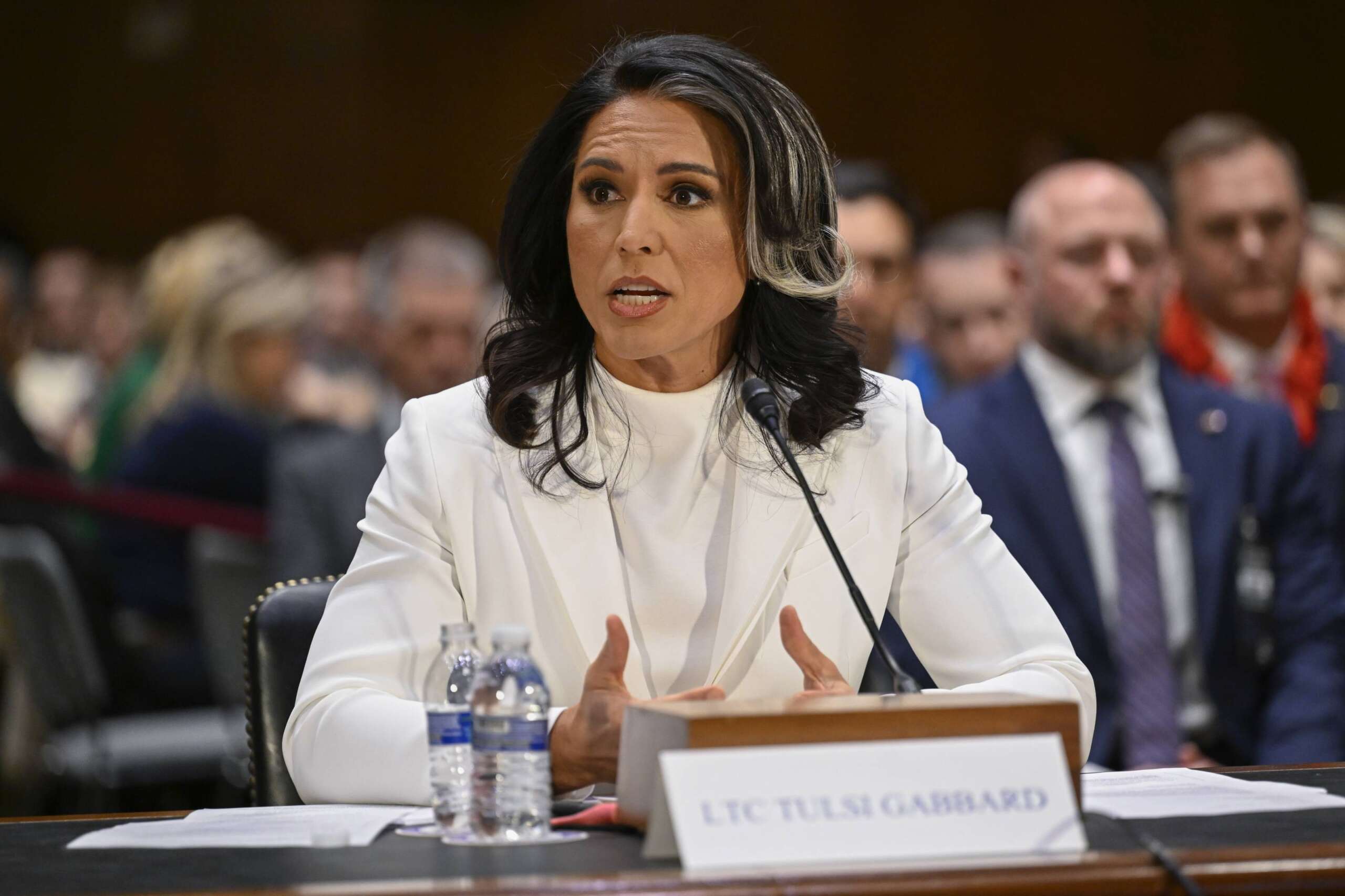
Gabbard resigns as director of national intelligence
🏫
May 22, 2026
Tennessee governor signs Memphis schools state takeover into law
View All Government Topics
769 topics
30 questions
Start the review