National Security · Constitutional Law · Foreign Policy · Government·April 7, 2026
Trump threatened to destroy "a whole civilization" and 85 lawmakers called for his removal
Eighty-five members of Congress invoked the 25th Amendment after Trump posted the threat on Truth Social

Photo: NBC Newssource ↗
On the morning of April 7, 2026, President 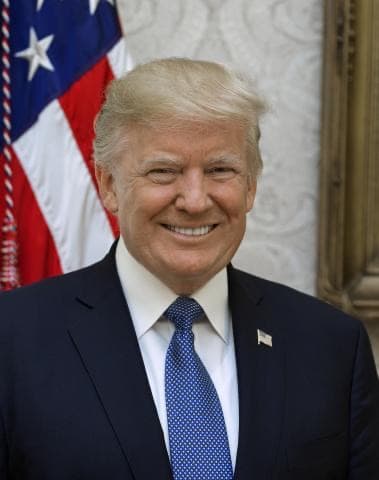 Trump posted on Truth Social: "A whole civilization will die tonight, never to be brought back again." He added that 47 years of Iranian "extortion, corruption, and death" would end by that evening, hours before his self-imposed 8 p.m. ET deadline for Iran to reopen the Strait of Hormuz or face strikes on its power plants and bridges. The post immediately triggered the broadest bipartisan removal push in recent U.S. history: by Tuesday evening, 85 members of Congress had called for Trump's removal via the 25th Amendment or 📖impeachment. Former Speaker Nancy Pelosi said: "If the Cabinet is not willing to invoke the 25th Amendment and restore sanity, Republicans must reconvene Congress to end this war."
Rep.  John Larson (D-Conn.) filed 13 articles of 📖impeachment under H.Res.353, citing Trump's "serial usurpation of the congressional war power," war crimes threats, and militarization of domestic law enforcement. The articles were drafted by consumer advocate Ralph Nader and constitutional lawyer Bruce Fein. House Minority Leader Hakeem Jeffries called Trump "completely unhinged" and demanded a congressional vote to end the war. Senator Chris Murphy (D-Conn.) and 70 other lawmakers called for Cabinet invocation of the 25th Amendment. From outside the Democratic Party, former Rep. Marjorie Taylor Greene, Alex Jones, and Candace Owens also posted calls for Cabinet removal.
Speaker  Mike Johnson and Senate Majority Leader John Thune did not respond to requests for comment. Rep.
 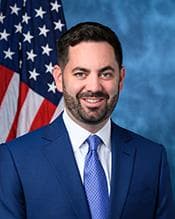 Mike Lawler (R-N.Y.) defended Trump, saying the targets were "energy infrastructure." Iran's government spokesperson Fatemeh Mohajerani called the threat "a sign of ignorance." Amnesty International said the post constituted "apocalyptic threats of large-scale civilian devastation" demanding urgent global action. Less than two hours before the 8 p.m. deadline, Trump announced a two-week 📖ceasefire. But by April 8, 85 Democrats had not withdrawn their removal calls even after the 📖ceasefire.
Key facts
At approximately 9 a.m. ET on April 7, 2026, President Trump posted on Truth Social: 'A whole civilization will die tonight, never to be brought back again.' He added: 'However, now that we have Complete and Total Regime Change, where different, smarter, and less radicalized minds prevail, maybe something revolutionarily wonderful can happen, WHO KNOWS? We will find out tonight, one of the most important moments in the long and complex history of the World. 47 years of extortion, corruption, and death, will finally end.' Trump had given Iran an 8 p.m. ET deadline to agree to a full reopening of the Strait of Hormuz. .
The post came days after Trump posted on Truth Social: 'Open the F***in Strait, you crazy bastards, or you'll be living in Hell — JUST WATCH!' and declared 'Tuesday will be Power Plant Day, and Bridge Day, all wrapped up in one, in Iran.' The April 7 post was the third in a series of escalating public threats. Iran's power grid and bridge network are civilian infrastructure protected under .
The 25th Amendment's Section 4 has never been invoked in U.S. history. Under Section 4, the vice president must join a majority of the principal officers of the executive departments — the 15 Cabinet secretaries — in sending a written declaration to the Speaker of the House and the Senate president pro tempore. The declaration must state that the president 'is unable to discharge the powers and duties of his office.' The vice president then immediately assumes the powers of acting president while the president remains in office.
If the president contests the declaration within four days, Congress must convene within 48 hours and has 21 days to vote. Two-thirds of both the House and Senate must agree that the president is unable to serve for the vice president to continue as acting president. With Republicans controlling both chambers, and no Republican congressional leader having called for Trump's removal, the two-thirds threshold is mathematically unreachable in the current Congress. , and whether it applies to behavioral or judgment-based unfitness remains legally contested.
The political barrier to Section 4 is equally high. VP JD Vance was Trump's chosen running mate and has publicly defended the Iran war throughout the conflict. Secretary of State Marco Rubio has been one of the war's strongest advocates. Secretary of Defense Pete Hegseth has characterized the Strait of Hormuz closure as an acceptable consequence of demonstrating military resolve. All three are Trump loyalists whose appointments depend on the president's goodwill. A Cabinet majority willing to vote against Trump does not exist in his second term, and no Cabinet member publicly endorsed the 25th Amendment calls on April 7.
Senator Ed Markey (D-Mass.) noted the political reality directly: 'We all know the Cabinet won't act. But the American people deserve to know that what they're seeing from this president is not normal, not legal, and not acceptable under the Constitution we swore to protect.'
By Tuesday afternoon, 70 Democrats in both chambers had signed onto calls for Cabinet invocation of the 25th Amendment. By Tuesday evening, that number had grown to 85 members who had called for either the 25th Amendment or 📖impeachment, according to . : 'If the Cabinet is not willing to invoke the 25th Amendment and restore sanity, Republicans must reconvene Congress to end this war.' — Cabinet action or congressional action — framing the 📖ceasefire not as a resolution but as a pause in a pattern of dangerous escalation.
: 'Donald Trump is completely unhinged. His statement threatening to eradicate an entire civilization shocks the conscience and requires a decisive congressional response.' Jeffries stopped short of personally calling for the 25th Amendment but said the House 'must come back into session immediately and vote to end this reckless war of choice in the Middle East before Donald Trump plunges our country into World War III.' Senators Ed Markey (D-Mass.) and Ron Wyden (D-Ore.) joined the 25th Amendment call from the Senate.
Rep. John Larson (D-Conn.), 77, filed 13 articles of 📖impeachment against Trump in H.Res.353 on the morning of April 7, before the 📖ceasefire was announced. , cited Trump's 'serial usurpation of the congressional war power and commission of murder, war crimes and piracy,' his 'militarization of domestic law enforcement' through National Guard deployments, and his administration's detention and deportation of 'citizens or immigrants based significantly on race or ethnicity or political opposition.'
: 'His profane and sacrilegious Easter Sunday and subsequent threats, including ''a whole civilization will die'' and ''open the Strait … or you''ll be living in hell'' not only foreshadow war crimes, but put our security at risk.' H.Res.353 was referred to the House Judiciary Committee. With Republicans controlling the House and the committee, a vote on articles was not expected.
. Senate Majority Leader John Thune (R-S.D.) also did not comment. The silence of the two top Republican congressional leaders contrasted sharply with the volume of Democratic response. Senator Lindsey Graham (R-S.C.) did not call for Trump's removal but said any final Iran deal should go through congressional review, analogizing it to the Iran Nuclear Agreement Review Act process that applied to the 2015 Obama-Iran nuclear deal.
that Trump's targets were 'energy infrastructure and civilian infrastructure, including roads and bridges' and that striking them would 'cripple the Iranian regime.' Lawler acknowledged the civilian nature of the targets while defending the strategy — a position 📖international humanitarian law scholars said was itself concerning, because civilian infrastructure is protected under Additional Protocol I regardless of its economic significance to the adversary.
The call for Trump's removal came not only from Democrats. shortly after Trump's Truth Social post. Conservative commentator Alex Jones and commentator Candace Owens, both prominent MAGA figures, also called for the Cabinet to invoke the 25th Amendment. Rep. Ilhan Omar (D-Minn.) called Trump 'an unhinged lunatic who must be removed from office.' Rep. Shri Thanedar (D-Mich.) said Trump 'threatened to slaughter 100 million people' and that Congress 'must do everything possible to stop Trump and this war.'
From the international community, . that Trump's threat was 'a sign of ignorance' that 'won't help potential dialogue' and that 'maintaining the peace and security of the people is the government's top priority.'
arguing that Trump's threats reversed the logic of IHL by framing the protected civilian population as the target rather than an unavoidable collateral consequence of military operations. Additional Protocol I, Article 52 requires that military attacks be directed at military objectives defined as 'those objects which by their nature, location, purpose or use make an effective contribution to military action.' Power plants and bridges are presumptively civilian under that framework unless they are being used specifically for military operations.
The Rome Statute of the International Criminal Court (Article 8(2)(b)(ii)) defines as a war crime 'intentionally directing attacks against civilian objects.' Article 25(3)(e) covers 'directly and publicly inciting others to commit genocide.' While a prosecutor would face significant jurisdictional and evidentiary hurdles — the U.S. has not ratified the Rome Statute — the publication of Trump's posts on Truth Social creates a documented record of expressed intent that legal scholars said was relevant to future accountability proceedings.
Trump announced the two-week 📖ceasefire at approximately 6:15 p.m. ET on April 7 — less than two hours before his deadline. The announcement came via Truth Social, not through a formal White House statement, a signed agreement, or any congressional notification. No written terms were published as of April 8, 2026. , and that the 'civilization' post was sent at a point when negotiations were still uncertain.
Even after the 📖ceasefire was announced, the 25th Amendment and 📖impeachment calls continued. , arguing that the 📖ceasefire did not erase the danger the president's behavior had exposed. , with Jeffries's office saying Democrats would return from recess prepared to press the issue on the House floor through available procedural tools.
Related Topics
6🕊️
Trump issues Iran ultimatum as ceasefire nears collapse
On May 17, 2026, President Donald Trump posted on Truth Social that "For Iran, the Clock is Ticking, and they better get moving, FAST, or there won't be anything left of them." The warning came as a six-week ceasefire — in place since April 8 — appeared to be collapsing. Iran's latest proposal refused to include any concessions on its nuclear program, which Trump called "TOTALLY UNACCEPTABLE." The same day, a drone struck a generator on the perimeter of the UAE's Barakah Nuclear Power Plant, the first attack on nuclear infrastructure in the Gulf since the war began February 28. CENTCOM Commander Admiral Brad Cooper had briefed Trump on a plan for a "short and powerful" wave of strikes on Iranian infrastructure, and Trump was expected to convene a Situation Room meeting with senior military leaders on Tuesday. U.S. Trade Representative Jamieson Greer, appearing on ABC News that morning, said President Trump had secured a commitment from China during the Beijing summit to not "provide material support to Iran." The standoff exposed a fundamental divide: Trump demanded Iran renounce uranium enrichment entirely before any ceasefire terms are finalized; Iran, citing its rights under the Nuclear Non-Proliferation Treaty, refused to make nuclear concessions in the opening phase of talks. Pakistan had been serving as the primary mediator, transmitting proposals between Washington and Tehran. The War Powers Resolution's 60-day clock — started when Trump notified Congress of hostilities on March 2 — became a parallel political flashpoint. Trump declared on May 1 that hostilities had "terminated," arguing the ceasefire paused the clock. Congress rejected that reading in a series of votes: the Senate came closest yet on May 13, falling 50-49, and the House tied 212-212 on May 14. Senate Majority Leader John Thune blocked a Republican authorization vote sought by Sen. Lisa Murkowski.
96% match
30 questions
🌍
Iran rejects US peace plan as strike deadline nears and regional escalation risk grows
Pakistani mediators confirmed on April 3, 2026 — Day 35 of Operation Epic Fury — that Iran had formally rejected the U.S. 15-point ceasefire framework as "unacceptable," ending the last structured diplomatic channel before President Trump's April 6, 8 p.m. Eastern deadline to open the Strait of Hormuz or face strikes on Iran's civilian power grid. The same day, Iranian forces shot down a U.S. Air Force F-15E Strike Eagle, and a weapons systems officer went missing, believed to be alive in Iranian custody. On April 4, Trump posted on Truth Social that "time is running out." The Senate had already voted 53-47 to kill a War Powers Resolution requiring withdrawal, and Congress was on recess until April 13, leaving no legislative check on the executive's military decision-making before the April 6 deadline.
95% match
25 questions
🌍
Trump gives Iran 48-hour ultimatum, threatens power plants
On March 22, 2026, day 23 of the U.S.-Israel war on Iran, President Trump posted on Truth Social giving Iran 48 hours to reopen the Strait of Hormuz or face U.S. strikes on Iranian power plants. The Strait of Hormuz carries about one-fifth of the world's daily oil supply and has been effectively shut since the war began on February 28. Iran's Revolutionary Guards Corps responded by threatening to permanently close the strait and deploy naval mines in the Persian Gulf if its coasts were attacked. Legal analysts told NBC News that broad strikes on Iranian civilian power infrastructure would likely violate laws of war, which bar attacks on civilian targets when civilian harm outweighs military advantage. Congress has not authorized the Iran war, and the House rejected a war powers resolution 219 to 212 on March 5, 2026. The deadline ran until 7:44 p.m. Eastern Time on March 23.
94% match
22 questions
⚡
Trump threatens to bomb Iran's power plants in primetime
President Trump delivered his first primetime address from the White House on Operation Epic Fury on April 1, 2026 — Day 33 of the U.S. war against Iran — declaring the conflict "nearing completion" while simultaneously threatening to strike all of Iran's power plants and oil fields simultaneously if Iran did not agree to his terms. International law experts and Amnesty International warned that deliberate attacks on civilian power infrastructure would constitute war crimes under customary international humanitarian law, which binds the United States regardless of whether it has ratified Additional Protocol I. Trump launched Operation Epic Fury on February 28, 2026, without congressional authorization. The War Powers Resolution's 60-day clock, triggered by his notification to Congress on that date, expires approximately April 28, 2026. Senate Democrats, led by Minority Leader Chuck Schumer and co-sponsored by Senators Adam Schiff and Tim Kaine, had already introduced a War Powers Resolution to end the conflict, which the Senate voted down 53-47. Congress was on recess when Trump delivered the address and was not scheduled to return until April 13-14.
94% match
25 questions
🕊️
Trump announced a U.S.-Iran ceasefire 90 minutes before his own deadline and the terms immediately fell apart
On April 7, 2026, about 90 minutes before his own 8 p.m. ET deadline, President Trump posted on Truth Social announcing a two-week ceasefire with Iran. The deal required Iran to agree to a "COMPLETE, IMMEDIATE, and SAFE OPENING" of the Strait of Hormuz, with formal negotiations to follow in Islamabad. Iran had closed the strait in late February 2026 after US and Israeli forces launched strikes on Iranian military and nuclear sites. The closure choked roughly 20% of global oil and liquefied natural gas trade, pushing crude prices from about $67 per barrel before the war to above $110 per barrel at their peak. Pakistan's Prime Minister Shehbaz Sharif publicly credited his government with brokering the deal, though the Financial Times reported that Trump had privately been seeking a ceasefire since at least March 21. The ceasefire ran into three simultaneous disputes within hours of the announcement. Pakistan's PM Sharif said the deal covered "everywhere including Lebanon." Iranian Parliamentary Speaker Mohammad Bagher Ghalibaf echoed that position and accused the US of violating three clauses of the agreement within 24 hours — including continued Israeli strikes on Lebanon, a drone found in Iranian airspace, and US rejection of Iran's nuclear enrichment demands. VP JD Vance called the Lebanon inclusion "a legitimate misunderstanding," saying the Iranians thought Lebanon was covered "and it just didn't. We never made that promise." On the Strait of Hormuz, Iran announced a "permission-based" system requiring ships to coordinate with Iranian armed forces and planned to charge cryptocurrency tolls. The White House insisted the strait must be open "without limitation, including tolls." Defense Secretary Pete Hegseth told reporters: "The strait is open." Iran's state media and the IRGC reported that tanker passage halted on April 8 in response to continued Israeli strikes on Lebanon. Markets welcomed the announcement. On April 8, the Dow Jones Industrial Average gained 1,325.46 points — its best single day in over a year. WTI crude fell 16.41% to $94.41 per barrel, its biggest single-day drop since April 2020. But ship-tracking data showed only about 11 vessels transited the strait in the first 24 hours — roughly 8% of normal daily traffic. Maersk said the ceasefire "may create transit opportunities, but it does not yet provide full maritime certainty." About 800 vessels remained trapped beyond the strait, waiting for clarity. Formal negotiations were scheduled for April 10 in Islamabad, with VP Vance, Special Envoy Steve Witkoff, and Jared Kushner leading the US team.
93% match
22 questions
⚓
US-Iran Islamabad talks collapse. Trump threatens naval blockade
Vice President JD Vance, Trump envoy Steve Witkoff, and Jared Kushner led a U.S. delegation through a 21-hour direct negotiating session with a 71-member Iranian team in Islamabad on April 11–12, 2026. Talks collapsed without an agreement after Iran refused to commit to never developing a nuclear weapon. Vance left Pakistan saying "we have not reached an agreement." Iranian Parliament Speaker Mohammad-Bagher Ghalibaf said his delegation raised "forward-looking" proposals but the U.S. failed to earn Iran's trust. President Trump responded Sunday by posting an article on Truth Social suggesting a "full naval blockade" of Iran as a way to "out-blockade" Iran's control over the Strait of Hormuz. The two-week ceasefire agreed on April 7 has roughly nine days remaining. The War Powers Resolution 60-day clock expires approximately April 28, days after Congress returns from recess. Congress has not authorized the Iran war; both chambers voted down war powers resolutions earlier this year.
93% match
22 questions
Related
Categories that may be relevant to you
5 topics available

May 23, 2026
DOJ scrubs hundreds of Jan. 6 prosecution records from website
May 22, 2026
Colorado closes legal gap for defendants found unfit to stand trial

May 21, 2026
SEC ends 54-year gag rule on settling defendants
May 21, 2026
Supreme Court rules cruise lines liable for Cuba's confiscated docks
May 21, 2026
Supreme Court lets stand Alabama ban on executing man with low IQ
View All Justice Topics
313 topics
21 questions
Start the review