National Security · Public Policy · Foreign Policy·February 28, 2026
Gulf states targeted by Iran retaliation despite refusing US base access for strikes
Gulf states blocked US base access while MBS secretly lobbied Trump to strike Iran

"When US and Israeli forces launched Operation Epic Fury on February 28, 2026, strikes did not fly from network of American military bases that United States has maintained in Gulf for three decades. They flew from Israeli territory, from US aircraft carriers in Gulf and Arabian Sea, and from B-2 bombers launched from continental United States. Reason was simple: every Gulf Cooperation Council country, Saudi Arabia, Qatar, UAE, Kuwait, Bahrain, and Oman, had refused to allow United States to use its territory for offensive military operations against Iran. Saudi Crown Prince Mohammed bin Salman personally called Iranian President Masoud Pezeshkian to assure him Saudi Arabia would not allow its airspace to be used. Qatar prime minister traveled to Tehran ahead of strikes. Oman, traditional back-channel between Washington and Tehran, had publicly refused strike operations from its soil. United States went to war with Iran neighbor from territory that none of Iran neighbors had authorized."
"Iran response did not respect distinction. Beginning on February 28, Iranian forces struck US military positions across Gulf regardless of whether host country had authorized US strike operations. Al Udeid Air Base in Qatar, home to largest US military installation in Middle East, approximately 10,000 US personnel, was struck on operation first night. Three Amazon Web Services data centers in Bahrain and UAE were struck on March 3, with Iran attributing attacks to AWS classified contracts with US military and intelligence agencies. UAE oil storage facilities at Fujairah were struck. Iranian Ali Larijani told state media that Iran viewed US bases in Gulf as American targets regardless of which country hosted them. Gulf states that had refused to authorize strikes were absorbing retaliation for war they had explicitly declined to join."
"The Saudi double game was most consequential diplomatic story of war opening week. Publicly, MBS had called Tehran to promise neutrality and allowed Saudi state media to run images of Saudi officials meeting Iranian counterparts. Privately, Washington Post reported that MBS had made multiple phone calls to Trump in preceding month urging him to strike Iran, arguing regime had never been weaker. Saudi Defense Minister Khalid bin Salman privately told Washington think-tank experts and Jewish organization representatives that US should take military action. Private Saudi position and public Saudi neutrality were in direct contradiction, and United States ended up fighting war that Saudi Arabia wanted but officially did not sanction, in which Saudi territory was getting struck by Iranian missiles because Iran did not accept public cover story."
"The refusal of every Gulf state to authorize US strike operations exposed hollowness of argument that United States had coherent regional coalition behind Iran strikes. Only country that actively participated was Israel. Gulf states that host US bases had those bases struck by Iran as result of US decisions those countries did not make. Oman, only GCC country Iran did not strike, was also one that had served as primary back-channel for US-Iran nuclear talks as recently as February 6. Strikes transformed negotiating partner into bystander in war neither country chose. Turkey, NATO ally, publicly condemned both Israel and Iran, refused its own territory for use, and offered to mediate, position that illustrated fracture in alliance system more clearly than any single European objection."
Related Topics
6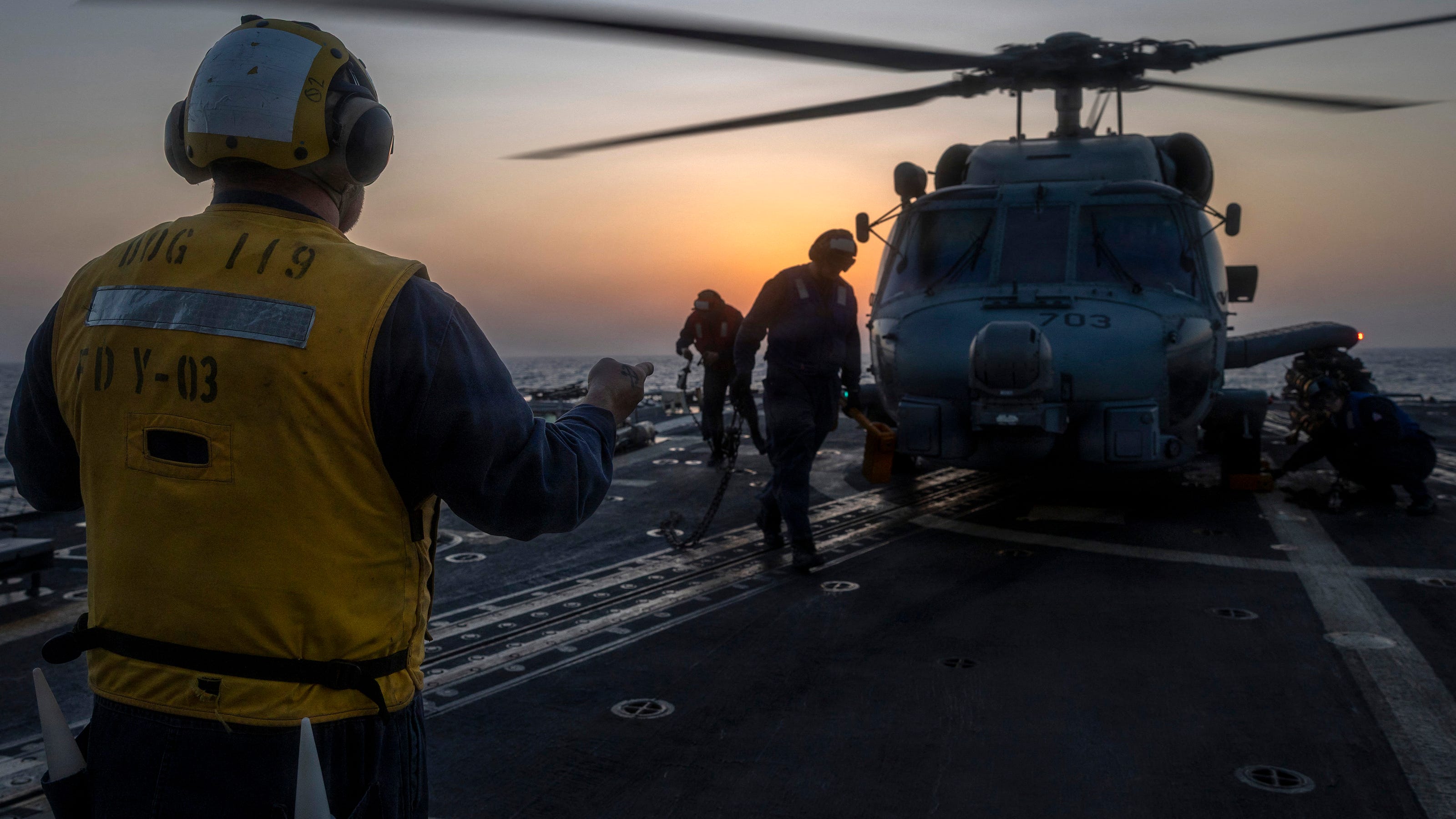
US and Israel launch Operation Epic Fury seeking regime change in Iran
Over 30 Iranian sites hit, 57 killed at girls school in southern Iran
US deploys F-22 fighters to Israel for first time amid escalating Iran tensions
Largest U.S. military buildup in the Middle East since the 2003 Iraq invasion

US and Iran resume nuclear talks as two carrier strike groups mass in Persian Gulf
US deploys F-22s to Israel for first time, two carrier groups now in region

They all promised no regime change in Iran. The record says otherwise
Trump, Vance, Hegseth, Rubio said it. Greene and Carlson documented the betrayal
Trump gives four different reasons for the Iran war in four days
No national address, six dead Americans, and no agreed reason why
Iran drone-strikes U.S. Embassy in Saudi Arabia. six embassies evacuated or closed
Largest U.S. diplomatic pullback from the Middle East since the 2003 Iraq invasion
48 questions
Start the review