Public Health · Judicial Review · Constitutional Law · Civil Rights·May 14, 2026
Supreme Court keeps abortion pill available by mail in 7-2 vote
Full court blocks 5th Circuit ban on mailing the abortion pill

Photo: AP Photo/Allen G. Breed, Filesource ↗
The 📖Supreme Court on May 14, 2026, granted stays in Danco Laboratories v. Louisiana and GenBioPro v. Louisiana, blocking the 5th Circuit's May 1 ruling that would have reinstated nationwide in-person dispensing requirements for the abortion pill mifepristone. Only Justices  Clarence Thomas and Samuel Alito dissented. Thomas invoked the 📖Comstock Act of 1873 to call mifepristone manufacturers a "criminal enterprise," while Alito called the majority's one-paragraph order "remarkable" and "unreasoned." The decision keeps telehealth prescriptions and mail delivery intact while Louisiana's challenge to the FDA's 2023 REMS proceeds in the lower courts. Mifepristone accounts for roughly 65% of all U.S. abortions, and telehealth now handles 27% of abortion care. The ruling draws a sharp line between two justices willing to revive a 153-year-old anti-obscenity law and a supermajority that wasn't ready to disrupt drug access for millions of patients.
Key facts
The 📖Supreme Court issued a on May 14, 2026, granting stay applications filed by Danco Laboratories and GenBioPro, the two companies that manufacture mifepristone in the United States. The order blocks the 5th Circuit's May 1 ruling in Louisiana v. FDA that would have reinstated a nationwide requirement for patients to pick up mifepristone in person from a certified prescriber.
The stay remains in effect while the appeal plays out in the 5th Circuit and, if either side seeks it, through a potential petition for certiorari at the 📖Supreme Court. The court didn't explain its reasoning, and it didn't officially disclose the . Because only Thomas and Alito publicly dissented, the effective split is at least 7-2.
Justice Clarence Thomas wrote a anchored entirely in the 📖Comstock Act of 1873, an anti-obscenity statute codified at 18 U.S.C. 1461 that bans using the mail to ship any "drug ... for producing abortion." Thomas wrote that "it is a criminal offense to ship mifepristone for use in abortions" and that the manufacturers "are not entitled to a stay of an adverse court order based on lost profits from their criminal enterprise."
Thomas's framing treats a law that hasn't been prosecuted for mailing abortion drugs in over a century as binding federal authority. The Biden-era Office of Legal Counsel that the 📖Comstock Act doesn't prohibit mailing mifepristone when the sender lacks intent for unlawful use.
Justice Samuel Alito wrote a calling the majority's order "remarkable" and "unreasoned." Alito framed the case as an attempt to "perpetuate a scheme to undermine our decision in Dobbs," the 2022 ruling he authored that overturned Roe v. Wade.
Alito also took aim at Danco and GenBioPro directly, writing that the manufacturers "are obviously aware of what is going on yet nevertheless supply the drug and reap profits from its felonious use in Louisiana." He had previously issued the administrative stays on May 4 and May 11 as the circuit justice responsible for the 5th Circuit, buying time for the full court to deliberate.
The 5th Circuit panel that triggered the crisis consisted of , a Trump appointee who wrote the opinion, joined by Judge Leslie Southwick, a George W. Bush appointee, and Judge Kurt Engelhardt, another Trump appointee. On May 1, 2026, the panel granted Louisiana's motion to stay the FDA's 2023 REMS modifications while the state's appeal proceeded, immediately reimposing the in-person dispensing requirement nationwide.
The panel's order applied to all 50 states, not just Louisiana, because it targeted the FDA's . That meant patients in states where abortion is legal also lost telehealth and mail access to the drug.
Louisiana Attorney General  Liz Murrill, who has served as AG since January 2024, against the FDA in October 2025. Louisiana argued that the FDA violated the Administrative Procedure Act when it modified the REMS in 2023 to allow telehealth prescribing and mail dispensing, and that the modifications violate the 📖Comstock Act.
Murrill called the 📖Supreme Court's May 14 decision "shocking" and vowed to continue fighting. The case now returns to the 5th Circuit for a merits ruling on Louisiana's challenge. Nearly two dozen Republican-led states supporting Louisiana, while a similar number of Democratic-led states filed in support of keeping current access rules.
The FDA first approved mifepristone in 2000 under a strict REMS that required in-person dispensing at certified clinics. During the COVID-19 pandemic in April 2021, the FDA . In January 2023, the agency made these changes permanent, also adding a pharmacy certification process that let retail pharmacies dispense the drug with a prescription.
Monthly pharmacy fills for mifepristone after the in-person requirement was removed. Mail-order pharmacies accounted for nearly 98% of these fills where telehealth is permitted.
📖Medication abortion using mifepristone accounts for roughly , according to the Guttmacher Institute's 2025 full-year estimates. The share of abortions provided through telehealth has climbed from 5% in early 2022 to 27% in the first half of 2025.
Those numbers mean the 5th Circuit's ruling, had it taken effect, would have disrupted access for a substantial share of the estimated 1.13 million clinician-provided abortions annually. Patients in states with abortion bans who rely on telehealth providers in other states would have been affected most directly.
The 📖Comstock Act of 1873, formally codified across , originally targeted obscene materials, contraceptives, and abortion-related items sent through the U.S. mail. Congress never repealed it, but federal prosecutors stopped enforcing its abortion provisions decades ago. The law carries penalties of up to 5 years for a first offense and 10 years for subsequent violations.
Thomas's dissent is the first time a sitting 📖Supreme Court justice has explicitly endorsed using the 📖Comstock Act to ban mailing mifepristone since the court overturned Roe v. Wade. Anti-abortion groups including the Alliance Defending Freedom and Americans United for Life have pushed for as a backdoor to restrict abortion access nationwide without new legislation.
The decision arrived against a backdrop of turmoil at the FDA itself. HHS Secretary Robert F. Kennedy Jr. of mifepristone's REMS in September 2025, and FDA Commissioner Dr. Marty Makary on May 12, 2026, two days before the 📖Supreme Court order. Anti-abortion groups had criticized Makary for not moving fast enough to restrict the drug.
Kyle Diamantas, the Senior Counselor and Acting Deputy Commissioner for Human Foods who has no medical background, is now serving as acting FDA commissioner. Diamantas told Live Action on May 13, 2026, that he "cares deeply about the pro-life cause." The instability at the agency raises questions about whether HHS might independently modify the REMS to restrict telehealth and mail access even without a court order.
Related Topics
4💊
SCOTUS extends emergency stay blocking mifepristone telemedicine ban
On May 12, 2026, Justice Samuel Alito extended an administrative stay blocking a 5th Circuit order that would have forced every patient in the country to obtain mifepristone in person. The extension runs through May 14 at 5 p.m. ET, buying the full Supreme Court additional time to decide whether to block the 5th Circuit ruling while a broader legal challenge proceeds. The case, Louisiana v. FDA (5th Circuit No. 26-30203; SCOTUS Nos. 25A1207, 25A1208), turns on whether the FDA violated the Administrative Procedure Act when it formally eliminated the in-person dispensing requirement for mifepristone in January 2023. Mifepristone accounts for approximately two-thirds of all U.S. abortions, and 27% of all abortions in the first half of 2025 were provided via telehealth, according to the Society of Family Planning WeCount report released in December 2025. If the 5th Circuit order took permanent effect, patients in all 50 states would need an in-person clinician visit to obtain mifepristone — even in states where abortion remains legally protected. Danco Laboratories and GenBioPro filed emergency applications at SCOTUS on May 2 after the 5th Circuit reinstated the in-person requirement immediately and without a pause.
107% match
25 questions
⚖️
Fifth Circuit blocks mail and telehealth access to abortion pill nationwide
A federal appeals court shut down mail-order and telehealth access to mifepristone across the United States on May 1, 2026, in a unanimous ruling that immediately affects the most common method of abortion in the country. The three-judge panel of the Fifth Circuit Court of Appeals granted Louisiana Attorney General Liz Murrill's emergency motion to reinstate a pre-2021 FDA requirement that patients obtain mifepristone in person at a clinic — reversing rules the FDA expanded in 2021 and 2023 to allow prescriptions by telehealth and dispensing through the mail and pharmacies. The ruling in Louisiana v. FDA was written by Trump-appointed Circuit Judge Kyle Duncan and joined by Judges Leslie Southwick and Kurt Engelhardt. Mifepristone now accounts for roughly two-thirds of all abortions in the United States. The decision affects patients in all 50 states, including states where abortion is legal, because it targets the FDA's authority to regulate how the drug is dispensed. The case is expected to go to the Supreme Court, which last addressed mifepristone access in FDA v. Alliance for Hippocratic Medicine (2024), unanimously ruling that the plaintiffs in that case lacked standing. Louisiana filed suit in October 2025, arguing that the FDA's mail-order rules undermine the state's total abortion ban and cause the state to incur Medicaid costs treating complications. U.S. District Judge David Joseph in Lafayette declined to block the rules in April 2026, but the Fifth Circuit reversed that decision on appeal. FDA Commissioner Martin Makary, who took office in April 2025, has not publicly stated whether the agency will comply with the order, appeal, or seek Supreme Court intervention.
104% match
22 questions
⚖️
Federal judge gave FDA six months to respond before blocking mail-order mifepristone in Louisiana
Trump-appointed Judge David Joseph of the Western District of Louisiana issued a 37-page ruling on April 7-8, 2026, in Louisiana v. FDA. He paused the case but concluded that Louisiana is "likely to succeed" in proving the FDA's 2023 changes to mifepristone dispensing rules were unlawful. The 2023 changes removed the in-person dispensing requirement and allowed certified pharmacies to mail the abortion drug. Joseph gave the FDA six months to complete a safety review and warned that if the agency fails, "the Court's analysis will inevitably change." Louisiana AG Liz Murrill filed the lawsuit after the Supreme Court unanimously dismissed a similar challenge in 2024 for lack of standing. Murrill used state sovereign standing instead, and Joseph ruled that approach gives Louisiana a valid path into court. Twenty-one Republican attorneys general filed amicus briefs supporting Louisiana. Murrill announced she'll appeal to the 5th Circuit to block the 2023 rule while the FDA review proceeds. One-quarter of all abortions in the US now involve telehealth prescribing, a fivefold increase since the 2023 REMS changes.
103% match
22 questions
💊
Red states advance 200+ medication abortion restriction bills
Nearly 200 anti-abortion bills targeting medication abortion have been introduced in 29 states in the 2026 legislative session, according to the Guttmacher Institute. The push comes as medication abortion — primarily the mifepristone and misoprostol regimen — now accounts for 63 percent of all clinician-provided abortions in states without total bans. Lawmakers in Indiana and South Carolina have advanced bills allowing residents to sue providers and drug manufacturers in other states for sending abortion pills across state lines, echoing Texas and Louisiana laws that offer $100,000 bounty payouts. At least six states introduced bills in 2026 to classify mifepristone and misoprostol as controlled dangerous substances, following Louisiana's 2024 law — the first to do so. Other proposals target telehealth abortion, mandatory in-person dispensing, environmental regulation of medication abortion as a pollutant, and fetal personhood frameworks that could criminalize patients. Since Dobbs eliminated the federal constitutional right to abortion in June 2022, state legislative fights over medication abortion have become the primary front in the fight over reproductive rights. Blue states have responded with shield laws protecting providers, while red states have escalated cross-border liability strategies designed to make those shield laws economically unworkable.
94% match
26 questions
Related
Categories that may be relevant to you
5 topics available

May 23, 2026
DOJ scrubs hundreds of Jan. 6 prosecution records from website
🔍
May 22, 2026
FTC fines Cox Media Group $930K for fake AI listening ad service
May 22, 2026
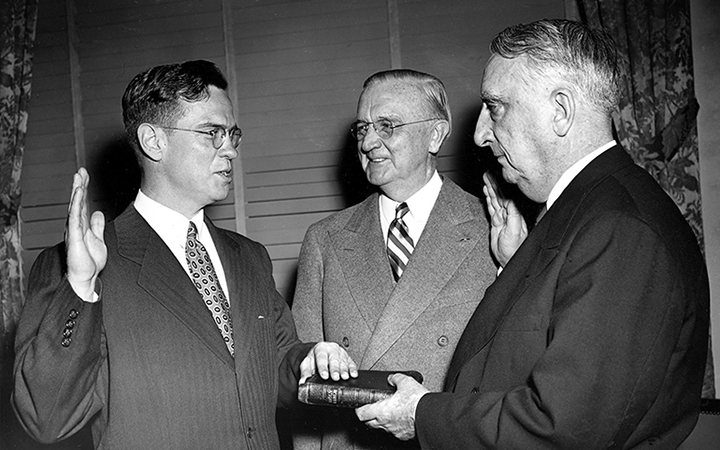
Warsh sworn in as Fed chair at White House in first such ceremony since 1987
May 22, 2026
Colorado closes legal gap for defendants found unfit to stand trial
May 22, 2026
Gabbard resigns as director of national intelligence
View All Government Topics
770 topics
30 questions
Start the review