National Security · Government · Fb02e87e 8f78 4c9f 9b85 D06b2f9e2e7b·March 17, 2026
Senate Democrats force repeated war powers votes to stall floor and demand Iran war authorization
Schiff, Kaine, Duckworth, Murphy, and Schumer file multiple resolutions on March 4 and 24; Joe Kent's resignation undermines Trump administration credibility

Photo: Eric Kayne / Stars and Stripes
Senate Democrats announced on March 17, 2026 that they would use resolutions as a procedural weapon to stall Senate floor operations and force the Trump administration to publicly defend the Iran war. Senator Adam Schiff of California told TIME magazine that Democrats were prepared to introduce and force floor votes on resolutions directing the removal of U.S. forces from Iran, day after day, if necessary.
The coalition behind the strategy included Schiff, Senator Tim Kaine of Virginia, Senator Tammy Duckworth of Illinois, Senator Chris Murphy of Connecticut, Senator Cory Booker of New Jersey, and Senate Minority Leader Chuck Schumer. Democrats had already filed five separate resolutions and planned to file more. Schiff told TIME the White House had "such a weak case for the war that publicly trying to defend it would hurt them." Kaine, the Senate's leading war powers expert, coordinated the legislative strategy and structured the resolutions to maximize the number of separate tabling votes Republicans would need to cast.
The was a direct response to the Vietnam War, during which Presidents Lyndon Johnson and Nixon sent hundreds of thousands of troops into combat without a formal declaration of war. Congress passed the law in 1973 over Nixon's veto, with Nixon arguing it unconstitutionally limited presidential authority as . The law created an expedited floor procedure specifically so the minority party could force a vote on troop deployments. Any senator can introduce a concurrent resolution directing the removal of U.S. forces from a conflict, and that resolution bypasses normal committee process and gets accelerated floor consideration.
Under the law, the President must notify Congress within 48 hours of introducing forces into hostilities and must terminate any use of armed forces after 60 days unless Congress has declared war, enacted a specific authorization, or extended the 60-day period by law. Section 2(c) of the Resolution states that the President's powers as to introduce forces into hostilities can be exercised only pursuant to: (1) a declaration of war, (2) specific statutory authorization, or (3) a national emergency created by attack upon the United States.
The Senate on March 4, 2026 voted 47-53 to reject the Democratic war powers resolution, mostly along party lines. All Senate Democrats voted for the resolution except for Pennsylvania Sen. John Fetterman, who has argued that cutting off the President's authority mid-campaign would send the wrong message. Sen. Rand Paul of Kentucky, a libertarian-leaning Republican, joined the majority of Democrats as the lone Republican voting in favor of it, making him the only Republican willing to break ranks.
Every Republican senator who voted to table the resolution went on record voting to continue a war that had killed 6 American servicemembers as of March 4 (rising to 13 by late March), wounded dozens, and was pushing gas prices toward $3.70 per gallon nationally. Moderate Republicans such as Sen. Susan Collins (R-ME) and Sen. Lisa Murkowski (R-AK), who previously voted with Democrats on war powers-related resolutions, did not cross the aisle this time, signaling full Republican caucus discipline around the Trump administration.
The Trump administration claimed it had legal authority to strike Iran under the 2001 Authorization for Use of Military Force (AUMF) passed after 9/11, which authorizes force against those who 'planned, authorized, committed, or aided' the 9/11 attacks or 'harbored such organizations or persons.' The administration attempted to argue that Iran qualifies because Iran has hosted al-Qaeda members. However, top legal experts including former State Department Legal Adviser Brian Egan and former Deputy Counsel to the President Ryan Goodman published joint statements: 'The 2001 AUMF does not authorize the use of force against Iran. Iran was not implicated in the 9/11 attacks, Iranian forces are not al Qaeda or the Taliban, or their associated forces, nor are they a successor to any of those forces.'
The 2002 AUMF, which authorized force against Iraq, is equally inapplicable: it allows force necessary to 'defend the national security of the United States against the continuing threat posed by Iraq' and to 'enforce all relevant United Nations Security Council resolutions against Iraq.' Those provisions plainly do not cover Iran. Legal scholars across multiple administrations concluded that neither existing AUMF provides a legal basis for offensive military action against Iran as a nation state.
On March 17, 2026, the same day Senate Democrats announced their war powers stall strategy, Joe Kent, the National Counterterrorism Center director appointed by Trump, resigned from his position. Kent stated publicly that Iran posed no imminent threat—precisely the legal standard the Trump administration had cited to justify acting without Congress. His resignation gave Democrats a factual anchor for their strategy: a Trump-appointed intelligence official had concluded the war lacked its stated legal basis, and the White House had produced no public evidence to refute him. Kent's departure signaled internal administration disagreement about the war's legal and strategic justification, undermining the administration's credibility with wavering Republicans.
Senator Tammy Duckworth's role in the war powers coalition gave it a credential Republicans struggled to counter. Duckworth is an Army combat veteran who lost both legs when her helicopter was shot down in Iraq in November 2004. She received the Purple Heart and the Air Medal with Valor. Her insistence on accountability for the Iran war made the standard Republican response—attacking Democrats as weak on defense—extremely difficult to deploy.
Duckworth said publicly that the administration's failure to brief Congress properly was 'disrespectful to military families' who deserved to know what strategic objective their family members were risking their lives to achieve. Her participation made the war powers coalition bipartisan in moral authority even if not in party affiliation, resonating with Republican military families in pivotal states.
The tactic threatened to disrupt Republican floor management at a particularly difficult moment. Senate Majority Leader John Thune had to manage each war powers resolution through tabling motions that consumed floor time. The Senate was simultaneously processing the SAVE America Act, a voting rights bill that required careful Republican scheduling around Democratic talking filibuster tactics. A cascade of war powers votes would force Thune to choose between advancing the SAVE Act and absorbing repeated war powers resolutions.
Democrats filed five resolutions with slightly different language, requiring five separate tabling votes. They planned to continue filing new resolutions as each prior one was tabled, creating an ongoing drain on floor time. Thune's office declined to commit to scheduling open Iran war hearings in response to Democratic pressure. Republicans were already burning floor time on the DHS shutdown and other urgent business.
Democrats' core demand was public Senate Intelligence Committee hearings where senior administration officials would testify under oath about the war's legal basis, military objectives, and casualty projections. After a classified briefing on March 3, 2026, Democratic senators emerged deeply unsatisfied. Senate Minority Leader Chuck Schumer called the session 'very unsatisfying' and criticized what he described as different explanations offered on different days.
Senator Chris Murphy reported that administration officials told them 'this is an open-ended operation that hasn't even really started in earnest yet. There will be more Americans killed. They refuse to take off the table the insertion of ground troops.' As of March 17, the White House had not sent any senior national security official to testify in open session since Operation Epic Fury began on February 28, 2026. The lack of public testimony left Congress unable to scrutinize the administration's claims that the war was constitutionally justified.
The War Powers Resolution's 60-day clock started when troops were committed to hostilities on February 28, 2026. That deadline fell at the end of April 2026. Under the law, if Congress hadn't authorized the war by that date, the president was legally required to withdraw forces, though no enforcement mechanism exists if a president refuses. As of March 22, the Senate hadn't voted on a formal AUMF for Iran, and no Republican had introduced one.
Democrats planned to keep filing war powers resolutions through the spring to create a public record and force Republicans to keep voting, building momentum toward the April 30 deadline. Some legal experts argued that the 60-day clock could force a debate even if the administration ignored it, since Congress could vote to force withdrawal.
Republicans who control both chambers rallied behind the President's decision to strike Iran even as Trump had not ruled out deploying U.S. ground troops and had reportedly said he didn't 'have the yips about boots on the ground.' Senator Lindsey Graham of South Carolina emerged as a leading voice for escalation, saying on March 3 'We should let him finish the job,' voicing support for a U.S.-Israeli air campaign that began five days prior and had already resulted in American casualties and hundreds of other deaths, including Iran's Supreme Leader Ali Khamenei.
Senator John Barrasso, Republican Whip, attacked the resolution as a 'partisan battering ram,' arguing that 'Democrats would rather obstruct President Trump than obliterate Iran's national nuclear program.' House Speaker Mike Johnson warned that passage of a war powers resolution would 'empower our enemies' and 'kneecap our own forces.' Republican opposition was nearly monolithic except for Rand Paul.
Senator Tim Kaine, a member of the Senate Armed Services and Foreign Relations Committees, is recognized as the Senate's leading expert on the War Powers Resolution of 1973. Kaine has argued for years that the political cost of repeated public votes, making senators choose between and executive loyalty, is itself a meaningful check even when individual votes fail. Congress has never successfully used the War Powers Resolution to end a military operation over a president's objection, and the bills Democrats were filing would almost certainly be tabled.
But Kaine structured the five resolutions with slightly different language specifically to maximize how many separate votes Republicans would need to cast. 'If you don't have the guts to vote yes or no on a war vote,' Kaine said, 'how dare you send our sons and daughters into war where they risk their lives?' He said the effort wouldn't be 'a one and done,' suggesting Democrats would pursue other strategies including through the appropriations process if procedural votes failed.
Democrats' strategy was explicitly framed around the 2026 midterm elections. Seven Republican Senate seats were up for reelection in states where gas prices, war casualties, and foreign policy were politically volatile. Senator Chris Murphy told reporters the goal wasn't necessarily to win any individual war powers vote but to make the Iran war the Senate's most visible and contested issue heading into the midterms.
By forcing Republicans to cast repeated votes on the record supporting the war, Democrats aimed to create a political liability for GOP senators in contested races in states like Pennsylvania, Ohio, Wisconsin, and Arizona, where swing voters were sensitive to the economic costs of military conflict and concerns about a repeat of Iraq-Afghanistan-style quagmires. The timing of Joe Kent's resignation on March 17—the same day the stall strategy was announced—added momentum to Democratic messaging.
Related Topics
6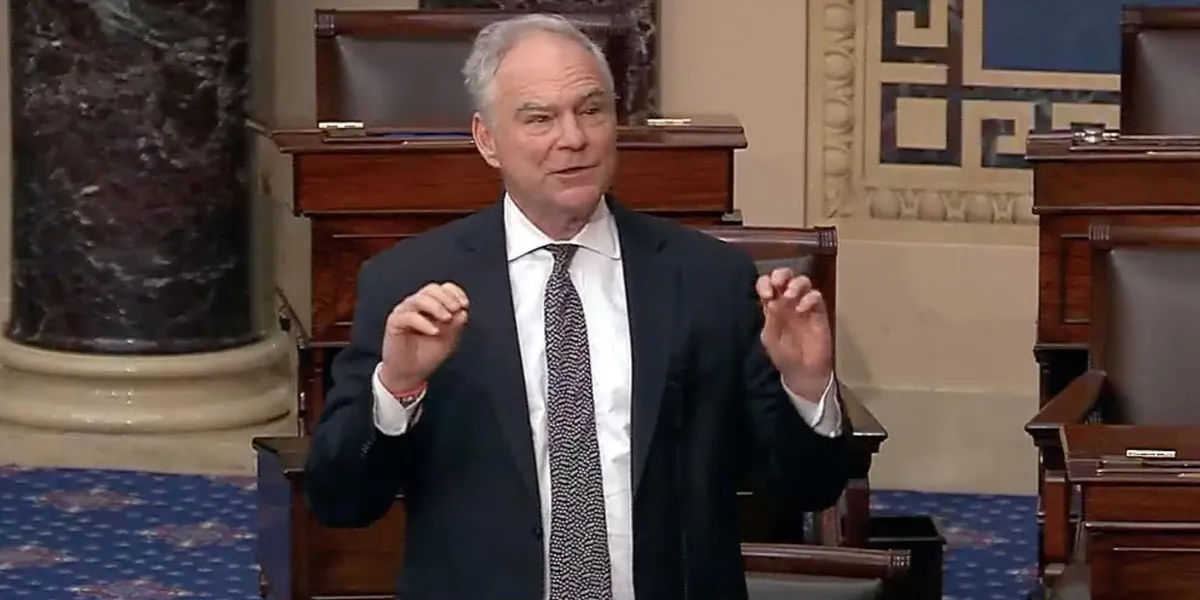
Senate rejects Iran war powers resolution 47-53
Eight failed votes leave Trump''s Iran war legally unchecked as April deadline nears

Massie and Khanna introduce war powers resolution to block Iran conflict
Unusual bipartisan alliance attempts to block presidential war without approval

Representative Chris Smith blocks Democrats' Iran war powers resolution in pro forma session
House Republican ended session before Democrats could vote to end U.S. attacks on Iran
Senate advances Iran war powers resolution for first time, 50-47
Four Republican defections force first-ever Senate procedural win
House rejects Iran war powers resolution by one vote
One Democrat's no vote left Trump's unauthorized Iran war unchecked

The sixty-day clock on Iran strikes just ran out. Congress can't stop it.
The sixty-day deadline under the War Powers Resolution passed May 1 with no congressional authorization in place. The Senate voted for the sixth time to end the strikes. The House hasn't moved.
28 questions
Start the review