National Security · Foreign Policy · Government·May 19, 2026
Senate advances Iran war powers resolution for first time, 50-47
Four Republican defections force first-ever Senate procedural win
On May 19, 2026, the Senate voted 50-47 to discharge S.J. Res. 185 from committee, the first time a 📖war powers resolution targeting Trump's Iran military campaign has cleared a procedural hurdle in the 119th Congress. Four Republicans broke with Senate leadership:  Susan Collins of Maine, Lisa Murkowski of Alaska, Rand Paul of Kentucky, and
  Bill Cassidy of Louisiana. Cassidy voted yes just three days after losing his Louisiana Republican primary to Rep. Julia Letlow, Trump's endorsed challenger. He became the first GOP Senate incumbent to lose renomination in nearly a decade.
Three Republican senators didn't show up: John Cornyn of Texas, Thom Tillis of North Carolina, and Tommy Tuberville of Alabama. Their absences effectively handed Democrats the margin. Sen. John Fetterman of Pennsylvania was the only Democrat to vote no, citing Iran's nuclear weapons ambitions as justification for continuing the war. The resolution, sponsored by Sen. Tim Kaine of Virginia, would direct the president to remove U.S. forces from hostilities against Iran not authorized by a declaration of war or a specific 📖Authorization for Use of Military Force.
The vote was the eighth Senate attempt to invoke 📖war powers authority since the U.S. and Israel launched strikes against Iran on February 28, 2026. Despite advancing procedurally, the measure still needs a final Senate floor vote, must clear the Republican-controlled House, and would almost certainly face a Trump veto. No 📖war powers resolution has ever survived a presidential veto.
Key facts
The Senate voted 50-47 on May 19, 2026 to discharge S.J. Res. 185 from the Foreign Relations Committee, using a procedural motion allowed under the 1973 📖War Powers Resolution's expedited procedures. It was the eighth time Democrats had forced a Senate vote on Iran 📖war powers since U.S. and Israeli forces launched airstrikes against Iran on February 28. It was the first time any such vote prevailed. The seven previous attempts all failed, each blocked by a Republican majority that held together through April.
The resolution's sponsor, Sen. Tim Kaine (D-VA), said the Senate had finally acted on its constitutional duty. 'I'm grateful that today, enough of my colleagues stood up for the Constitution,' .
Four Republicans voted with Democrats: Susan Collins of Maine, Lisa Murkowski of Alaska, Rand Paul of Kentucky, and Bill Cassidy of Louisiana. Collins and Paul had supported earlier versions of the resolution. Murkowski voted for the after saying she expected 'more clarity from the administration' on the war's legal basis after the 60-day 📖War Powers deadline passed. She didn't get it.
Cassidy was the new defection. He voted yes on May 19, three days after to Rep. Julia Letlow, who carried Trump's endorsement, and State Treasurer John Fleming in a race that will go to a June 27 runoff. Cassidy became the first Republican Senate incumbent to lose renomination in nearly a decade, a direct consequence of his 2021 vote to convict Trump in the second impeachment trial.
Three absent Republicans effectively gave Democrats their majority. John Cornyn of Texas, Thom Tillis of North Carolina, and Tommy Tuberville of Alabama all missed the vote. Without their absences, the resolution would have failed 50-50 at best. Senate rules for 📖war powers discharge motions require only a simple majority, so the three no-shows they needed.
The three absent Republicans hadn't publicly explained why they missed the vote. Their absences drew immediate scrutiny, with critics noting that not voting is functionally equivalent to handing the opposition a win on a simple-majority threshold.
Sen. John Fetterman (D-PA) was the sole Democrat to vote no, continuing his break from his caucus on Iran war policy. Fetterman has opposed every 📖war powers resolution since the war began. In an interview with Semafor published the day before the vote, on his position and that no Democrat had tried to flip him.
Fetterman's stated reason: Iran's nuclear weapons program. 'Iran with a nuclear bomb is one of those things more important than voting what a political base might demand,' he said. His position has put him at odds with the overwhelming majority of Senate Democrats and aligned him with the Trump administration's justification for the war.
S.J. Res. 185 directs the president to remove U.S. Armed Forces from hostilities within or against Iran unless Congress authorizes the war through a declaration or a specific AUMF. It invokes Section 5(c) of the , which gives Congress the power to direct troop withdrawal by concurrent resolution without a presidential signature.
The legal backdrop matters: Trump notified Congress of the hostilities on March 2, 2026, starting a 60-day clock under the 📖War Powers Resolution that expired May 1. The Trump administration argued a temporary ceasefire in April paused the clock. Congressional Democrats and most constitutional scholars , saying the law provides no such pause mechanism.
The U.S.-Iran conflict began on February 28, 2026, when U.S. and Israeli forces launched airstrikes under what the administration called 'Operation Epic Fury.' By early March, 13 American service members had died and , according to U.S. Central Command. A ceasefire was announced April 7 but the administration has maintained military operations in the region.
Kaine and other resolution sponsors pointed to the human costs in floor speeches. 'Trump's war in Iran has imposed a tremendous cost on the American people, including deaths and injuries of our servicemembers and soaring gas prices,' Kaine said on May 19.
Rand Paul, the only Republican to support every previous 📖war powers vote, grounded his position in constitutional principle rather than opposition to Trump specifically. Paul told reporters that 'only Congress can declare war' under Article I and that congressional leadership had 'resigned themselves to their own irrelevance.' He said the public on whether to go to war with Iran. His consistent libertarian-conservative position separates him from Collins, Murkowski, and Cassidy, who framed their votes more narrowly around oversight and the 60-day deadline.
The path forward is steep. The Senate still needs to pass a final floor vote, and with Cornyn, Tillis, and Tuberville voting no, the math may not hold. The resolution would then need to pass the House, which on May 14. And Trump would almost certainly veto it. The only time Congress successfully overrode a presidential veto of a 📖war powers measure was in 1973, when it passed the 📖War Powers Resolution itself over Nixon's veto. Every subsequent presidential veto of a 📖war powers resolution, including Trump's 2020 veto related to Iran and Yemen, .
Related Topics
6⏱️
The sixty-day clock on Iran strikes just ran out. Congress can't stop it.
The War Powers Resolution gives Congress 60 days to authorize or end presidential military action. That deadline passed May 1 for U.S. strikes on Iran. The Senate voted 47-50 to direct Trump to stop — the sixth such vote since strikes began February 28. The resolution is expected to die in the House. The White House argues the clock pauses during ceasefires. Constitutional scholars disagree.
104% match
34 questions
🗳️
Representative Chris Smith blocks Democrats' Iran war powers resolution in pro forma session
Senate Democrats led by Minority Leader Chuck Schumer forced the fourth war powers resolution vote on Iran when the Senate returned from its two-week recess on April 13, 2026 — the same day CENTCOM launched a naval blockade of Iranian ports. The resolution, co-sponsored by Senators Tim Kaine, Adam Schiff, and Chris Murphy, sought to direct President Trump to withdraw U.S. forces from hostilities against Iran. Senate Republicans defeated it again, with Democratic Sen. John Fetterman crossing the aisle to oppose it and Republican Sen. Rand Paul crossing to support it. The War Powers Resolution 60-day clock expires approximately April 28.
102% match
18 questions
⚖️
House Iran war powers resolution fails on historic 212-212 tie
The U.S. House voted 212-212 on May 14, 2026, on H.Con.Res.75, a resolution directing President Trump to remove armed forces from hostilities against Iran within 30 days. The tie killed the measure. Three Republicans crossed party lines to support it: Reps. Thomas Massie of Kentucky, Brian Fitzpatrick of Pennsylvania, and Tom Barrett of Michigan. Rep. Jared Golden of Maine was the only Democrat to vote no. It was the third House war powers vote on Iran and the closest to passing. The vote came one day after the Senate rejected its own war powers resolution 49-50, with Sen. Lisa Murkowski breaking ranks for the first time. Both votes occurred weeks after the 60-day War Powers Resolution deadline expired on May 1, 2026.
100% match
30 questions
🌍
Trump declares Iran war "terminated" to skip the 60-day deadline
On May 1, 2026 — the 60th day after U.S. airstrikes on Iran began — President Trump sent letters to House Speaker Mike Johnson (R-LA) and Senate President pro tempore Chuck Grassley (R-IA) declaring that "The hostilities that began on February 28, 2026, have terminated." Trump cited an April 7 ceasefire and the absence of active fire exchange since that date. He also described the War Powers Resolution of 1973 as unconstitutional, arguing it infringes on his authority as commander-in-chief. The War Powers Resolution requires the president, within 60 days of notifying Congress about the introduction of U.S. forces into hostilities, to either obtain congressional authorization for the conflict or cease operations. The 60-day clock started when Trump notified Congress on March 2, 2026, that airstrikes had begun on February 28. By declaring hostilities "terminated," Trump argued the 60-day requirement was now moot — a legal theory no president has successfully used before. Senate Minority Leader Chuck Schumer (D-NY) called the declaration "an illegal war" and said declaring it "terminated" while a blockade of the Strait of Hormuz continued was deceptive. Sen. Richard Blumenthal (D-CT) said "there is no pause button in the Constitution or the War Powers Act." The Senate had voted 47-50 the day before to direct Trump to end hostilities — the sixth such vote since the conflict began.
100% match
22 questions
🗳️
House rejects Iran war powers resolution by one vote
The U.S. House of Representatives voted 213 to 214 on April 16, 2026, to reject a resolution sponsored by Rep. Gregory Meeks directing President Trump to remove U.S. armed forces from Iran unless Congress explicitly authorizes the war. Only one Republican — Rep. Thomas Massie of Kentucky — voted yes. Only one Democrat — Rep. Jared Golden of Maine — voted no. Rep. Warren Davidson of Ohio, who had supported a similar measure in March, voted "present," effectively helping defeat the bill. Three Democrats who previously voted against the measure switched to yes: Reps. Juan Vargas, Greg Landsman, and Henry Cuellar. The War Powers Resolution of 1973 gives Congress a 60-day clock to force troop withdrawals from unauthorized hostilities — that deadline falls around May 1, 2026. No president has ever complied with a congressional demand to withdraw troops under the War Powers Resolution in the law's 53-year history.
99% match
19 questions
⚔️
Senate Democrats force repeated war powers votes to stall floor and demand Iran war authorization
On March 4 and March 24, 2026, Senate Democrats forced floor votes on war powers resolutions directing the removal of U.S. troops from hostilities against Iran without congressional authorization. The procedural votes failed along mostly party lines (47-53 on March 4, with only Sen. Rand Paul crossing over), but the effort achieved Democrats' strategic goal: forcing every Republican senator to vote on the record supporting Trump's undeclared war. The coalition—led by Sens. Adam Schiff (D-CA), Tim Kaine (D-VA), Tammy Duckworth (D-IL), Chris Murphy (D-CT), Cory Booker (D-NJ), and Minority Leader Chuck Schumer (D-NY)—invoked the War Powers Resolution of 1973 to challenge whether the Trump administration possessed legal authority to wage war against Iran. The administration claimed existing 2001 and 2002 military force authorizations (AUMFs) provided coverage, but top constitutional scholars including former State Department Legal Adviser Brian Egan rejected this interpretation. The strategy succeeded in making the Iran war the most visible Senate issue in March 2026, with significant midterm implications for seven vulnerable Republican seats, while Joe Kent's March 17 resignation as National Counterterrorism Center director contradicted the administration's claims about Iranian threats.
96% match
28 questions
Related
Categories that may be relevant to you
5 topics available

May 23, 2026
DOJ scrubs hundreds of Jan. 6 prosecution records from website

May 23, 2026
SC Senate cloture vote advances map to end Clyburn's Black district
May 23, 2026
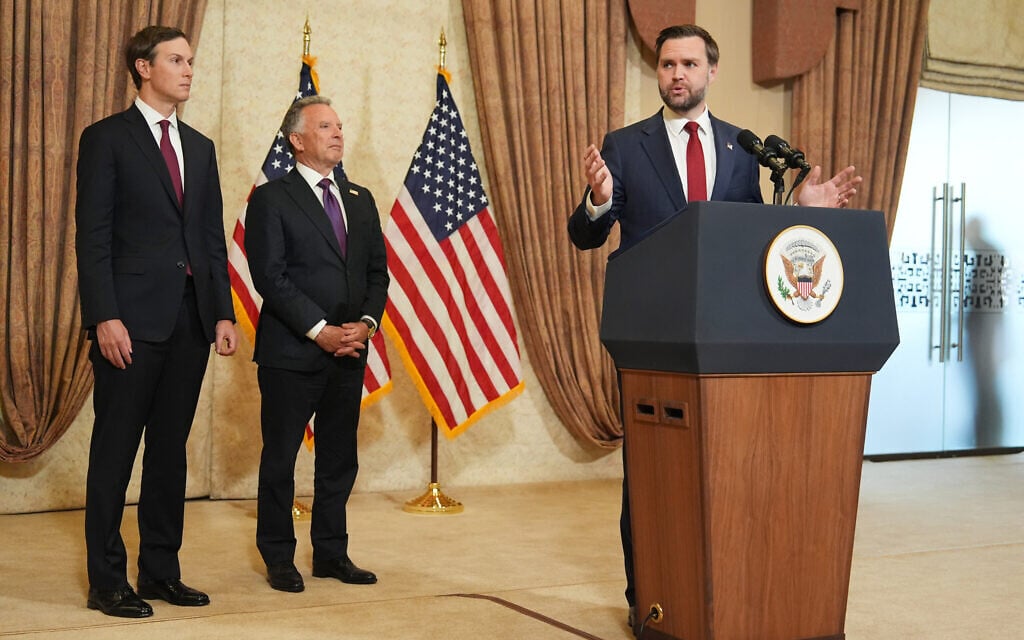
Trump declares Iran peace MOU largely negotiated

May 22, 2026
Colorado closes legal gap for defendants found unfit to stand trial

May 22, 2026
Third Circuit splits 6-5, clearing path to deport Khalil
View All Constitutional Law Topics
546 topics
30 questions
Start the review