Government · Labor·October 2, 2025
Trump plans mass federal layoffs during shutdown
Trump eyes 16,000 firings, targets 'Democrat Agencies'

On Oct. 2, 2025, White House Press Secretary  Karoline Leavitt announced layoffs were imminent and in the thousands during the shutdown. President
 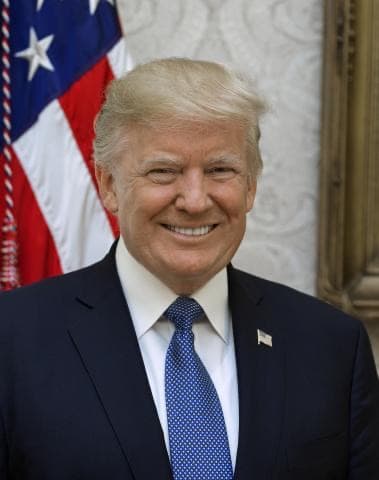 Trump posted on Truth Social that he would meet with OMB Director
  Russell Vought—he of PROJECT 2025 Fame—to decide which agencies to cut. OMB Lapse Memorandum instructed agencies to use this opportunity for RIFs targeting programs not consistent with the President priorities. Unions AFGE and AFSCME sued on Sep. 30 in Northern District of California. By mid-Oct., court filings showed roughly 4,000 RIF notices issued. A federal judge issued a preliminary injunction on Oct. 28, pausing shutdown-related RIFs.
Key facts
On Oct. 2, 2025, White House Press Secretary Karoline Leavitt announced layoffs were imminent and likely in the thousands as a result of the government shutdown. Her comments established the administration intent to use the shutdown for workforce reductions.
President Trump posted on Truth Social on Oct. 2, 2025, that he would meet with OMB Director Russell Vought—he of PROJECT 2025 Fame—to identify which federal programs to cut and whether cuts would be temporary or permanent. This public statement linked the layoffs to Project 2025 goals.
Labor unions AFGE and AFSCME filed suit on Sep. 30, 2025, in the Northern District of California (case 3:25-cv-08302), naming OMB, OPM, Director Russell Vought, and OPM Director Scott Kupor as defendants challenging shutdown RIF guidance.
The OMB Lapse Memorandum cited in the lawsuit instructs agencies to use this opportunity to consider reductions in force for programs not consistent with the President priorities. This language goes far beyond standard shutdown contingency planning.
By mid-Oct. 2025, public court filings and agency declarations showed agencies reported roughly 4,000 layoffs to the court. Some agencies issued and later rescinded multiple RIF notices at HHS, creating chaos and uncertainty for affected employees.
A federal district court issued a preliminary injunction on Oct. 28, 2025, enjoining further shutdown-related reductions in force while the case proceeds. The order pauses many RIFs and preserves employees status pending resolution.
The Pendleton Civil Service Reform Act of 1883 and subsequent laws prohibit removing federal employees based on political affiliation. Trump stated intent to make layoffs Democrat oriented (Oct 10 statement) directly contradicts these legal protections.
During shutdowns, normal personnel procedures and oversight mechanisms are suspended: the Merit Systems Protection Board lacks funding to hear appeals, union representatives are furloughed, and congressional oversight is limited. This created an opportunity for mass firings without usual safeguards.
Related Topics
5⚖️
Senate bill reverses Trump's 4,000 federal layoffs, bars new firings through January
The Senate's Nov. 9-10, 2025, legislation to end the government shutdown includes provisions reversing all reduction-in-force (RIF) notices issued since Oct. 1, 2025, reinstating more than 4,000 fired federal employees with full back pay. The bill states RIF notices "shall have no force or effect" and employees "shall be returned to employment status as of Sept. 30, 2025, without interruption." It also bars federal agencies from using any funds to "initiate, carry out, implement, or otherwise notice a reduction in force" through Jan. 30, 2026. U.S. District Judge Susan Illston (California) had temporarily blocked the Trump administration's layoffs in Oct. after the American Federation of Government Employees sued, arguing the firings were arbitrary and capricious.
99% match
11 questions
⚖️
Judge enjoins shutdown-related federal layoffs
On Oct. 15, 2025, U.S. District Judge Susan Illston in San Francisco granted a temporary restraining order that paused shutdown-related reduction-in-force (RIF) activity after agencies began issuing roughly 4,000 layoff notices. The court later entered a preliminary injunction on Oct. 28, 2025, enjoining further RIFs tied to the shutdown. The order rests on Administrative Procedure Act grounds and found the agencies' actions likely exceeded their authority and were arbitrary and capricious. OMB Director Russell Vought had publicly said layoffs could end up "north of 10,000," but the court paused implementation while the case proceeds.
95% match
16 questions
🏛️
OPM Schedule F rule removes civil service protections from thousands of federal employees, allowing at-will termination
The Office of Personnel Management published a final rule on Feb. 6, 2026, implementing Schedule Policy/Career — the Trump administration's revival of the controversial "Schedule F" classification from 2020. The rule takes effect March 8, 2026. It creates a new employment classification stripping civil service protections from an estimated 50,000 federal employees in "policy-influencing" roles, making them at-will workers who can be suspended, demoted, or fired without the usual due process appeals to the Merit Systems Protection Board. The rule received more than 40,000 public comments in 45 days, with 94% opposed. OPM Director Scott Kupor said the rule improves accountability and doesn't involve political litmus tests. Agencies will begin identifying which positions to reclassify over the next 30 days, after which President Trump will sign another executive order formally converting those roles. The rule also shifts whistleblower retaliation investigations from the independent Office of Special Counsel to individual agencies — a provision critics say eliminates the independence that made those protections meaningful. A coalition led by Democracy Forward announced plans to sue.
94% match
30 questions
🏛️
State Dept. refuses to rescind 250 Foreign Service layoffs
The State Department said on Jan. 9, 2026, it will move forward with 250 Foreign Service layoffs despite a federal court order that appeared to block them. A judge issued a preliminary injunction on Dec. 17, 2025, ordering agencies to rescind reduction-in-force notices finalized during the government shutdown between Oct. 1 and Nov. 12. The Trump administration argues the court order only delays the layoffs through Jan. 30, 2026, and doesn't reverse them. Justice Department attorneys told the court that rescinding the layoffs would be "logistically a big lift" for agencies. The administration said State should not have to "go back in time" to unwind actions from Jul. when the RIF process began. The layoffs are part of broader federal workforce reductions Trump ordered in his second term.
93% match
25 questions
🏛️
OMB orders 670,000 furloughed workers back Nov. 13 before shutdown back pay clears
On November 12, 2025, the day President Trump signed legislation ending the 43-day government shutdown — the longest in U.S. history — OMB Director Russell Vought issued memo M-26-01 directing all executive departments and agencies to reopen and to recall furloughed employees by November 13. The shutdown had started October 1 when Congress and the Trump administration failed to pass a spending bill, furloughing at least 670,000 federal workers without pay and forcing roughly 730,000 essential workers to work unpaid. The 2019 Government Employees Fair Treatment Act guarantees furloughed workers back pay at the earliest date possible after a shutdown ends. But the November 12 memo set a return-to-work date while agency payroll systems were still working to process 43 days of missing wages. The National Treasury Employees Union warned that the recall forced workers back before they could access money they were legally owed. The IRS initially planned to issue back pay on a slow schedule before union pressure forced it to move the date to November 19. State Department employees saw paychecks as early as November 13. Interior Department workers got half their back pay on November 17 and the other half on November 25. The spending deal that ended the shutdown also rescinded reduction-in-force notices that agencies had sent to employees during the shutdown.
92% match
11 questions
Related
Categories that may be relevant to you
5 topics available

May 23, 2026
DOJ scrubs hundreds of Jan. 6 prosecution records from website
May 23, 2026
SC Senate cloture vote advances map to end Clyburn's Black district
May 23, 2026
Trump declares Iran peace MOU largely negotiated
May 22, 2026
Colorado closes legal gap for defendants found unfit to stand trial
May 22, 2026
Third Circuit splits 6-5, clearing path to deport Khalil
View All Constitutional Law Topics
546 topics
18 questions
Start the review